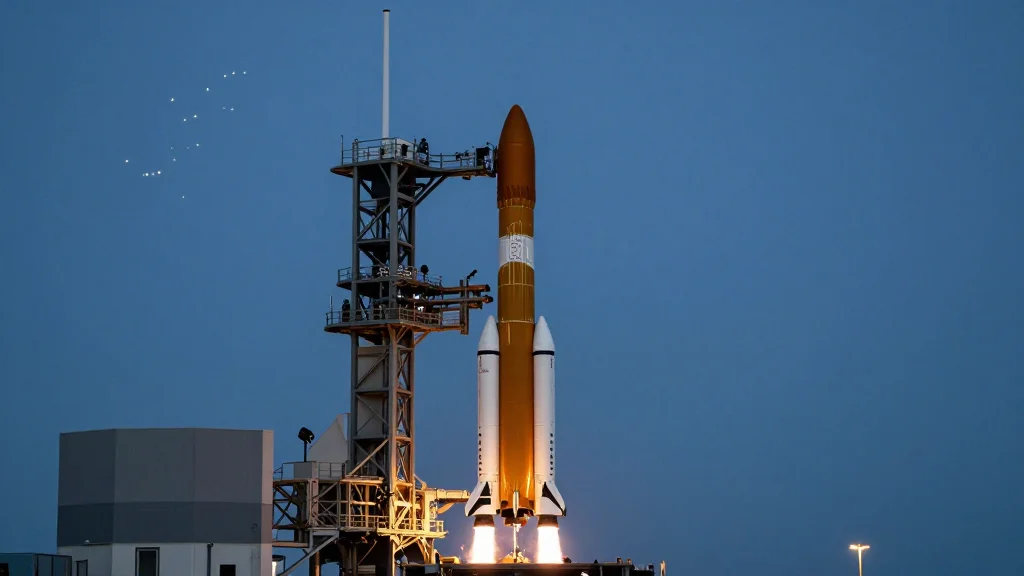
SpaceX Adds 24 Starlink Satellites, Nearing 9,000 in Orbit

Companies Mentioned
Why It Matters
The near‑9,000‑satellite milestone signals that low‑Earth‑orbit broadband is transitioning from a niche offering to a mainstream utility, challenging traditional telecom incumbents and reshaping global connectivity. SpaceX’s ability to reuse boosters at scale keeps launch prices low, encouraging other commercial players to consider LEO constellations for data, Earth‑observation, and defense applications. At the same time, the growing constellation intensifies debates over space traffic management, orbital debris mitigation, and the protection of astronomical research, forcing policymakers to craft new regulatory frameworks. For investors and industry observers, the launch underscores SpaceX’s dual‑track strategy: leveraging Starlink’s cash flow to fund ambitious deep‑space projects while cementing its dominance in the rapidly expanding LEO services market. The outcome will influence capital allocation across the broader SpaceTech ecosystem, from satellite manufacturers to ground‑segment providers and launch service competitors.
Key Takeaways
- •SpaceX launched 24 Starlink satellites from Vandenberg on April 22, 2026.
- •The mission brought the total Starlink constellation close to 9,000 satellites.
- •Falcon 9 booster performed its fifth flight and landed on the droneship “Of Course I Still Love You.”
- •New satellites feature upgraded laser inter‑satellite links for lower latency.
- •Astronomers and regulators continue to raise concerns about brightness and orbital debris.
Pulse Analysis
SpaceX’s relentless launch cadence is redefining the economics of satellite broadband. By achieving a fifth‑flight booster with a successful droneship recovery, the company demonstrates that rapid turnaround can be sustained without compromising reliability. This operational efficiency translates into launch costs that are an order of magnitude lower than the early 2010s benchmark, allowing SpaceX to price Starlink services competitively against terrestrial ISPs in underserved markets. The financial model—using broadband revenue to underwrite Starship development—creates a virtuous cycle: each successful launch not only expands the network but also fuels the next generation of heavy‑lift capability.
However, the rapid expansion also amplifies externalities. The sheer number of objects in low‑Earth orbit raises the probability of conjunction events, prompting calls for more robust space‑traffic coordination. Meanwhile, the astronomical community’s complaints about satellite glare have forced SpaceX to iterate on surface treatments, a process that adds engineering overhead and could slow future deployments if not managed carefully. The regulatory landscape is likely to tighten, especially as nations seek to protect both scientific assets and national security interests. Companies that can balance growth with responsible stewardship will gain a competitive edge.
In the broader market, SpaceX’s progress pressures rivals such as OneWeb, Amazon’s Project Kuiper, and emerging Chinese constellations to accelerate their own launch schedules and cost‑reduction initiatives. The race to dominate LEO broadband is no longer about who can launch the first batch, but who can sustain a high‑frequency, low‑cost launch pipeline while navigating an increasingly complex regulatory environment. SpaceX’s latest Vandenberg launch is a microcosm of that dynamic—showcasing operational mastery, revenue generation, and the growing pains of a crowded orbital neighborhood.
SpaceX Adds 24 Starlink Satellites, Nearing 9,000 in Orbit
Comments
Want to join the conversation?
Loading comments...