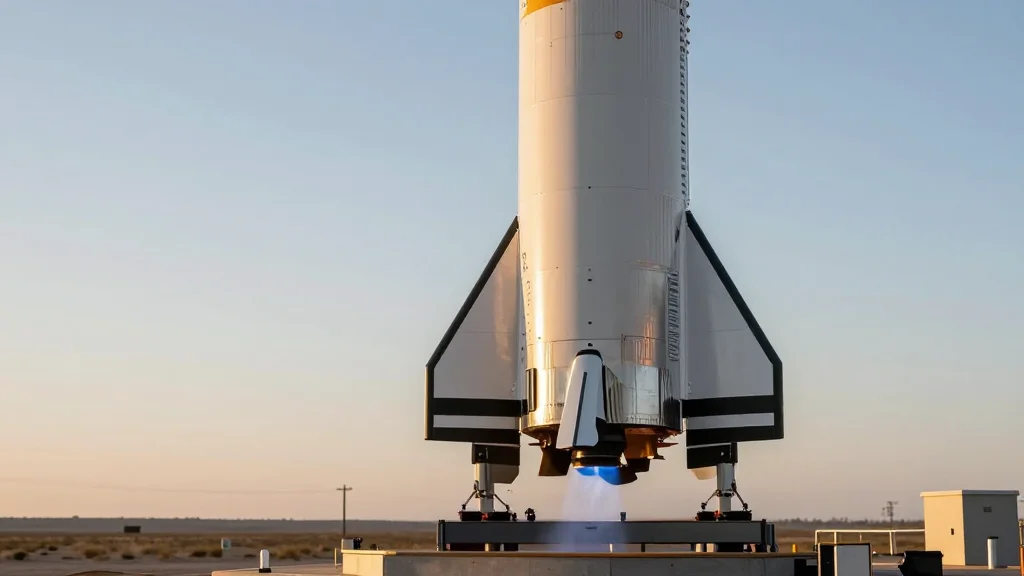
SpaceX Completes Starship Static Fire and Sets Aggressive April Launch Slate After Artemis II


Why It Matters
The Starship static fire and the aggressive April launch schedule together signal a turning point for the U.S. lunar architecture and the broader commercial space sector. A successful Starship orbital flight would validate the vehicle’s unprecedented payload capacity, enabling NASA to meet its Artemis lunar landing goals without further schedule slips. It would also give SpaceX a decisive edge over Blue Origin’s competing Blue Moon lander, consolidating its role as the primary HLS provider. Beyond government contracts, the continued cadence of Falcon 9 launches sustains SpaceX’s cash flow and expands the Starlink network, which is increasingly viewed as a strategic asset for both civilian broadband and defense communications. The dual‑track approach—maintaining short‑term launch revenue while advancing a transformative heavy‑lift system—illustrates how SpaceX is reshaping the economics of space access, potentially lowering launch costs across the industry and accelerating the commercialization of lunar and deep‑space missions.
Key Takeaways
- •April 15, 2026: Starship Super Heavy static fire lit all 33 Raptor engines at Starbase, Texas.
- •Elon Musk described Starship as “the most powerful object ever made.”
- •SpaceX announced a full April launch manifest, including six Falcon 9 missions already completed.
- •Five of the April Falcon 9 launches deployed Starlink satellites; one delivered 11,000 lb of cargo to the ISS.
- •NASA’s Artemis II mission has heightened demand for Starship’s HLS, with an orbital test planned for October 2026.
Pulse Analysis
SpaceX’s recent static fire is more than a technical checkpoint; it is a strategic lever in the high‑stakes competition for lunar access. By proving the 33‑engine Super Heavy can ignite reliably, SpaceX removes a major uncertainty that has plagued NASA’s Artemis schedule. The timing is crucial: with Artemis II already demonstrating crewed deep‑space capability, the agency now needs a launch system that can deliver a crew‑rated lander to lunar orbit and back. If SpaceX’s October orbital test succeeds, the company will likely lock in the bulk of NASA’s lunar contracts, marginalizing Blue Origin’s Blue Moon and any emerging European or Japanese heavy‑lift contenders.
At the same time, SpaceX’s April launch cadence showcases a disciplined revenue engine that funds the costly Starship development program. The Falcon 9’s reliability and rapid turnaround have turned the company into a de‑facto launch service provider for both commercial satellite operators and government agencies. This cash‑flow model reduces reliance on external financing and allows SpaceX to absorb the high development risk of Starship without jeopardizing its short‑term financial health.
Looking forward, the industry will watch how NASA’s safety panels interpret the data from the static fire and subsequent orbital test. A clean record could accelerate the certification of a crewed HLS, potentially moving the first crewed lunar landing from the late‑2028 window to an earlier date. Conversely, any setback could reignite calls for alternative architectures, reviving interest in expendable heavy‑lift rockets or even prompting a policy shift toward a more diversified lunar launch portfolio. In either scenario, SpaceX’s actions this month are setting the tempo for the next decade of lunar exploration and commercial space growth.
SpaceX completes Starship static fire and sets aggressive April launch slate after Artemis II
Comments
Want to join the conversation?
Loading comments...