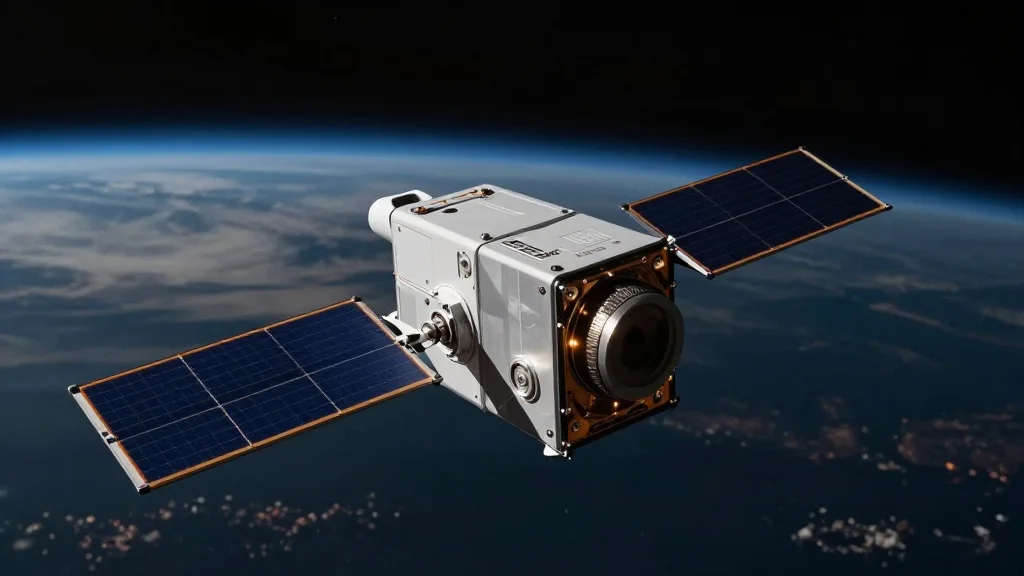
SpaceX Deploys 25 Starlink V2 Mini Satellites on Falcon 9 From Vandenberg

Why It Matters
SpaceX’s Vandenberg launch illustrates how reusable launch technology is reshaping the economics of satellite broadband. By treating each booster as a reusable asset, the company reduces launch costs, enabling faster expansion of the Starlink network and lowering the price barrier for end‑users in remote areas. The rapid deployment of V2 Mini satellites also pressures rival constellations to accelerate their own launch schedules, intensifying competition for spectrum and ground‑station partnerships. The broader implication is a shift toward an industrialized approach to orbital access, where launch cadence and logistics become as critical as payload performance. This model could lower entry barriers for future space‑based services, from Earth observation to low‑latency communications for autonomous vehicles, fostering a new wave of commercial activity in low‑Earth orbit.
Key Takeaways
- •SpaceX launched 25 Starlink V2 Mini Optimized satellites from Vandenberg on April 13, 2026.
- •Falcon 9 booster B1100 performed its fourth flight, landing on the drone ship OCISLY.
- •The launch adds to a constellation now exceeding 5,000 satellites, moving toward global broadband coverage.
- •Reusable booster strategy reduces per‑launch cost and shortens turnaround, enabling a high launch cadence.
- •Industry analysts see the launch as a competitive pressure point for OneWeb, Project Kuiper, and other satellite‑internet providers.
Pulse Analysis
SpaceX’s latest Vandenberg launch is less about a single batch of satellites and more about the validation of a production line in space. The company’s ability to reuse a single booster four times in a row demonstrates a level of operational maturity that rivals have yet to achieve. Historically, launch providers treated each mission as a discrete event; SpaceX has turned it into a repeatable process, akin to an automotive assembly line. This shift drives down marginal costs and creates a predictable schedule that can be leveraged for commercial contracts beyond Starlink, such as government payloads and private missions.
From a market perspective, the incremental capacity added by 25 V2 Mini satellites may appear modest, but the cumulative effect of weekly launches compounds quickly. As the constellation densifies, latency drops and throughput rises, making satellite broadband a viable alternative to terrestrial fiber in many regions. This puts pressure on traditional telecom operators to reconsider pricing and service models, especially in underserved markets where Starlink can now promise sub‑30‑ms latency.
Looking forward, the real test will be how SpaceX integrates larger V2 satellites without disrupting its reuse cadence. If successful, the company will have proven that high‑mass, high‑value payloads can be launched at the same low cost per kilogram that has defined its smaller satellite launches. That would cement SpaceX’s dominance not only in broadband but across the entire low‑Earth‑orbit services market, setting a new benchmark for cost, speed, and scalability in space operations.
SpaceX Deploys 25 Starlink V2 Mini Satellites on Falcon 9 from Vandenberg
Comments
Want to join the conversation?
Loading comments...