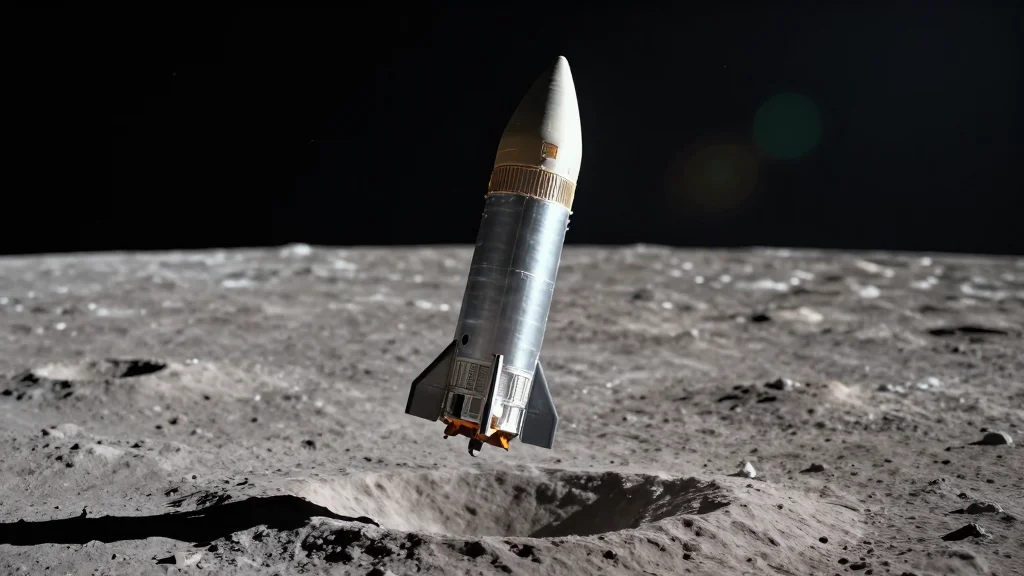
SpaceX Falcon 9 Upper Stage Set to Strike Moon in August, Raising Lunar Debris Concerns

Companies Mentioned
Why It Matters
The predicted lunar impact highlights a gap in current space‑environment governance: while Earth‑orbiting debris is heavily regulated, the Moon lacks comprehensive mitigation rules. As commercial and national actors accelerate lunar lander development, unmanaged debris could jeopardize scientific research, resource extraction, and the safety of future crews. The event also serves as a real‑world test case for tracking technologies and international coordination on debris reporting. If left unchecked, a growing catalog of lunar debris could force stricter licensing requirements, increase mission costs, and slow the pace of lunar settlement. Conversely, proactive policy responses could establish standards that balance rapid development with long‑term sustainability, setting a precedent for other celestial bodies such as Mars and asteroids.
Key Takeaways
- •A 45‑foot Falcon 9 upper‑stage booster (2025‑010D) launched Jan 2025 is slated to hit the Moon on Aug 5, 2026.
- •Impact speed estimated at ~5,400 mph near the Einstein crater on the Moon’s western limb.
- •Elon Musk reiterated SpaceX’s focus on a lunar city, citing faster launch windows to the Moon versus Mars.
- •The event fuels debate over lunar debris mitigation as UN COPUOS drafts new protocols.
- •Ground telescopes and lunar orbiters will monitor the impact to assess crater formation and contamination risks.
Pulse Analysis
The August impact underscores a strategic blind spot in the burgeoning lunar economy. Historically, debris mitigation has centered on low‑Earth orbit, where collision risk is immediate and quantifiable. The Moon, by contrast, has been treated as a pristine environment, but the influx of launch vehicle stages, lander ascent modules, and even commercial payloads is rapidly changing that perception. SpaceX’s aggressive launch cadence, combined with its public emphasis on lunar colonization, creates a paradox: the very hardware that enables rapid iteration also becomes a source of long‑term contamination.
From a market perspective, the incident could catalyze a new niche for end‑of‑life services—companies that specialize in de‑orbiting or safely disposing of lunar‑bound stages. Such services would likely command premium pricing, especially if future contracts require compliance with emerging debris‑mitigation clauses. Moreover, insurers may begin to factor lunar impact risk into coverage for lunar lander missions, potentially raising costs for early adopters.
Looking ahead, the August impact may serve as a catalyst for international policy harmonization. If the data collected confirms minimal scientific disruption, regulators might adopt a risk‑based approach, allowing certain non‑critical debris to impact remote lunar regions. However, a high‑profile mishap—such as contamination of a scientifically valuable site—could trigger stricter, perhaps even punitive, measures. In either scenario, the episode forces the industry to confront the trade‑off between rapid development and responsible stewardship of extraterrestrial environments.
SpaceX Falcon 9 Upper Stage Set to Strike Moon in August, Raising Lunar Debris Concerns
Comments
Want to join the conversation?
Loading comments...