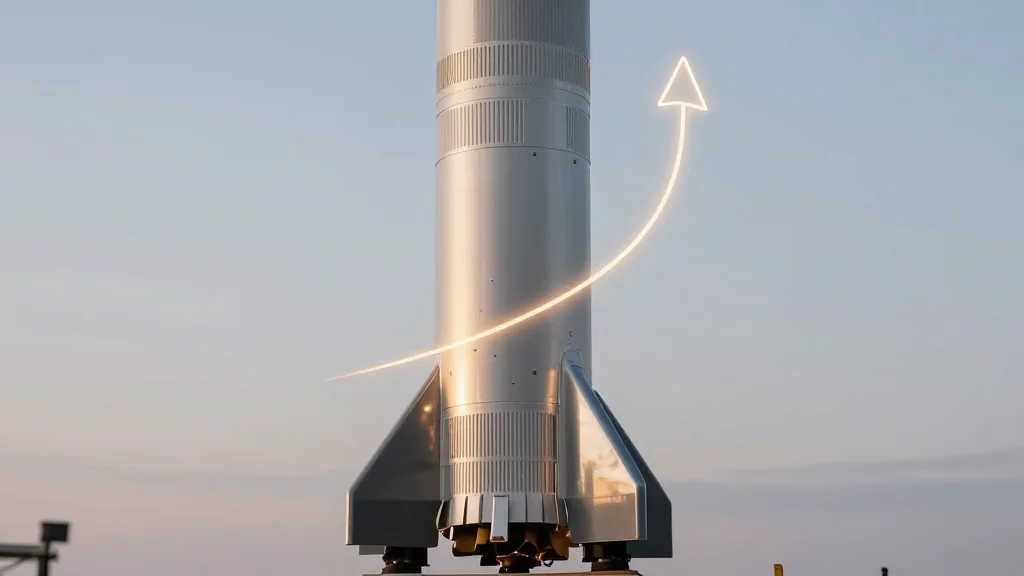
SpaceX IPO Valued at $1.75 Trillion Targets June 12, Poised to Become Largest Public Offering Ever

Companies Mentioned
Why It Matters
The SpaceX IPO could redefine capital flows into the SpaceTech ecosystem, unlocking financing for next‑generation launch vehicles, satellite constellations, and off‑world infrastructure. A successful float would validate the sector’s transition from government‑driven projects to a mature, profit‑centered industry, encouraging more public‑market entrants. Moreover, the record‑size offering may pressure traditional aerospace giants to accelerate innovation and cost‑reduction strategies, intensifying competition for launch contracts, spectrum rights, and orbital slots. The ripple effect could accelerate the commercialization of lunar and Martian initiatives, reshaping the strategic priorities of both private firms and national space agencies.
Key Takeaways
- •SpaceX aims for a June 12 IPO valued at $1.75 trillion, the largest ever
- •30% of shares reserved for private investors, far above typical allocations
- •S&P Kensho Final Frontiers index up 47% since January, reflecting sector momentum
- •Rocket Lab shares up 102% YTD; Planet Labs up 147% to $49 per share
- •European players like OHB (+279%) and EutelSat (+133%) see massive gains
- •Mark Boggett calls the float a "powerful validation of space as critical economic infrastructure"
Pulse Analysis
SpaceX’s impending IPO is more than a financing event; it is a litmus test for the commercial viability of deep‑space ambitions. Historically, aerospace IPOs have been modest—think Boeing’s 1962 listing or Lockheed’s 1995 float—because the industry relied heavily on defense contracts and long development cycles. SpaceX’s $1.75 trillion valuation signals that investors now see recurring revenue streams—Starlink subscriptions, launch services, and emerging AI products—as sufficiently predictable to justify equity market exposure.
The allocation of 30% to private investors also hints at a democratization of space capital. By widening the investor base, SpaceX may mitigate the volatility that can accompany a single‑class public offering, while also building a community of shareholders who are aligned with its long‑term vision of Mars colonization. This could create a feedback loop: broader ownership fuels public enthusiasm, which in turn pressures regulators and policymakers to support supportive frameworks for orbital manufacturing and lunar habitats.
Finally, the IPO’s scale will likely set a new benchmark for valuation multiples in the sector. If SpaceX’s market cap approaches $2 trillion, comparable firms—Rocket Lab, Planet Labs, and European satellite operators—may see their own valuations re‑priced upward, potentially sparking a wave of secondary offerings. The market will watch closely how SpaceX balances its ambitious R&D pipeline with the expectations of public shareholders, a tension that could shape the strategic direction of the entire SpaceTech industry for the next decade.
SpaceX IPO Valued at $1.75 Trillion Targets June 12, Poised to Become Largest Public Offering Ever
Comments
Want to join the conversation?
Loading comments...