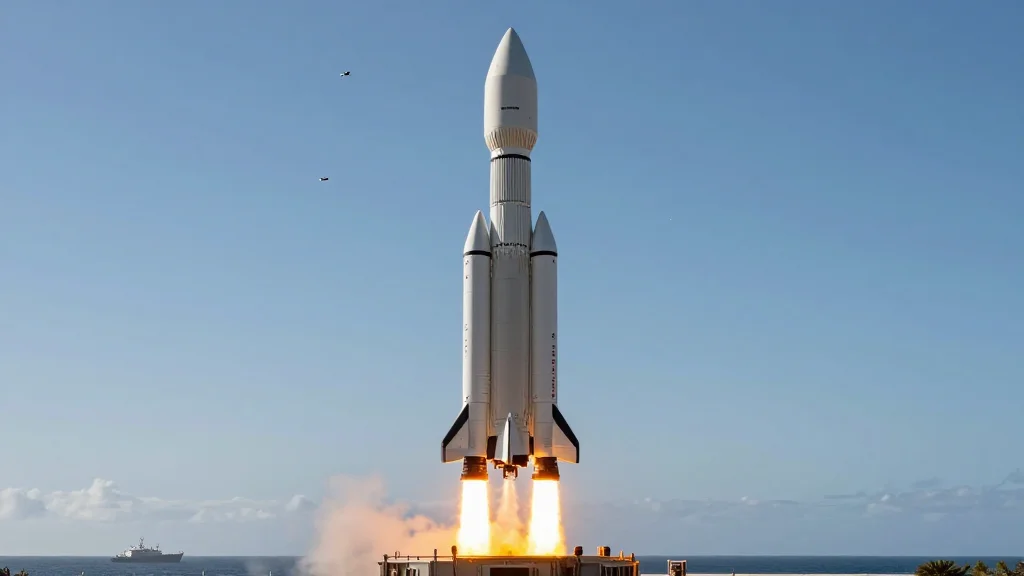
SpaceX Launches 24 More Starlink Satellites
Why It Matters
SpaceX’s rapid deployment of Starlink satellites accelerates global internet coverage while its reusable launch cadence drives down costs, reshaping the commercial space market and pressuring rivals to innovate.
Key Takeaways
- •24 Starlink satellites added, raising constellation to over 4,000 units
- •Falcon 9’s first stage completed 24th flight, landed on drone ship
- •SpaceX logged 55 launches in 2026, outpacing all rivals combined
- •Reusable rockets cut launch costs, accelerating satellite‑internet rollout
Pulse Analysis
SpaceX’s latest Starlink deployment highlights the company’s relentless push to expand its broadband constellation. By launching 24 satellites from Vandenberg, the firm not only moves closer to its 4,000‑satellite target but also demonstrates the operational maturity of its Falcon 9 fleet. The first stage’s 24th successful flight and autonomous drone‑ship landing illustrate how reusability has become routine, shaving millions of dollars off each launch and enabling a higher launch cadence than ever before.
The 2026 launch statistics cement SpaceX’s position at the apex of the global launch market. With 55 missions this year, the company eclipses the combined total of its closest competitors—China, Russia, and Rocket Lab—by a wide margin. This dominance forces other nations and commercial providers to reassess their launch strategies, invest in reusable technology, or seek partnerships with SpaceX to stay competitive. The gap also signals a strategic advantage for U.S. space policy, as American launch capacity remains largely under private control.
Beyond the numbers, the rapid rollout of Starlink satellites carries profound implications for connectivity, geopolitics, and regulatory frameworks. As broadband reaches remote regions, new revenue streams emerge for SpaceX, while governments grapple with spectrum allocation and space‑debris mitigation. The continued success of reusable rockets lowers entry barriers for smaller satellite operators, fostering a more diverse ecosystem. In the long term, SpaceX’s model could set the standard for cost‑effective, high‑frequency launches that underpin the next wave of satellite‑based services, from IoT networks to low‑latency edge computing.
SpaceX launches 24 more Starlink satellites
Comments
Want to join the conversation?
Loading comments...