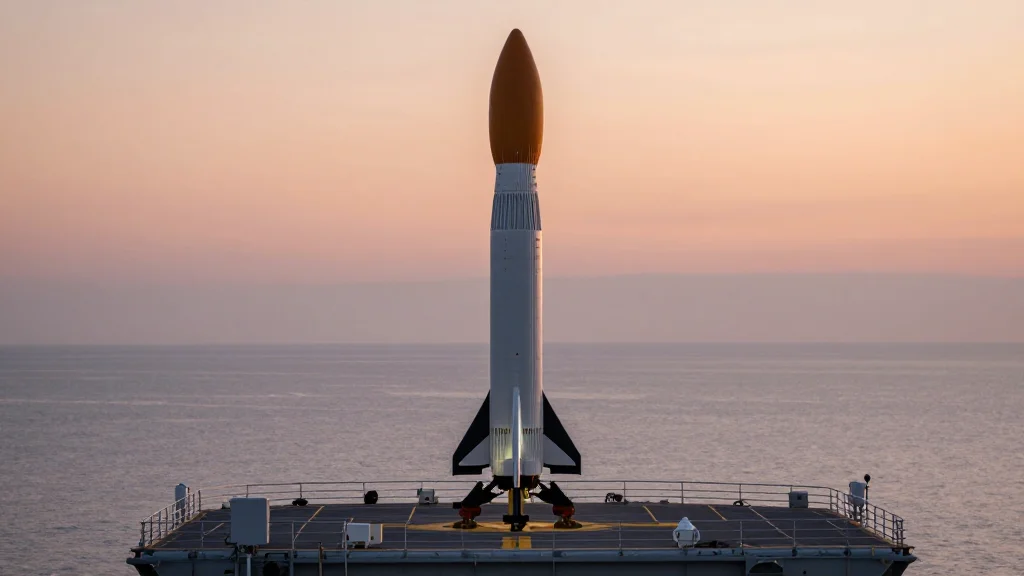
SpaceX Launches 24 More Starlink Satellites
Companies Mentioned
Why It Matters
SpaceX’s relentless launch cadence fuels its Starlink broadband rollout while cementing its market leadership, pressuring rivals to accelerate reusable‑rocket development and satellite constellations.
Key Takeaways
- •SpaceX launched 24 Starlink satellites on Falcon 9 from Vandenberg.
- •First stage completed its fifth successful drone‑ship landing.
- •2026 launch tally: SpaceX 49, China 21, Rocket Lab 6, Russia 5.
- •SpaceX’s launch count exceeds combined total of all other providers.
- •Starlink deployment supports growing global broadband demand.
Pulse Analysis
SpaceX’s latest Falcon 9 mission illustrates how reusable launch technology is reshaping the economics of satellite broadband. By delivering 24 new Starlink units and recovering the first stage for a fifth time, the company reduces per‑satellite costs and accelerates network density, a critical factor as demand for low‑latency internet expands into remote regions and emerging markets. Analysts view each successful landing as a step toward higher flight rates and tighter launch schedules, positioning SpaceX to capture a larger share of the multi‑billion‑dollar satellite services market.
The 2026 launch leaderboard highlights a widening gap between the United States and its competitors. With 49 missions, SpaceX outpaces China’s 21 launches, a disparity that reflects both the private sector’s agility and the strategic priority placed on space infrastructure by U.S. firms. China’s growing launch cadence signals an intent to develop its own broadband constellations, but regulatory hurdles and less mature reusability programs may limit rapid scaling. Meanwhile, Rocket Lab and Russia remain niche players, focusing on small‑sat and government payloads rather than massive constellations.
Beyond the headline numbers, the Starlink expansion carries broader implications for global connectivity and regulatory policy. As the constellation approaches a critical mass, it will deliver higher throughput and lower latency, challenging traditional terrestrial ISPs and prompting discussions on spectrum allocation and orbital debris mitigation. The steady flow of launches also supports SpaceX’s ancillary revenue streams, including launch services for third‑party customers, further entrenching its position as a one‑stop shop for space‑based solutions. Industry observers expect the launch tempo to stay high, with upcoming missions targeting next‑generation satellites that promise even greater bandwidth and resilience.
SpaceX launches 24 more Starlink satellites
Comments
Want to join the conversation?
Loading comments...