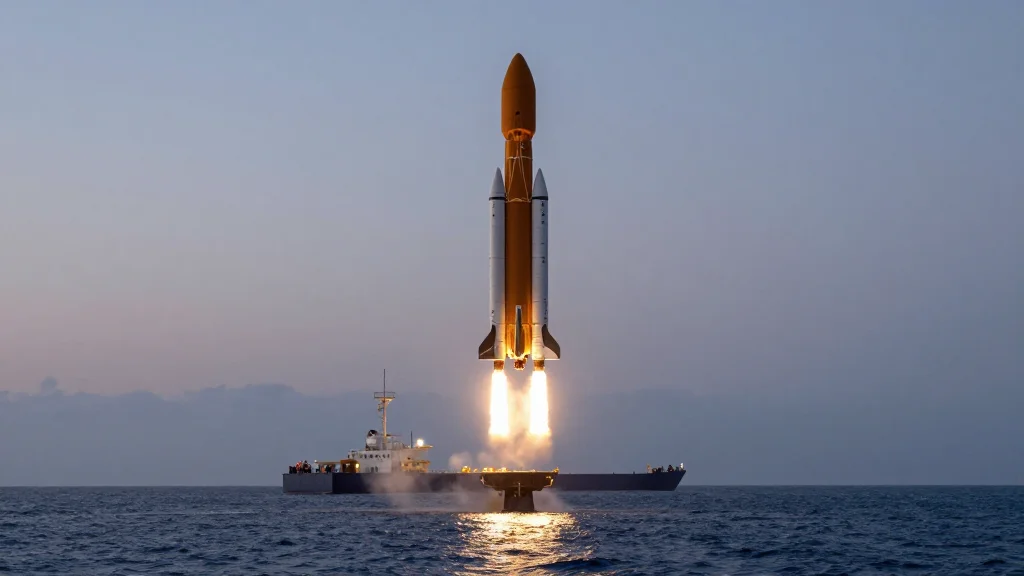
SpaceX Launches 29 More Starlink Satellites
Why It Matters
The added satellites expand Starlink’s coverage and capacity, reinforcing SpaceX’s dominance in low‑Earth‑orbit broadband and driving down launch costs through reusable hardware.
Key Takeaways
- •29 new Starlink satellites raise constellation to over 4,500 units.
- •Falcon 9 first stage completed its 12th flight, 78‑day reuse.
- •SpaceX leads 2026 with 66 launches, ahead of China’s 32.
- •Reusable boosters cut launch costs, accelerating broadband rollout.
- •China schedules multiple launches, intensifying global launch competition.
Pulse Analysis
Starlink’s latest batch of 29 satellites pushes the constellation past the 4,500‑satellite mark, a milestone that translates into higher bandwidth and lower latency for users in underserved regions. As demand for high‑speed internet grows in remote areas, enterprises and governments alike are turning to low‑Earth‑orbit constellations to bridge the digital divide. SpaceX’s aggressive deployment schedule not only expands coverage but also creates economies of scale that can lower subscription prices, making satellite broadband a more viable alternative to terrestrial fiber.
The Falcon 9’s 12th successful first‑stage flight underscores the commercial viability of rapid‑turnaround reusability. A 78‑day refurbishment cycle demonstrates how SpaceX is compressing the cost curve for each launch, a competitive edge that rivals are scrambling to match. With 66 launches slated for 2026, SpaceX outpaces the combined total of China, Russia and Rocket Lab, reinforcing its position as the de‑facto launch service provider for both commercial and government payloads. This dominance pressures other launch firms to accelerate development of reusable technologies or carve niche markets in specialized orbits.
Beyond the immediate business gains, the expanding Starlink network raises strategic considerations. Increased satellite density intensifies concerns over orbital debris and spectrum allocation, prompting regulators to revisit coordination frameworks. Meanwhile, the heightened competition from China’s growing launch cadence signals a multipolar future for space access, potentially driving down prices further and spurring innovation in satellite design, ground infrastructure, and data services. Stakeholders—from telecom operators to policymakers—must monitor these dynamics to capitalize on the evolving low‑Earth‑orbit ecosystem.
SpaceX launches 29 more Starlink satellites
Comments
Want to join the conversation?
Loading comments...