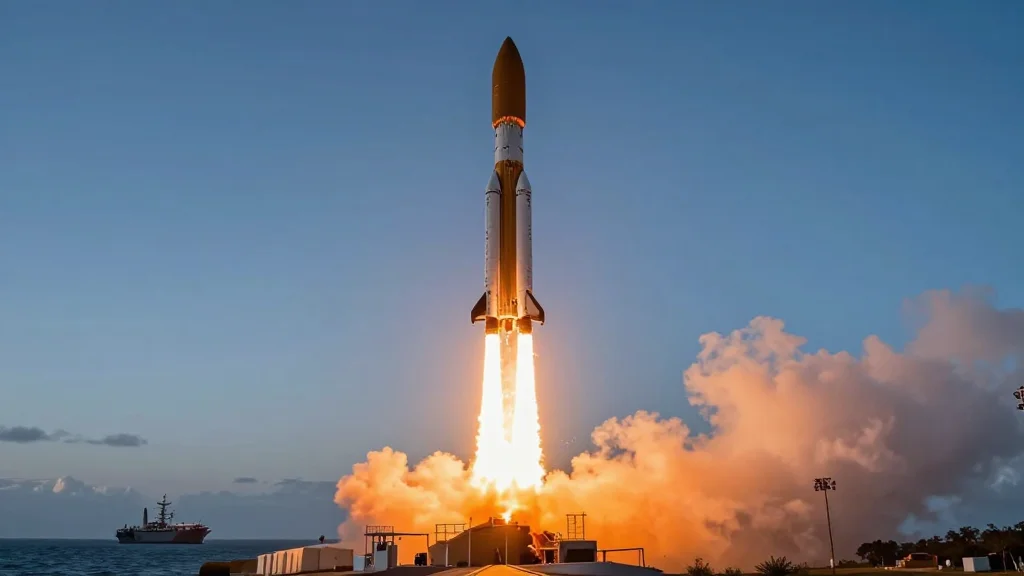
SpaceX Launches 29 Starlink Satellites, Uses 1st Stage for Record 35th Time
Companies Mentioned
Why It Matters
The milestone demonstrates how reusable hardware can dramatically lower launch costs and solidify SpaceX’s dominance in both satellite broadband deployment and the worldwide launch market.
Key Takeaways
- •Falcon 9 booster B1067 completed 35 flights, a reuse record
- •29 Starlink satellites launched, expanding global broadband coverage
- •Booster landed on Atlantic drone ship after 70‑day turnaround
- •SpaceX logged 68 launches in 2026, leading worldwide
Pulse Analysis
SpaceX’s Falcon 9 booster B1067 marked its 35th flight on Tuesday, setting a new reuse benchmark for orbital launch vehicles. The first stage lifted off from Cape Canaveral, delivered 29 Starlink satellites, and then returned to a drone ship in the Atlantic for a successful landing. A 70‑day refurbishment cycle shows how the company is compressing turnaround times, especially for newer boosters that can be ready in under a month. This operational efficiency translates into lower launch costs and reinforces SpaceX’s business model centered on rapid, repeatable access to space.
The payload, a batch of 29 Starlink satellites, pushes the constellation closer to its goal of delivering high‑speed internet to underserved regions worldwide. Each satellite costs a fraction of traditional communications hardware, and the incremental launch cost is further reduced by reusing the booster. Analysts see the expanding network as a strategic asset that could generate recurring revenue streams through subscription services and enterprise contracts. Moreover, the growing coverage strengthens SpaceX’s position in the emerging space‑based broadband market, challenging incumbents such as OneWeb and Amazon’s Project Kuiper.
With 68 launches recorded in 2026, SpaceX outpaces the combined output of China, Russia and Rocket Lab, cementing its lead in the global launch race. The high launch cadence not only supports Starlink but also serves a diverse customer base that includes government, commercial, and scientific missions. Competitors are scrambling to match SpaceX’s reuse cadence, but the company’s extensive fleet of flight‑proven boosters gives it a decisive advantage. Looking ahead, faster refurbishment and continued booster longevity could further widen the gap, shaping the economics of the entire launch industry.
SpaceX launches 29 Starlink satellites, uses 1st stage for record 35th time
Comments
Want to join the conversation?
Loading comments...