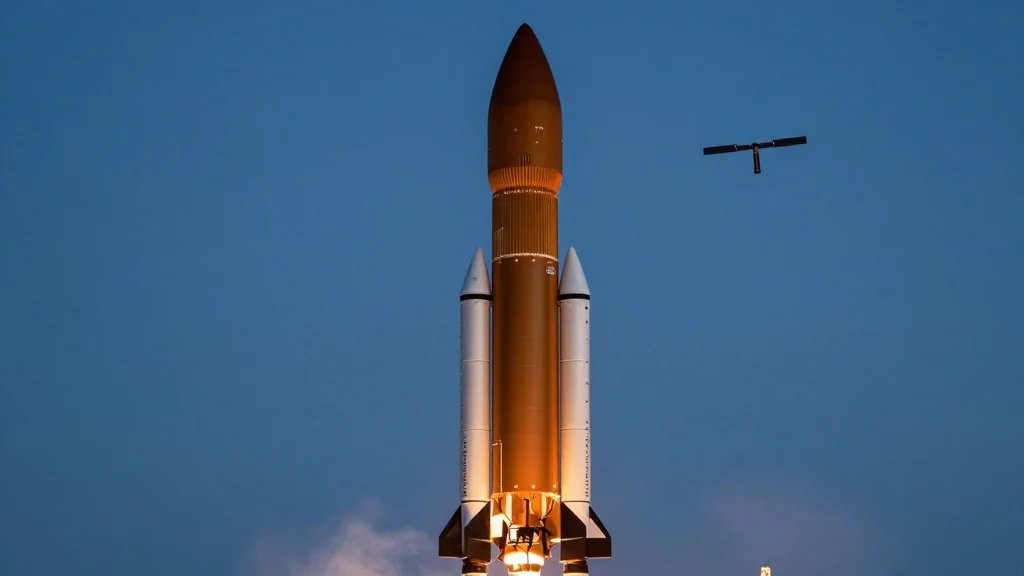
SpaceX Launches Crew‑12 to ISS, Marking 12th Long‑duration Commercial Mission

Why It Matters
The Crew‑12 launch underscores the reliability of the U.S. commercial crew architecture, a cornerstone of NASA’s strategy to free up agency resources for deep‑space exploration. By consistently delivering crews to the ISS, SpaceX validates the reusability model and creates a steady pipeline of data that feeds directly into Artemis mission planning, from life‑support systems to in‑situ resource utilization research. The mission also illustrates the growing interdependence of international partners on the ISS platform. With astronauts from the United States, Europe, and Russia sharing a single orbital laboratory, the flight reinforces diplomatic cooperation even as geopolitical tensions rise elsewhere, ensuring that scientific progress remains a collaborative endeavor.
Key Takeaways
- •Falcon 9 launched Crew‑12 at 5:15 a.m. EST from Cape Canaveral
- •Crew‑12 is NASA’s 12th long‑duration commercial crew mission
- •Four astronauts will spend roughly six months aboard the ISS
- •Mission supports Artemis research on bacteria, plants, and microbe interactions
- •Early departure of Crew‑11 highlighted ISS medical evacuation capability
Pulse Analysis
SpaceX’s latest crewed launch cements its dominance in the commercial low‑Earth‑orbit market, a sector that has transitioned from experimental to operational within six years. The company’s ability to reuse boosters and turn around crewed flights on a near‑monthly cadence reduces launch costs and creates a predictable schedule for NASA’s ISS and Artemis timelines. This predictability is a strategic asset; it allows NASA to allocate more budget to deep‑space hardware rather than repeatedly funding launch services.
However, the success of Crew‑12 also sharpens the competitive pressure on Boeing’s CST‑100 Starliner, which has yet to achieve a crewed flight. Investors and policymakers are watching the Starliner’s progress closely, as a viable second U.S. crew provider would introduce redundancy and potentially drive down prices further. The health‑related early return of Crew‑11 members serves as a reminder that even with commercial reliability, human factors remain a variable that can disrupt mission cadence.
In the broader context, each commercial crew flight feeds data into Artemis’s lunar architecture, especially in life‑support and habitat research. The experiments slated for Crew‑12 could inform the design of closed‑loop environmental control systems needed for sustained lunar stays. As Artemis II approaches, the synergy between ISS operations and lunar objectives will become increasingly visible, positioning SpaceX not just as a launch provider but as an integral partner in humanity’s next step beyond low Earth orbit.
SpaceX launches Crew‑12 to ISS, marking 12th long‑duration commercial mission
Comments
Want to join the conversation?
Loading comments...