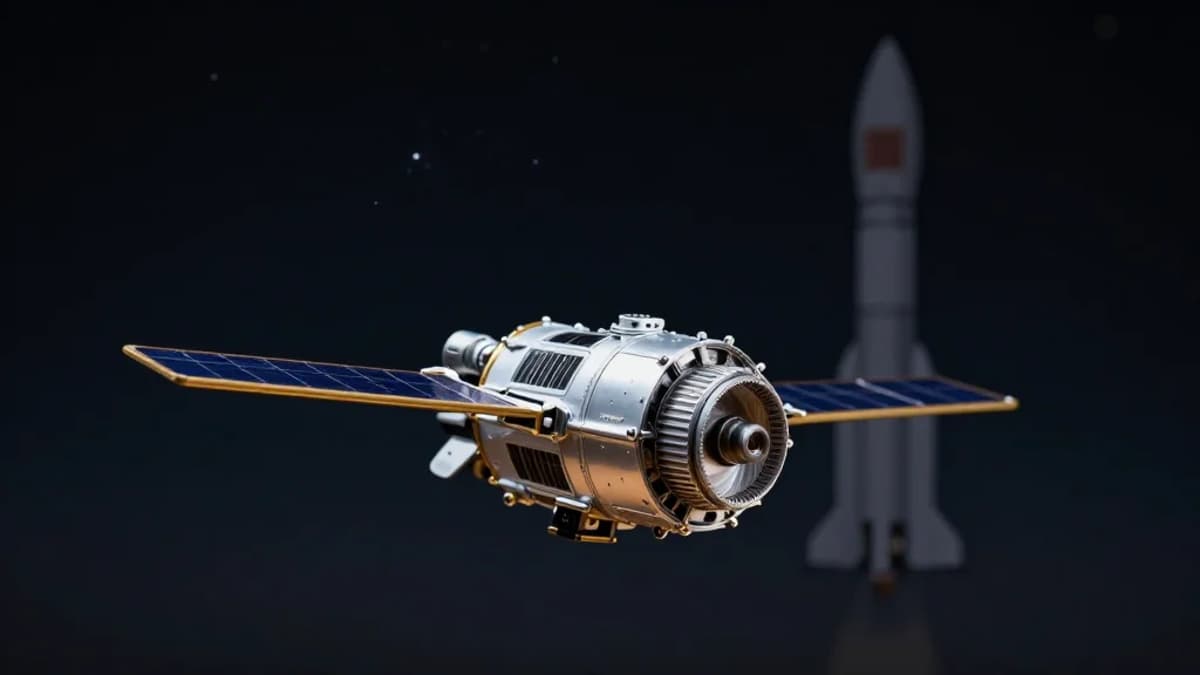
SpaceX Launches NASA’s Pandora Exoplanet Space Telescope
•January 11, 2026
0
Companies Mentioned

Why It Matters
Pandora will deepen understanding of exoplanet atmospheres and stellar behavior, accelerating NASA’s search for habitable worlds. The reusable launch profile lowers costs, enabling more frequent small‑sat missions across scientific and commercial sectors.
Key Takeaways
- •Pandora targets 20 known transiting exoplanet host stars
- •Falcon 9’s first stage marks its fifth successful flight
- •Two fairing halves achieve first and seventh flight milestones
- •Launch includes two additional NASA astronomy cubesats
- •SpaceX remains sole 2026 launch provider with fourth mission
Pulse Analysis
NASA’s Pandora telescope represents a new wave of small‑satellite astronomy, focusing on the 20 stars already known to host transiting exoplanets. By repeatedly observing these systems, Pandora aims to refine measurements of planetary atmospheres, orbital dynamics, and stellar activity, filling gaps left by larger observatories such as Hubble and JWST. The mission also carries two companion cubesats that will test novel detector technologies, creating a miniature constellation that can gather complementary data. This approach leverages the agility and lower cost of cubesats while delivering scientifically valuable results.
The launch was executed on a Falcon 9 from Vandenberg Space Force Base, marking the rocket’s fifth successful first‑stage recovery and a seamless landing on the West Coast pad. Notably, the payload fairing halves demonstrated continued reusability, with one completing its inaugural flight and the other its seventh, underscoring SpaceX’s push toward near‑zero‑cost launch hardware. These milestones reduce per‑mission expenses and open the door for more frequent small‑satellite deployments, a trend that aligns with both commercial and governmental demand for rapid, responsive access to orbit.
SpaceX’s exclusive launch activity in 2026 reinforces its dominance in the emerging small‑sat market, where rapid turnaround and cost efficiency are paramount. By delivering Pandora and its companion cubesats on schedule, the company not only supports NASA’s exoplanet science agenda but also showcases a repeatable launch model that competitors must match. As more agencies adopt cubesat constellations for scientific and communications purposes, the demand for reliable, reusable launch services is expected to accelerate, shaping the next decade of low‑Earth‑orbit logistics.
SpaceX launches NASA’s Pandora exoplanet space telescope
0
Comments
Want to join the conversation?
Loading comments...