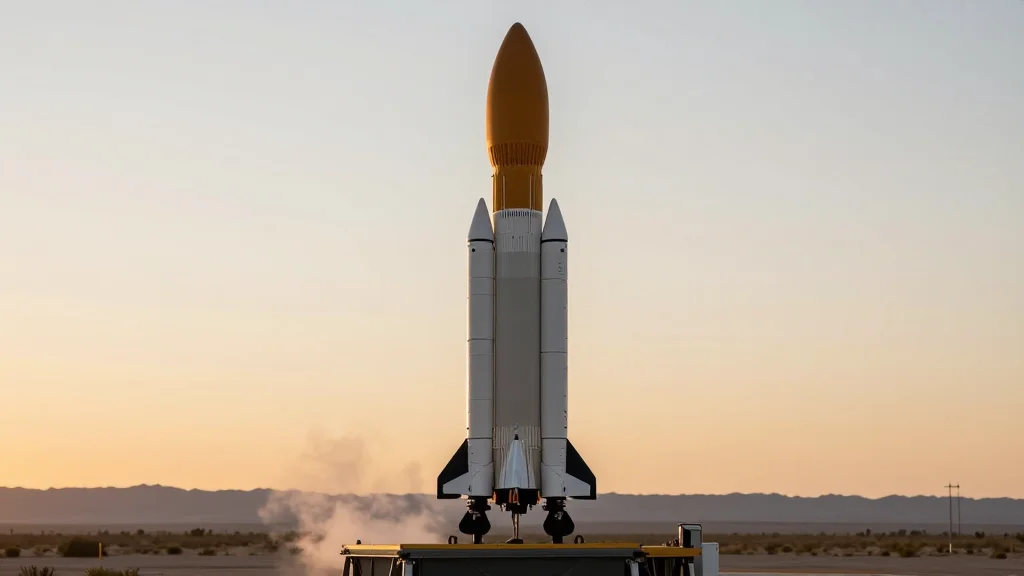
SpaceX Lifts Off 45 Satellites on Nighttime Falcon 9 From Vandenberg

Companies Mentioned
Why It Matters
The Vandenberg launch illustrates how a single launch provider can serve a heterogeneous set of customers, from emerging space nations to commercial data firms, by offering flexible timing and cost efficiencies. For South Korea, the mission restores a critical capability that was stalled by geopolitical upheaval, reinforcing the strategic importance of diversified launch options. On a broader scale, SpaceX’s demonstrated ability to conduct nighttime launches without sacrificing recovery performance could reshape scheduling norms, allowing more launches per day and easing congestion on traditional daylight windows. The event also signals a maturing rideshare ecosystem where small‑satellite constellations can be rapidly expanded without the need for dedicated launch vehicles. As more nations and private firms adopt this model, the competitive pressure on legacy launch providers will intensify, potentially driving further innovation in launch cadence, reusability, and cost structures across the industry.
Key Takeaways
- •SpaceX launched 45 satellites on a Falcon 9 from Vandenberg at 3:00 a.m. EDT on May 3, 2026.
- •South Korea’s CAS500‑2 Earth‑observation satellite was the primary payload, after a delay caused by the 2022 Russia‑Ukraine conflict.
- •The mission marked SpaceX’s first nighttime launch involving a large rideshare manifest.
- •Falcon 9’s first stage landed successfully on the drone ship ‘Of Course I Still Love You’ despite the pre‑dawn profile.
- •The launch reinforces SpaceX’s dominance in the commercial rideshare market and highlights the strategic value of West Coast polar launch sites.
Pulse Analysis
SpaceX’s Vandenberg launch is a textbook case of how operational flexibility can translate into market advantage. By successfully executing a pre‑dawn lift‑off, the company proved that launch windows are no longer a hard constraint for high‑frequency rideshare customers. This flexibility is likely to attract a new class of payloads that require specific orbital phasing or lighting conditions, expanding SpaceX’s addressable market beyond the traditional daylight‑only paradigm.
The inclusion of South Korea’s CAS500‑2 also underscores a geopolitical shift in launch procurement. Nations that previously depended on Russian launch services are now actively seeking Western alternatives, a trend accelerated by the Ukraine war. SpaceX’s ability to absorb these delayed payloads into its rideshare pipeline not only fills capacity but also diversifies its revenue streams, reducing reliance on Starlink alone. This diversification is critical as the broadband constellation matures and its incremental revenue growth slows.
Looking forward, the success of this mission could set a precedent for more frequent nighttime launches, especially from Vandenberg, which is ideally situated for polar and sun‑synchronous orbits. If SpaceX can maintain a high cadence of such launches while preserving first‑stage recovery rates, it will further cement its competitive moat, forcing legacy providers to accelerate their own reusable and flexible launch capabilities. The ripple effect may accelerate the overall pace of satellite constellation deployment, driving down costs for services ranging from global broadband to Earth‑observation analytics.
SpaceX lifts off 45 satellites on nighttime Falcon 9 from Vandenberg
Comments
Want to join the conversation?
Loading comments...