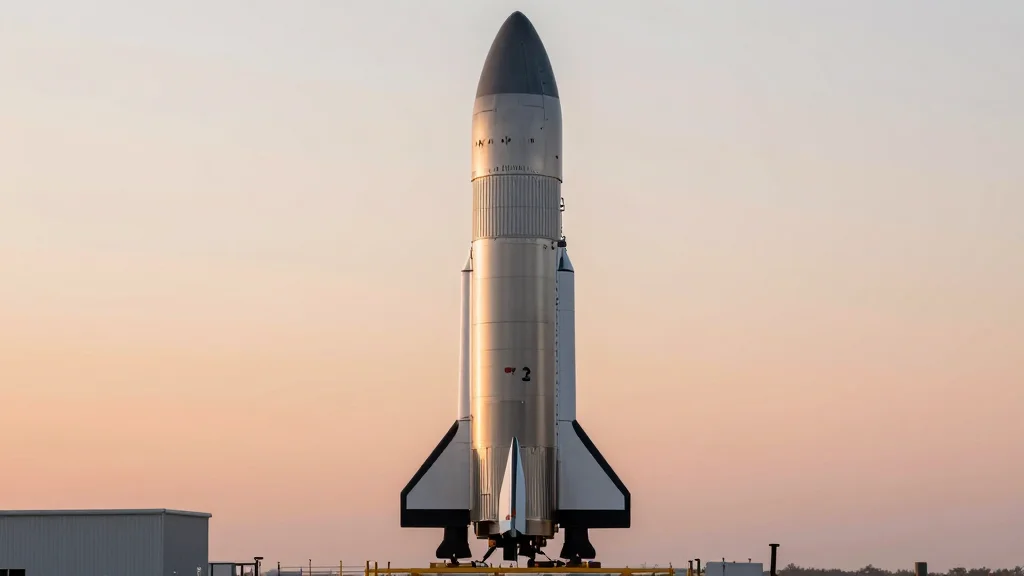
SpaceX Sets May 21 Launch for Starship V3, NASA’s Artemis Lander Upgrade

Companies Mentioned


Why It Matters
Starship V3 represents a quantum leap in launch capability, offering more than 100 t to low‑Earth orbit and the thrust needed for lunar‑lander missions. Its successful debut would cement SpaceX’s role as the primary launch provider for NASA’s Artemis program, potentially sidelining competitors like Blue Origin. The vehicle’s reusable architecture also promises to lower launch costs, accelerating satellite constellations, deep‑space exploration, and commercial ventures such as lunar tourism. Beyond technical performance, the V3 test is a litmus test for SpaceX’s market positioning ahead of a highly anticipated IPO. Investors will gauge whether the company can deliver on its promises of rapid turnaround and high‑payload capacity, factors that could drive a multi‑billion‑dollar valuation. A successful flight would likely boost confidence in the company’s growth trajectory, while a failure could trigger regulatory and financial headwinds at a critical fundraising juncture.
Key Takeaways
- •SpaceX set May 21, 2026 launch for Starship V3 maiden flight (Flight 12)
- •V3 stands 124 m tall, uses 33 upgraded Raptor 3 engines, and can lift >100 t to LEO in reusable mode
- •Launch will be first from Starbase’s new Pad 2, featuring a 90‑minute window at 6:30 p.m. ET
- •NASA counts on Starship V3 for Artemis III lunar‑lander integration, targeting crewed Moon landing by 2028
- •IPO anticipation: V3 success could boost SpaceX valuation ahead of a planned public offering next month
Pulse Analysis
SpaceX’s decision to push the Starship V3 launch to late May reflects both technical confidence and strategic timing. By aligning the maiden flight with the Artemis schedule, SpaceX not only reinforces its partnership with NASA but also creates a narrative of mission‑critical reliability that investors can rally behind. The V3’s upgraded Raptor 3 engines, with higher thrust-to-weight ratios and fewer moving parts, address long‑standing concerns about engine churn and refurbishment costs that have plagued earlier iterations. If the flight validates these improvements, SpaceX could dramatically shorten turnaround times, a key metric for achieving the high launch cadence required for both Starlink expansion and deep‑space missions.
The competitive pressure from Blue Origin adds another layer of urgency. While Blue Origin has paused its tourism flights to focus on the Blue Moon lander, it still lags behind SpaceX’s production velocity and reusability roadmap. A successful V3 flight would widen the performance gap, potentially swaying future NASA contract awards toward SpaceX. Moreover, the launch’s multi‑payload profile—deploying Starlink simulators alongside a refueling test—demonstrates the vehicle’s versatility, a selling point for commercial customers seeking integrated launch‑and‑service solutions.
From a financial perspective, the V3 test is a de‑facto dress rehearsal for the upcoming IPO. Market participants will scrutinize not just the flight’s success but also the operational data that underpins SpaceX’s cost‑per‑kilogram claims. A clean flight could justify a premium valuation, especially as the company positions itself to dominate the emerging lunar‑transport market. Conversely, any anomaly could reignite debates about the viability of fully reusable heavy‑lift rockets and temper investor enthusiasm. In short, the Starship V3 launch is a crucible where engineering ambition, governmental partnership, and capital market expectations converge, setting the tone for the next phase of commercial spaceflight.
SpaceX Sets May 21 Launch for Starship V3, NASA’s Artemis Lander Upgrade
Comments
Want to join the conversation?
Loading comments...