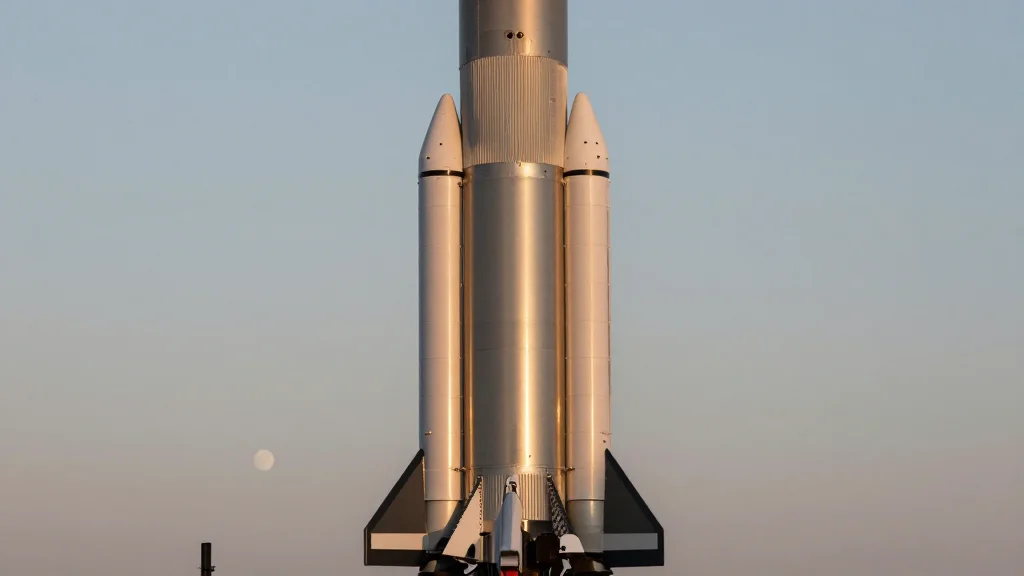
SpaceX Sets Sights on 12th Starship Flight, a Key Milestone for Artemis Lunar Ops

Companies Mentioned
SpaceX

NASA
Why It Matters
The 12th Starship flight is more than a technical checkpoint; it is a litmus test for the commercial model that underpins NASA’s Artemis program. Demonstrating higher payload capacity and reliable reusability could dramatically reduce the cost of delivering supplies and crew to the Moon, making a permanent lunar outpost financially viable. Moreover, the flight will signal to the broader space industry whether private‑sector timelines can align with government mission schedules, a factor that will shape future public‑private collaborations. A successful launch also strengthens the United States’ strategic foothold in cislunar space, where emerging competitors are investing heavily. By proving a robust, reusable lunar transport system, SpaceX helps ensure that American leadership in lunar exploration remains unchallenged, while opening new commercial opportunities for satellite deployment, lunar mining, and tourism.
Key Takeaways
- •SpaceX targets a pre‑June launch for Starship’s 12th test flight.
- •The flight will feature a Version 3 design with more powerful Raptor engines.
- •An elongated airframe will increase payload capacity for lunar missions.
- •Success is critical for NASA’s Artemis III human landing system schedule.
- •Market analysts predict the launch will occur before June, reflecting confidence in SpaceX’s timeline.
Pulse Analysis
SpaceX’s push toward the 12th Starship flight reflects a broader shift in how deep‑space missions are funded and executed. Historically, government agencies bore the full cost and risk of spacecraft development; today, the private sector is shouldering much of the engineering burden while still relying on government contracts for mission assurance. The upgraded hardware on this flight illustrates how SpaceX is leveraging economies of scale—reusing engines, refining manufacturing processes, and iterating designs rapidly—to meet NASA’s stringent performance criteria without inflating costs.
The timing of the launch also reveals the delicate balance between commercial ambition and governmental deadlines. NASA’s Artemis roadmap is tightly choreographed, with each HLS demonstration feeding into the next crewed mission. Any slip in SpaceX’s schedule could force NASA to re‑evaluate its risk profile, potentially opening the door for competitors like Blue Origin or Lockheed Martin to vie for future HLS contracts. This competitive pressure may accelerate innovation but also introduces uncertainty for downstream lunar infrastructure projects that depend on a reliable launch cadence.
Looking ahead, the 12th flight could serve as a de‑risking milestone that unlocks additional funding streams for both SpaceX and its partners. A successful orbital test would likely boost investor confidence, leading to higher valuations and more capital for the next generation of lunar and Martian missions. Conversely, a failure could trigger a reassessment of the commercial HLS model, prompting NASA to diversify its supplier base. In either scenario, the outcome of this test will shape the commercial space landscape for years to come.
SpaceX Sets Sights on 12th Starship Flight, a Key Milestone for Artemis Lunar Ops
Comments
Want to join the conversation?
Loading comments...