Companies Mentioned


Why It Matters
Prioritizing the Moon accelerates commercial space growth and dovetails with U.S. policy, reshaping investment and partnership dynamics in the aerospace sector.
Key Takeaways
- •SpaceX pivots to lunar settlement over Mars
- •Moon launches possible every ten days, Mars every 26 months
- •Artemis program aims US Moon return by 2028
- •SpaceX still targets Mars city within 5‑7 years
- •Lunar lander delays may push Artemis 3 beyond 2027
Pulse Analysis
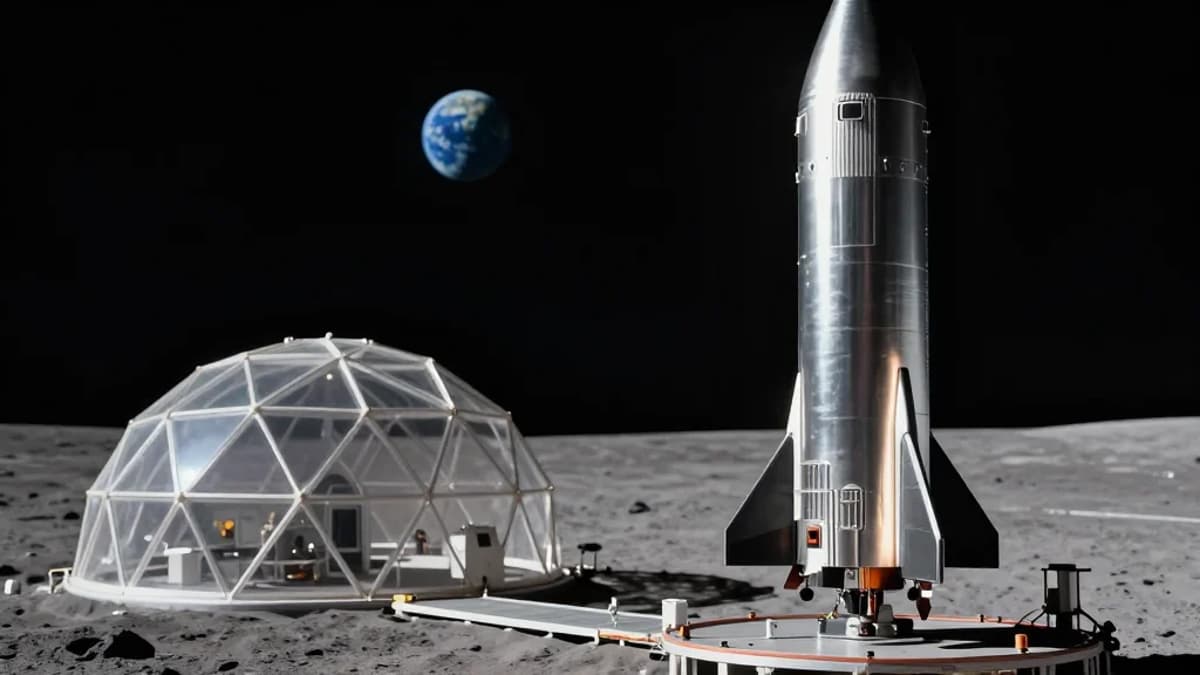
The strategic pivot from Mars to the Moon reflects both technical pragmatism and political alignment. Musk’s emphasis on the Moon’s frequent launch windows—every ten days versus Mars’ 26‑month alignment—offers a clear path to a self‑growing lunar city within a decade. This timeline dovetails with the Trump administration’s Artemis agenda, which seeks a U.S. crewed lunar landing by 2028, positioning SpaceX as a cornerstone contractor for NASA’s next generation of landers and habitats.
From an engineering perspective, the Moon presents fewer propulsion challenges, lower radiation exposure, and the possibility of in‑situ resource utilization, such as extracting water ice for fuel and life support. These advantages translate into faster iteration cycles and lower development costs, allowing SpaceX to test reusable systems and autonomous construction techniques that could later be adapted for Mars. The company’s continued commitment to a Mars city—targeted for the next five to seven years—suggests a dual‑track approach, using lunar successes as a proving ground for deeper‑space ambitions.
Industry analysts see this shift as a catalyst for broader commercial participation in lunar activities. By aligning with U.S. policy, SpaceX is likely to secure additional NASA contracts and attract private investors eager to tap into a near‑term market for lunar infrastructure, tourism, and mining. The move also pressures competitors to accelerate their own lunar roadmaps, potentially reshaping the competitive landscape of space exploration and establishing the Moon as the next hub for human settlement before the eventual push to Mars.
SpaceX shifts focus from Mars to Moon, Musk says
0
Comments
Want to join the conversation?
Loading comments...