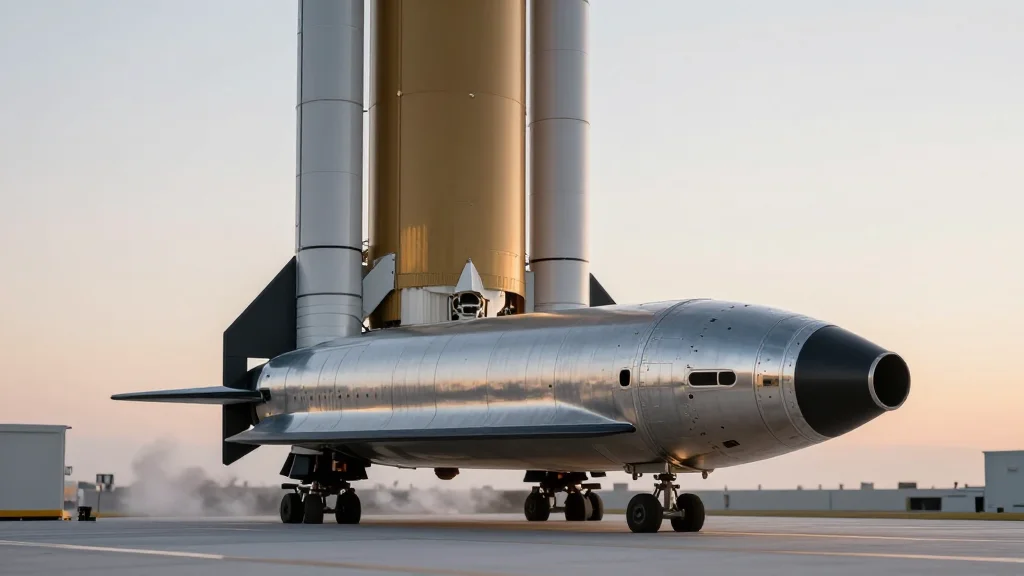
SpaceX Targets May 19 for Starship V3 Debut, Unveils Major Rocket Upgrades

Companies Mentioned
Why It Matters
The Starship V3 launch represents a watershed moment for commercial heavy‑lift capability. By delivering a vehicle that can lift over 100 metric tons and support rapid reuse, SpaceX is positioning itself as the primary launch provider for deep‑space missions, potentially monopolizing the market for lunar and Martian cargo. This shift could accelerate NASA’s Artemis schedule, reduce launch costs for government and private customers, and reshape the economics of space infrastructure, including orbital refueling and satellite constellations. Moreover, the successful integration of Pad 2 and the new propulsion architecture signals that SpaceX is moving from experimental test flights to an operational, repeatable launch system. That transition could trigger a cascade of investments in related technologies—such as in‑space manufacturing, lunar habitats, and Mars transit vehicles—while also prompting regulatory bodies to adapt oversight frameworks for high‑frequency, high‑payload launches.
Key Takeaways
- •May 19, 2026: First integrated flight of Starship Version 3 (Flight 12) from Pad 2, Starbase, Texas
- •V3 features larger Raptor 3 engines, a 408‑foot stack, and redesigned three‑fin Super Heavy booster
- •Payload capacity exceeds 100 metric tons to low‑Earth orbit, enabling in‑space refueling
- •Upgrades aim to support NASA’s Artemis lunar missions and SpaceX’s planned 2026 uncrewed Mars launch
- •Successful test could allow multiple Starship launches per year, reshaping the heavy‑lift market
Pulse Analysis
SpaceX’s decision to push the Starship V3 debut to May 19 reflects a calculated gamble: the company is betting that the extensive redesigns will deliver the reliability needed for NASA’s Artemis contracts and its own Mars timetable. Historically, each Starship iteration has been a learning platform, with early flights ending in explosions. The V3 upgrades—particularly the integration of the hot‑stage ring and the reduction to three larger fins—address the most persistent failure modes observed in previous tests, such as fin‑induced heating and debris generation during hot‑staging. If these changes hold up under flight conditions, SpaceX could finally achieve the rapid‑turnaround, full‑reuse cadence it has promised for years.
From a market perspective, the V3’s projected >100 metric‑ton LEO capacity dwarfs the payloads of legacy heavy‑lift rockets like the Delta IV Heavy and even the upcoming SLS Block 2. This capacity advantage, combined with a projected launch cost in the low‑hundreds of thousands per kilogram, could undercut traditional launch providers and force a consolidation of the commercial launch sector. Satellite operators, lunar lander developers, and emerging in‑space manufacturing firms will likely pivot toward Starship as the default launch vehicle, accelerating the commercialization of cislunar space.
However, the launch also raises regulatory and safety concerns. The FAA’s licensing process has been under pressure to keep pace with SpaceX’s accelerated schedule, and any mishap could trigger stricter oversight that might slow the cadence SpaceX seeks. Additionally, the environmental impact of frequent high‑energy launches from Boca Chica remains a contentious issue among local stakeholders. The outcome of the May 19 flight will therefore not only determine the technical viability of V3 but also set the tone for how quickly the broader industry can move toward a truly multiplanetary future.
SpaceX Targets May 19 for Starship V3 Debut, Unveils Major Rocket Upgrades
Comments
Want to join the conversation?
Loading comments...