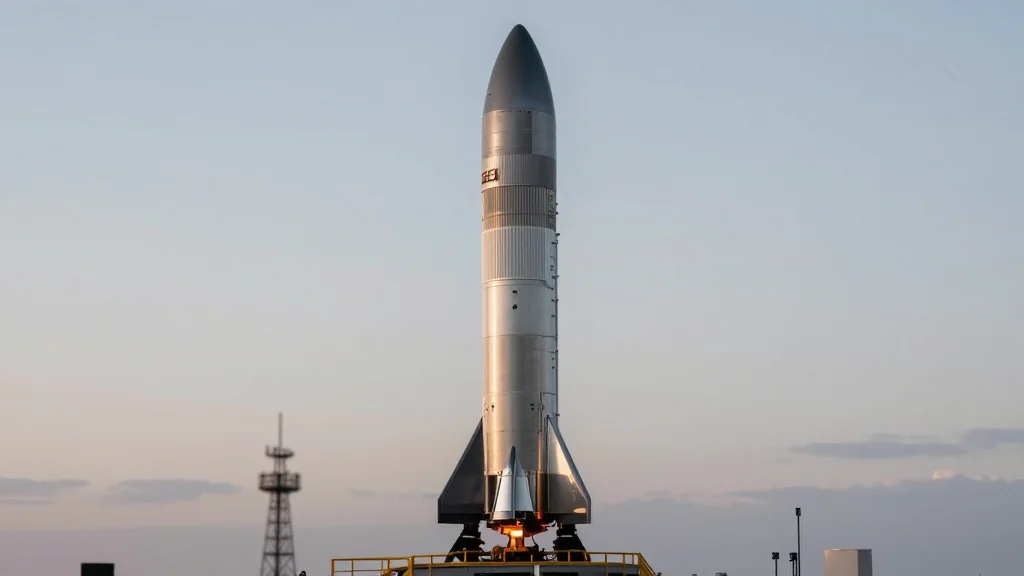
SpaceX Starship V3 Completes Rehearsal Ahead of Possible May 19 Test Flight

Companies Mentioned

Why It Matters
The rehearsal validates the core propulsion and fueling systems of Starship V3, the vehicle that SpaceX envisions as the workhorse for both its commercial satellite business and NASA’s Artemis lunar missions. Demonstrating reliable, high‑capacity launches could dramatically lower the cost of deploying large constellations, AI infrastructure, and deep‑space payloads, reshaping the economics of space access. If the upcoming test flight succeeds, SpaceX will solidify its position as the dominant heavy‑lift provider, potentially crowding out competitors and influencing the allocation of future government contracts. A failure, however, could delay critical milestones for Starlink expansion, AI‑in‑orbit initiatives, and NASA’s lunar landing schedule, opening space for rivals such as Blue Origin and United Launch Alliance to capture market share.
Key Takeaways
- •Starship V3 completed a full launch rehearsal on Monday, filling >5,000 metric tons of propellant.
- •The vehicle stands 124 meters tall and can carry up to 150 metric tons of payload in a reusable configuration.
- •The rehearsal paves the way for the 12th flight, potentially launching around May 19.
- •Success is critical for SpaceX’s Starlink growth, AI‑in‑orbit plans, and NASA’s Artemis III lunar landing contract.
- •Experts warn schedule delays could jeopardize NASA’s 2027 Artemis timeline and open opportunities for competitors.
Pulse Analysis
SpaceX’s rapid progression from propellant loading to a full‑scale flight test underscores a strategic shift: the company is leveraging Starship not just as a launch vehicle but as a platform for an entire ecosystem of services, from broadband to orbital computing. By compressing the rehearsal timeline, SpaceX signals confidence in its manufacturing pipeline and its ability to meet the aggressive cadence demanded by both commercial customers and government agencies.
Historically, heavy‑lift development has been plagued by long lead times and incremental upgrades. Starship’s V3 iteration, however, bundles a suite of improvements—higher thrust engines, refined aerodynamic surfaces, and a more robust thermal protection system—into a single launch. If the May 19 flight validates these upgrades, SpaceX could achieve a cost per kilogram to orbit that undercuts legacy providers, forcing a market recalibration. The ripple effect would be felt across satellite operators, deep‑space mission planners, and even emerging sectors like space‑based AI, which rely on large, affordable payload slots.
Nevertheless, the stakes are high. An abort or failure would not only stall SpaceX’s IPO ambitions but also give NASA a reason to diversify its lunar landing architecture, potentially awarding more contracts to Blue Origin or other emerging players. The outcome of this test will therefore serve as a bellwether for the next decade of space logistics, influencing everything from the pace of lunar exploration to the commercial viability of orbital data centers.
SpaceX Starship V3 completes rehearsal ahead of possible May 19 test flight
Comments
Want to join the conversation?
Loading comments...