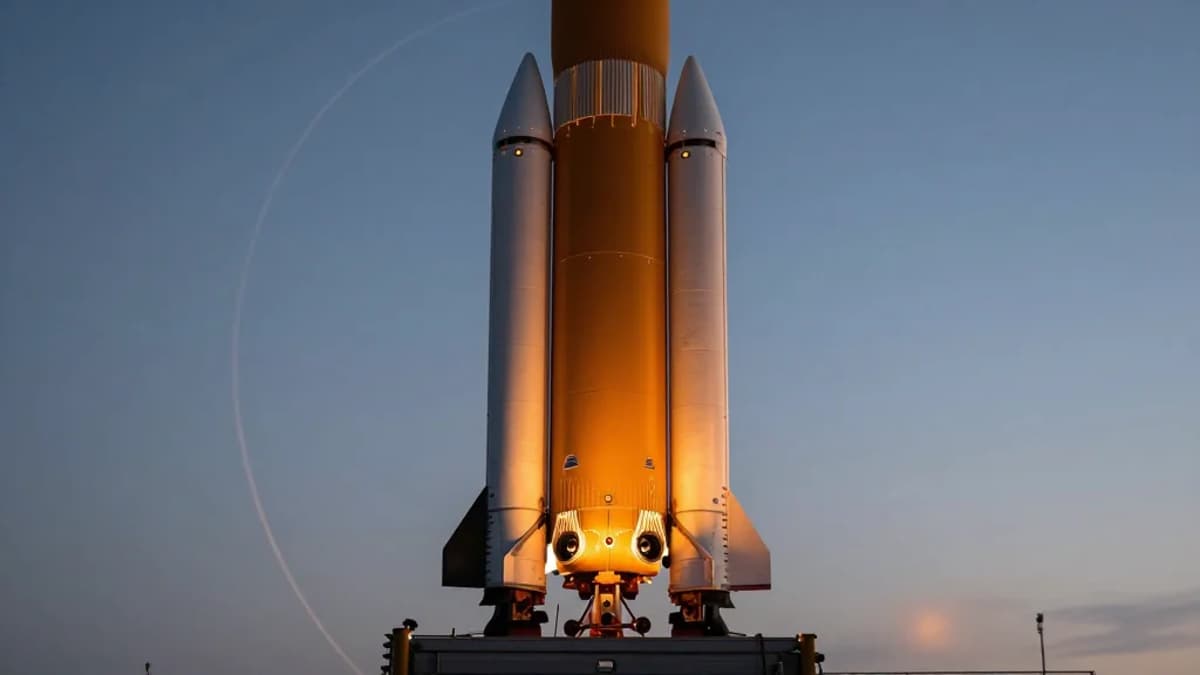
SpaceX Test Fires Its Falcon 9 Rocket Ahead of Midweek Launch of Crew-12 to the Space Station
•February 8, 2026
0
Companies Mentioned

Why It Matters
Successful engine testing clears a critical milestone, keeping NASA’s ISS crew rotation on schedule and showcasing SpaceX’s rapid re‑usability model, which drives down launch costs for commercial and governmental customers.
Key Takeaways
- •Falcon 9 static fire completed successfully, confirming engine performance
- •Crew-12 includes NASA, ESA, Roscosmos astronauts for eight‑month ISS stay
- •Launch scheduled from SLC‑40, second crewed flight from this pad
- •Booster 1101 lands on Landing Zone 40 within minutes
- •Upgraded flight suits debut on Crew‑12, enhancing crew safety
Pulse Analysis
The static fire at Cape Canaveral’s SLC‑40 is more than a routine check; it validates the integrated performance of Falcon 9’s nine Merlin 1D engines under real‑world conditions. By igniting each engine for roughly ten seconds, SpaceX gathers telemetry that confirms thrust levels, fuel flow, and structural integrity, reducing risk for the crewed launch. This test also aligns with NASA’s tight timeline for crew rotations, ensuring that the next long‑duration expedition can depart without delay, a crucial factor for maintaining continuous occupancy of the International Space Station.
Crew‑12 represents a hallmark of international cooperation, featuring two NASA astronauts, an ESA representative and a Roscosmos cosmonaut. Their eight‑month tenure will support scientific experiments, technology demonstrations, and maintenance tasks that keep the orbital laboratory operational. The introduction of upgraded flight suits, modeled after those used on Crew‑11, adds enhanced thermal protection and mobility, reflecting incremental safety improvements that accumulate across NASA’s commercial crew program. Such upgrades not only protect the crew but also set new standards for future missions, including lunar gateway and deep‑space endeavors.
From a commercial perspective, the launch underscores SpaceX’s evolving launch infrastructure. The reuse of booster 1101 and its rapid return to Landing Zone 40 demonstrate the company’s commitment to turnaround efficiency, a key driver of cost reductions. The second crewed flight from SLC‑40 signals confidence in the pad’s refurbishment after previous incidents, expanding launch cadence options for both government and private payloads. As the market increasingly favors reusable launch systems, SpaceX’s demonstrated reliability and operational tempo position it as a preferred provider for upcoming orbital and interplanetary contracts.
SpaceX test fires its Falcon 9 rocket ahead of midweek launch of Crew-12 to the space station
0
Comments
Want to join the conversation?
Loading comments...