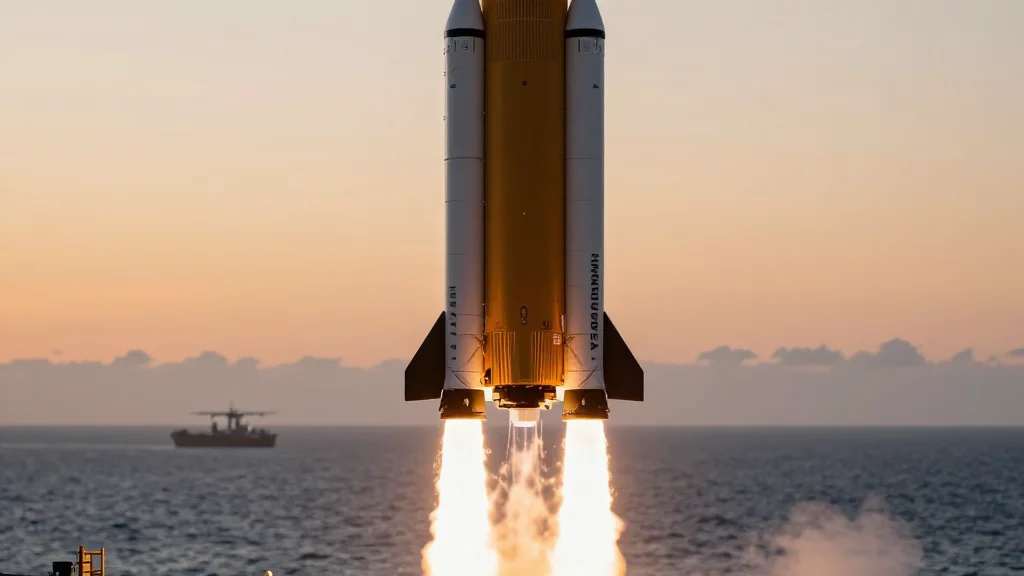
SpaceX to Launch 2 Starshield Satellites During Saturday Night Starlink Mission
Companies Mentioned
Why It Matters
The addition of Starshield satellites signals expanding U.S. government reliance on commercial launch providers for secure communications, while the booster’s repeated drone‑ship recovery underscores SpaceX’s cost‑saving model that could reshape defense satellite procurement.
Key Takeaways
- •SpaceX adds two Starshield payloads to Starlink 17-43 mission
- •B1097 targets 201st drone‑ship landing on ‘Of Course I Still Love You’
- •Starshield satellites likely serve undisclosed U.S. intelligence missions
- •Northrop Grumman supplies sensors for SpaceX’s classified Starshield fleet
- •Starlink 17-43 will deploy 21 commercial broadband satellites alongside Starshield
Pulse Analysis
Starshield represents SpaceX’s answer to the growing demand for low‑Earth‑orbit (LEO) communications that can survive the rigors of defense and intelligence operations. Built on the same bus as the commercial Starlink constellation, the classified variant incorporates hardened electronics, encrypted links and bespoke payloads that can support reconnaissance, secure data relay or even on‑orbit signal intelligence. While SpaceX has not identified the customer, the pattern of launches—first noted in 2024 and repeated in 2025—suggests a sustained contract with the National Reconnaissance Office or another U.S. agency seeking rapid, cost‑effective satellite deployment.
The mission also highlights SpaceX’s relentless push for reusability. Booster B1097, already on its tenth flight, is slated for a drone‑ship touchdown that would mark the 201st landing on ‘Of Course I Still Love You’ and the 620th successful recovery across the fleet. Each successful return trims launch costs by an estimated 30 percent, a margin that is especially attractive for government programs operating under tight budgets. The high flight count further validates the company’s engineering confidence, enabling tighter launch windows for both commercial and classified payloads.
From a market perspective, the integration of Starshield into routine Starlink missions blurs the line between civilian broadband services and strategic space assets. Competitors such as OneWeb and Amazon’s Project Kuiper may soon face a dual‑use pressure, where customers expect both consumer connectivity and secure, government‑grade capabilities. Moreover, the partnership with Northrop Grumman for sensor integration signals a deeper collaboration between traditional defense contractors and commercial launch providers, potentially accelerating the pace of next‑generation LEO constellations for both commercial and national security customers.
SpaceX to launch 2 Starshield satellites during Saturday night Starlink mission
Comments
Want to join the conversation?
Loading comments...