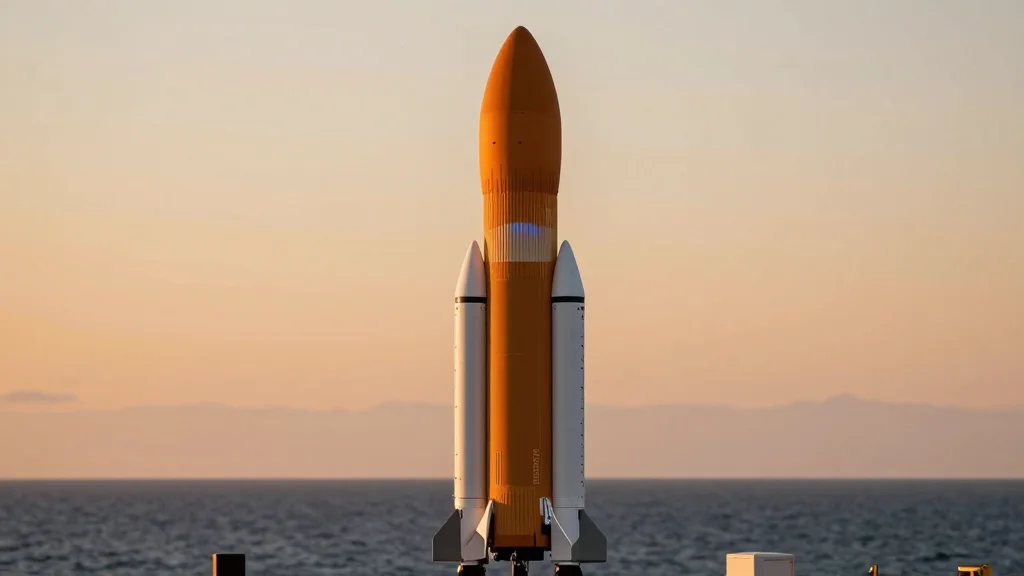
SpaceX to Launch Classified NROL-172 Reconnaissance Payload From Vandenberg on May 11

Companies Mentioned
Why It Matters
The NROL‑172 launch underscores the strategic shift toward commercial launch services for U.S. intelligence satellites, a move that promises faster deployment cycles and reduced costs compared with legacy government‑run launch programs. By entrusting a classified payload to a reused Falcon 9, the NRO signals confidence in the reliability of commercial hardware for mission‑critical assets. If the mission proceeds without incident, it will reinforce the argument that reusability can be extended beyond commercial broadband constellations to the most sensitive national‑security missions. This could accelerate policy changes that further integrate private launch providers into the defense supply chain, potentially reshaping procurement practices across the Department of Defense and related agencies.
Key Takeaways
- •SpaceX's Falcon 9 launch of NROL‑172 scheduled for May 11, 2026 at 3:28 p.m. PT from Vandenberg Space Force Base
- •Mission carries a classified National Reconnaissance Office payload for U.S. intelligence
- •Booster is on its second flight, previously launched a Starlink satellite
- •First stage expected to land on the “Of Course I Still Love You” droneship in the Pacific
- •Backup launch window set for May 12 at 3:15 p.m., with live webcast available on SpaceX’s website and X
Pulse Analysis
SpaceX’s handling of NROL‑172 marks a watershed in the commercialization of national‑security space. Historically, the Department of Defense and its intelligence arms relied almost exclusively on United Launch Alliance’s Atlas V and Delta IV rockets, which, while reliable, carried high per‑launch costs and longer turnaround times. SpaceX’s entry has forced a price‑competition dynamic that is now evident in the NRO’s procurement strategy, where cost‑per‑kilogram and launch cadence have become decisive factors.
The reuse of a booster for a classified payload also serves as a proof point for the broader defense community. Reusability has traditionally been viewed with caution for missions where failure is not an option. By successfully integrating a second‑flight booster into a high‑value reconnaissance launch, SpaceX demonstrates that the risk calculus can be managed, potentially opening the door for even more ambitious reuse scenarios, such as multi‑flight missions for critical payloads. This could drive a cascade of investment in refurbishment processes, telemetry analytics, and certification pathways tailored to defense customers.
Looking forward, the NROL‑172 launch may catalyze policy adjustments that streamline the approval process for commercial launch providers handling classified missions. As the NRO continues to schedule additional launches with SpaceX, the agency may push for standardized interfaces and rapid integration pipelines, further eroding the traditional barriers between government and commercial space sectors. Competitors like ULA are already accelerating their own reusable vehicle development to stay relevant, suggesting that the next few years will see a more competitive, innovation‑driven market for national‑security space access.
SpaceX to launch classified NROL-172 reconnaissance payload from Vandenberg on May 11
Comments
Want to join the conversation?
Loading comments...