SpaceX Wins $57 Million U.S. Military Contract for Satellite Crosslink Demo
Companies Mentioned
Why It Matters
The demo directly supports U.S. warfighting capability by enabling rapid, on‑orbit data exchange for missile‑defense interceptors, and it opens a sizable defense market for space‑qualified communications hardware.
Key Takeaways
- •SpaceX awarded $57 M for Link‑182 satellite‑to‑satellite demo
- •Demonstration must be completed by April 2027 for MILNET
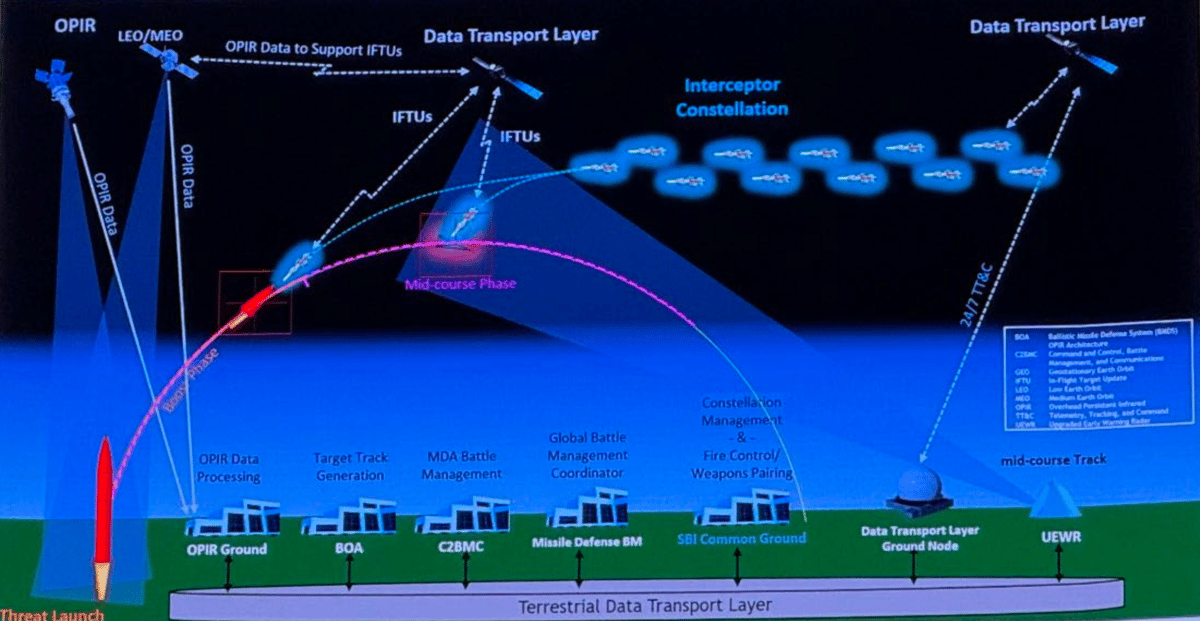
- •Link‑182 will enable Golden Dome interceptors to bypass ground stations
- •DoD seeks multiple suppliers for future Link‑182 radio production
- •L‑ and S‑band radios required for compact space‑based communications
Pulse Analysis
The U.S. Space Force’s acquisition arm, Space Systems Command, has earmarked $57 million for SpaceX to prove the Link‑182 radio‑frequency data‑link standard in a satellite‑to‑satellite demonstration. This effort is central to MILNET, a planned low‑Earth‑orbit constellation of Starshield communications satellites that will form the backbone of the Pentagon’s emerging Golden Dome missile‑defense architecture. By validating cross‑link capabilities in orbit, the program aims to reduce latency and reliance on terrestrial ground stations, a critical advantage for time‑sensitive intercept missions.
Link‑182 operates in the L‑ and S‑band spectrum, offering a compact, resilient link suitable for the tight size, weight, and power constraints of space‑based interceptors. The Golden Dome concept envisions a network of satellites capable of detecting a launch, cueing an interceptor, and transmitting kill‑chain data entirely in space. Successful demonstration of these radios could accelerate the deployment of a fully autonomous, space‑centric missile‑defense layer, reshaping how the United States counters ballistic threats.
Beyond the technical milestone, the contract signals a strategic shift in defense procurement. While SpaceX secured the initial demo, the Department of Defense has explicitly stated it will not rely on a single supplier, opening the market to additional aerospace firms. This multi‑vendor strategy is likely to spur competition in the production of hardened, space‑qualified communications hardware, driving innovation and potentially lowering costs for future large‑scale acquisitions. Industry observers will watch closely as the demonstration progresses, anticipating how it may influence broader space‑security initiatives and commercial satellite communications standards.
SpaceX wins $57 million U.S. military contract for satellite crosslink demo
Comments
Want to join the conversation?
Loading comments...