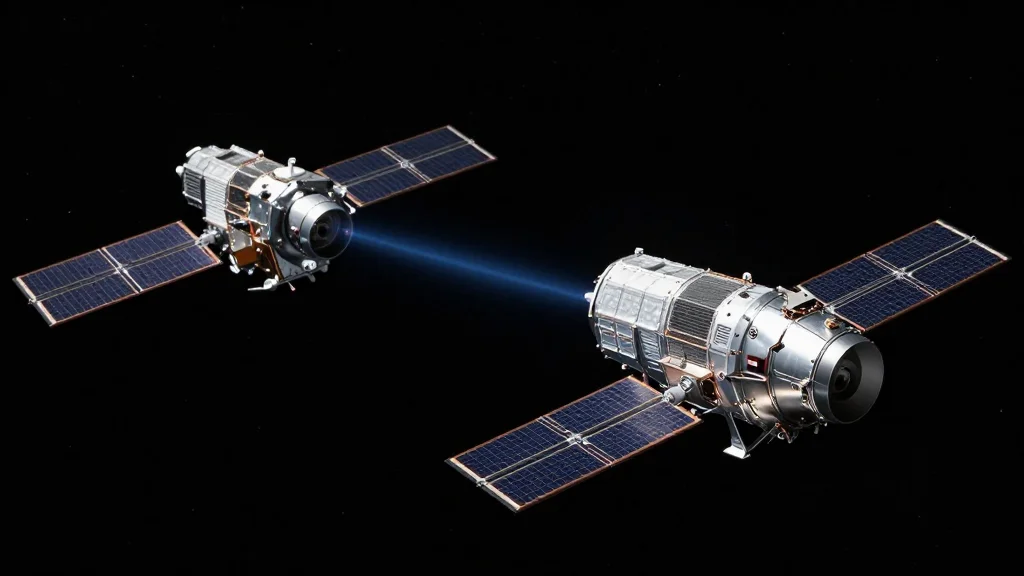
SpaceX Wins $57 Million U.S. Military Contract to Demo Satellite Crosslink Tech

Why It Matters
The contract marks a pivotal moment in the integration of commercial satellite services with U.S. defense objectives. By proving that low‑cost, mass‑produced satellites can host secure, high‑bandwidth crosslinks, the Pentagon reduces its reliance on legacy, expensive government‑built platforms. This could accelerate the deployment of a resilient, space‑based missile‑defense network capable of operating independently of terrestrial infrastructure, a critical advantage in contested environments. Moreover, the procurement approach—seeking multiple suppliers for Link‑182 radios—signals a broader shift toward competitive, market‑driven acquisition strategies in the defense space sector. If successful, the program could unlock billions of dollars in future contracts, incentivizing innovation among both established aerospace firms and emerging RF technology startups, and reshaping the commercial‑defense ecosystem.
Key Takeaways
- •SpaceX awarded $57 million by Space Systems Command for a Link‑182 satellite crosslink demo.
- •Demonstration to be completed by April 2027, supporting the Golden Dome missile‑defense concept.
- •Link‑182 radios will be integrated into Starshield LEO satellites to form the MILNET data‑relay network.
- •SSC plans to procure Link‑182 radios from multiple vendors, preventing reliance on a single supplier.
- •Successful demo could lead to a multi‑billion‑dollar follow‑on contract for a full MILNET constellation.
Pulse Analysis
SpaceX’s $57 million contract is less about the dollar amount and more about the strategic foothold it gives the company in the defense communications arena. Historically, the Department of Defense has built its own satellite constellations, a process that is costly and time‑consuming. By tapping SpaceX’s existing Starshield infrastructure, the Space Force can shortcut development cycles and leverage commercial economies of scale. This partnership mirrors earlier collaborations, such as the use of SpaceX’s Falcon 9 for national‑security launches, but it goes a step further by embedding defense‑grade payloads directly into a commercial constellation.
The decision to keep the supply chain open to multiple vendors is a calculated risk mitigation strategy. While SpaceX enjoys a first‑mover advantage, the defense acquisition community is wary of single‑point failures—both technical and geopolitical. By encouraging competition, SSC not only safeguards against supply disruptions but also drives down costs and spurs innovation in RF hardware. Companies that can deliver compact, hardened Link‑182 radios at scale will likely see a surge in demand, potentially reshaping the RF market.
Looking forward, the success of the Link‑182 demo could set a precedent for future joint ventures where commercial satellite operators provide the platform while the government supplies mission‑specific payloads. This hybrid model could become the default for a range of defense applications, from ISR to secure communications, accelerating the pace at which the U.S. modernizes its space capabilities. However, the program’s ultimate impact will hinge on technical performance, cybersecurity resilience, and the ability of the procurement office to balance commercial agility with stringent defense standards.
SpaceX Wins $57 Million U.S. Military Contract to Demo Satellite Crosslink Tech
Comments
Want to join the conversation?
Loading comments...