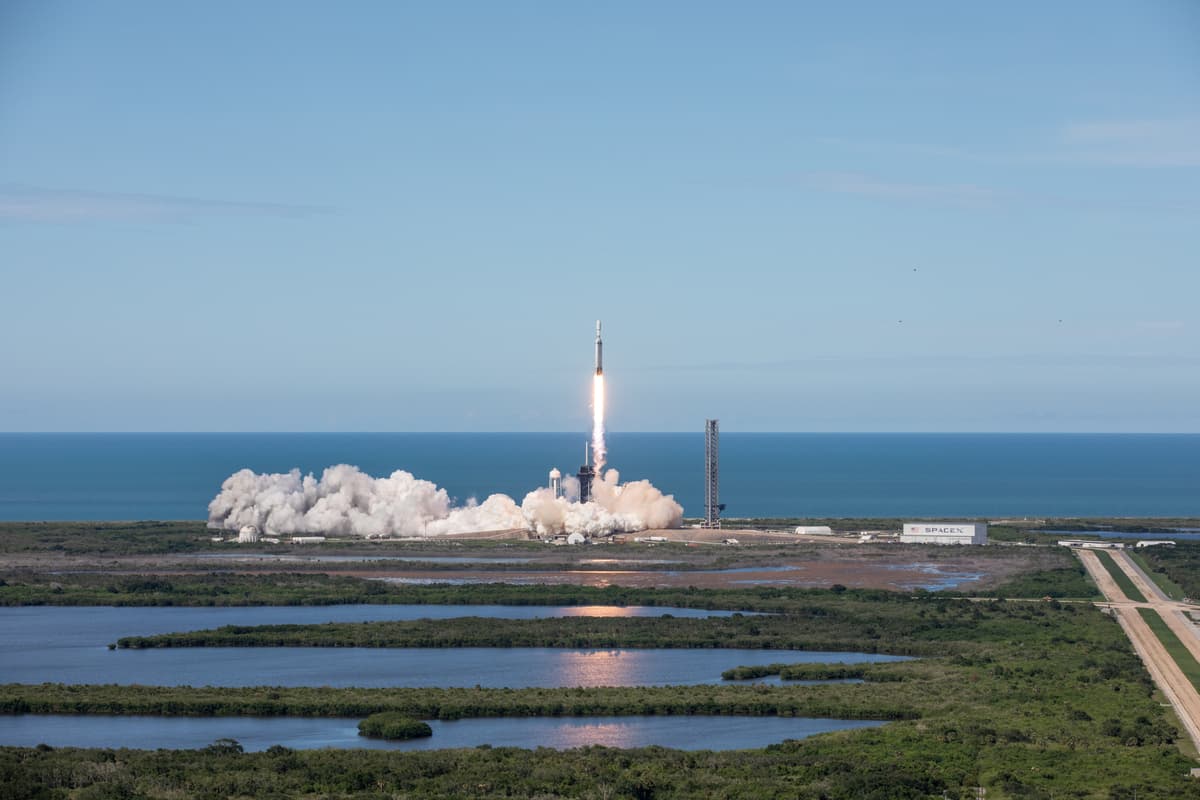
SpaceX Won A Mars Mission That Might Get Cancelled
Why It Matters
The rover’s fate determines the pace of U.S.–European Mars collaboration and influences SpaceX’s access to high‑energy deep‑space contracts, while budget cuts could reshape planetary science funding.
Key Takeaways
- •NASA selected Falcon Heavy for ESA's Rosalind Franklin rover launch
- •Mission valued at $175.7 million, targeted for late 2028
- •FY2027 budget proposes cutting NASA’s Mars participation, risking cancellation
- •Falcon Heavy has not launched since 2024, awaiting deep‑space jobs
- •Previous ExoMars deals collapsed due to budget cuts and geopolitics
Pulse Analysis
NASA’s recent decision to award SpaceX’s Falcon Heavy the launch slot for ESA’s Rosalind Franklin rover marks a rare deep‑space contract for the heavy‑lift vehicle. Valued at roughly $175.7 million, the mission targets a late‑2028 departure to deliver the first European rover to Mars, carrying a suite of scientific instruments and a descent‑braking engine supplied by the United States. For SpaceX, the contract offers a high‑energy payload after a two‑year lull in Falcon Heavy flights, reinforcing the rocket’s relevance alongside the rapidly evolving Starship program.
The award, however, hangs in the balance of the White House’s FY 2027 budget request, which proposes slashing NASA’s participation in the Mars effort as part of a broader ~23 percent cut to the agency’s $18.8 billion budget. If enacted, the reduction could force ESA to seek an alternate launcher or postpone the mission entirely. The situation echoes earlier setbacks: the 2012 U.S. withdrawal from ExoMars and the collapse of a Russian partnership after the Ukraine war, underscoring how fiscal and geopolitical shifts can derail long‑term planetary programs.
Beyond the immediate science, the outcome will shape the commercial launch landscape. A confirmed Falcon Heavy Mars slot would diversify SpaceX’s revenue stream beyond the prolific Falcon 9 and the still‑testing Starship, attracting other deep‑space customers such as ESA or private lunar ventures. Conversely, a cancellation could push ESA toward competing providers like United Launch Alliance or Arianespace, intensifying market competition. For the broader Mars community, the rover’s fate influences timelines for sample‑return concepts and international collaboration, making the budget debate a pivotal moment for interplanetary exploration.
SpaceX Won A Mars Mission That Might Get Cancelled
Comments
Want to join the conversation?
Loading comments...