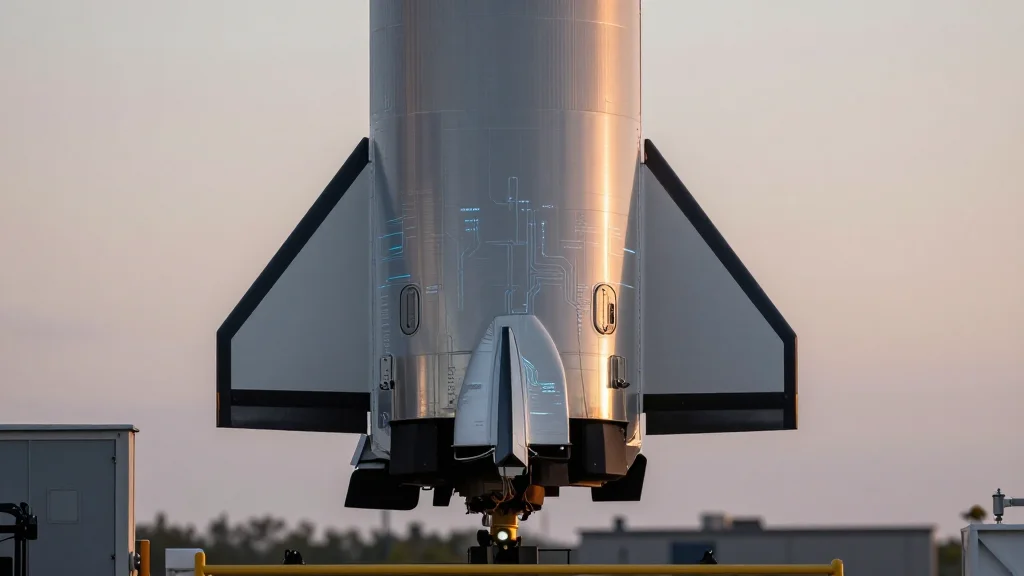
SpaceX’s $60 B Cursor Deal Sparks NASA Artemis Concerns


Why It Matters
The $60 billion Cursor acquisition could reshape how software is developed for space missions, potentially accelerating AI‑driven design, testing, and operations. However, if the deal diverts engineering talent and capital away from Starship, NASA may be forced to rely on other contractors for the Artemis HLS, altering the agency’s partnership dynamics and possibly delaying the return of humans to the Moon. The transaction also signals a broader trend of integrating generative AI into aerospace, raising questions about data security, export controls, and the future of public‑private collaboration in deep‑space exploration. For investors, the deal underscores the high‑stakes gamble of SpaceX’s diversification strategy. A successful integration could unlock new revenue streams from AI services in orbit, while a misstep could erode confidence in the company’s ability to deliver on its core launch and lunar contracts, influencing both the upcoming IPO and the competitive landscape for future lunar and Martian missions.
Key Takeaways
- •SpaceX announced a $60 billion plan to acquire AI‑code startup Cursor, announced in April 2026.
- •The acquisition amount exceeds twice NASA’s annual budget and matches the capital expected from SpaceX’s June IPO.
- •Starship delays threaten the company’s Human Landing System contract for Artemis IV, scheduled for 2028.
- •NASA reopened the $135 million HLS contract to competitors in late 2025, citing schedule concerns.
- •Experts warn the AI pivot could distract from critical lunar mission work and raise regulatory scrutiny.
Pulse Analysis
SpaceX’s foray into generative AI via the Cursor deal reflects a strategic bet that software automation can accelerate spacecraft development and create a new revenue class from AI‑powered orbital data centers. Historically, aerospace firms have been cautious adopters of AI, preferring incremental tools for navigation and fault detection. By attempting to internalize a full‑stack code‑generation platform, SpaceX hopes to compress design cycles for Starship and future lunar habitats, potentially gaining a competitive edge over rivals like Blue Origin and Lockheed Martin.
However, the timing is precarious. The Artemis program is a high‑visibility, politically sensitive partnership that anchors NASA’s lunar roadmap. Any perception that SpaceX is reallocating resources to a speculative AI venture could prompt the agency to diversify its supplier base, as already hinted by the reopened HLS contract. This shift would not only dilute SpaceX’s market share in lunar logistics but also empower traditional defense contractors to re‑enter the lunar arena, reshaping the commercial space ecosystem.
Investors should weigh the upside of a $22.7 trillion AI market claim against the operational risk of delayed Starship milestones. If SpaceX can demonstrate that Cursor’s technology materially improves launch vehicle reliability or reduces development costs, the acquisition could justify its price tag and bolster the IPO narrative. Conversely, a failure to meet Artemis deadlines could trigger penalties, erode NASA’s trust, and depress the company’s valuation. The next few months—particularly the IPO filing and the Artemis III HLS test—will be decisive in determining whether the AI gamble pays off or becomes a costly distraction.
SpaceX’s $60 B Cursor Deal Sparks NASA Artemis Concerns
Comments
Want to join the conversation?
Loading comments...