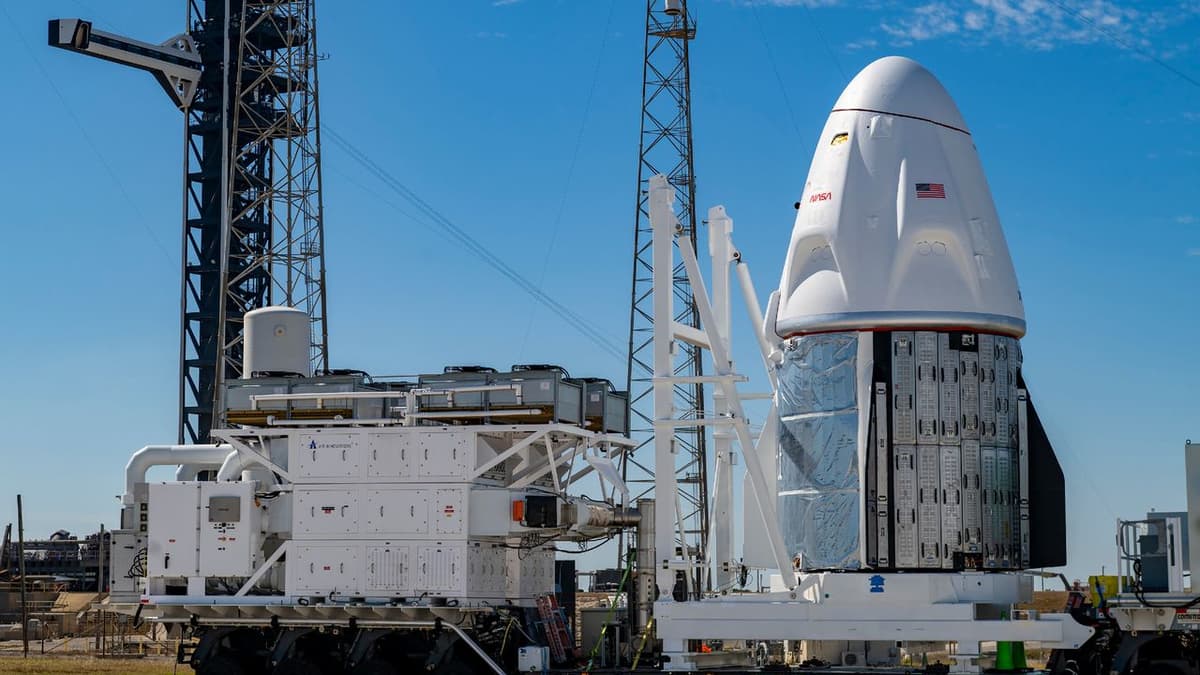
SpaceX's Next Astronaut Launch for NASA Is Officially on for Feb. 11 as FAA Clears Falcon 9 Rocket to Fly Again
•February 6, 2026
0
Companies Mentioned


Why It Matters
The launch reestablishes full ISS staffing, enabling continued scientific research, while the rapid FAA approval underscores improved safety protocols that bolster confidence in commercial crew operations.
Key Takeaways
- •FAA approved Falcon 9 return after Feb 2 upper‑stage failure.
- •Crew‑12 launch scheduled Feb 11, restoring ISS crew to seven.
- •Four astronauts: Meir, Hathaway, Fedyaev, Adenot on Dragon “Freedom”.
- •Issue stemmed from stage‑2 engine not igniting for deorbit burn.
- •Faster investigation shows SpaceX’s improved safety response.
Pulse Analysis
The Federal Aviation Administration’s swift clearance of SpaceX’s Falcon 9 marks a pivotal moment for the commercial crew ecosystem. After a brief grounding triggered by an upper‑stage engine that failed to ignite for a deorbit burn on a Starlink mission, the FAA reviewed SpaceX’s self‑conducted investigation and accepted its corrective actions. This rapid turnaround—just four days—contrasts with earlier incidents that sidelined the vehicle for weeks, signaling heightened confidence in the company’s safety culture and regulatory collaboration.
Crew‑12, slated for a Feb 11 launch, will ferry NASA astronauts Jessica Meir and Jack Hathaway, Roscosmos cosmonaut Andrey Fedyaev, and ESA’s Sophie Adenot to the International Space Station aboard the Dragon capsule “Freedom.” Their arrival restores the ISS to its nominal seven‑person crew after a medical evacuation forced a reduced three‑person occupancy. The mission’s timing is critical: a full complement enables a broader suite of microgravity experiments, Earth‑observation campaigns, and technology demonstrations that drive both scientific discovery and commercial partnerships.
Beyond the immediate flight, the episode underscores a broader industry trend toward faster, data‑driven incident resolution. SpaceX’s identification of the stage‑2 engine ignition fault and implementation of technical and organizational safeguards illustrate a maturing risk‑management framework. As launch cadence accelerates and more private operators vie for government and commercial contracts, such proactive safety measures will be essential to sustain investor confidence and keep the orbital economy on an upward trajectory.
SpaceX's next astronaut launch for NASA is officially on for Feb. 11 as FAA clears Falcon 9 rocket to fly again
0
Comments
Want to join the conversation?
Loading comments...