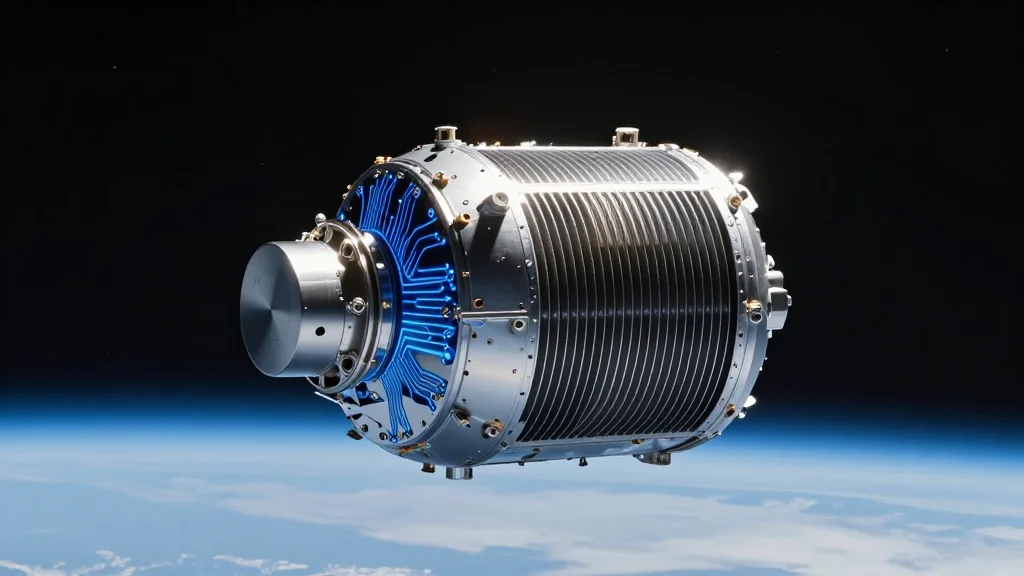
SpaceX’s S‑1 Flags Technical Hurdles for Orbital AI Data‑Center Ambitions

Companies Mentioned
Why It Matters
SpaceX’s orbital AI data‑center ambition represents a potential paradigm shift in how compute power is delivered, moving from terrestrial megacities to low‑Earth orbit. If the technical hurdles are overcome, the model could enable ultra‑low‑latency AI services for defense, autonomous vehicles and global communications, fundamentally altering the economics of high‑performance computing. Conversely, the high‑risk nature of the plan could set a precedent for how space‑based infrastructure projects are financed, influencing investor appetite for future SpaceTech ventures. The S‑1 filing also illustrates how corporate governance is being re‑engineered around visionary founders. By tying Musk’s compensation to milestones that blend financial valuation with planetary colonization, SpaceX is blurring the line between shareholder returns and existential goals, a strategy that could inspire similar structures in other deep‑tech IPOs.
Key Takeaways
- •SpaceX targets a $1.75 trillion valuation and $75 billion raise in its IPO filing.
- •The S‑1 outlines a plan for orbital AI data centers delivering 100 terawatts of compute.
- •CEO Elon Musk’s compensation is linked to a $7.5 trillion valuation and a one‑million‑person Mars colony.
- •CFO Bret Johnsen said retail investors will be a larger part of the IPO than any prior offering.
- •The filing admits major technical, thermal and regulatory challenges that could delay or derail the data‑center rollout.
Pulse Analysis
SpaceX’s S‑1 is a bold gamble that leverages the company’s launch pedigree to sell a vision of AI compute that is as much science‑fiction as it is engineering. Historically, SpaceTech IPOs have been anchored in tangible assets—satellite constellations, launch services, or ground infrastructure. By contrast, SpaceX is selling a future where the satellite itself becomes a data‑center, a proposition that stretches traditional valuation models. The 100 TW target dwarfs the combined capacity of today’s global data‑center market, implying a revenue multiple that would be unprecedented even for tech giants.
The risk‑reward calculus is further complicated by Musk’s compensation structure. Tying personal wealth to a $7.5 trillion market cap and a million‑person Mars colony creates a feedback loop: success fuels stock price, which in turn unlocks massive equity grants, incentivizing aggressive, potentially reckless, capital deployment. Investors must decide whether they are buying into a proven launch business or a speculative AI infrastructure platform.
From a market dynamics perspective, the filing could catalyze a wave of satellite‑based compute projects, prompting incumbents like Amazon’s Kuiper or OneWeb to explore similar offerings. However, the technical challenges—radiation‑hardening, power‑to‑weight ratios, and thermal dissipation—are non‑trivial and may require a decade of R&D before commercial viability. If SpaceX fails to meet its milestones, the fallout could reverberate across the broader SpaceTech financing environment, tightening capital for high‑risk ventures. Conversely, a successful rollout would cement SpaceX’s dominance beyond launch services, positioning it as the backbone of a new orbital AI economy.
SpaceX’s S‑1 Flags Technical Hurdles for Orbital AI Data‑Center Ambitions
Comments
Want to join the conversation?
Loading comments...