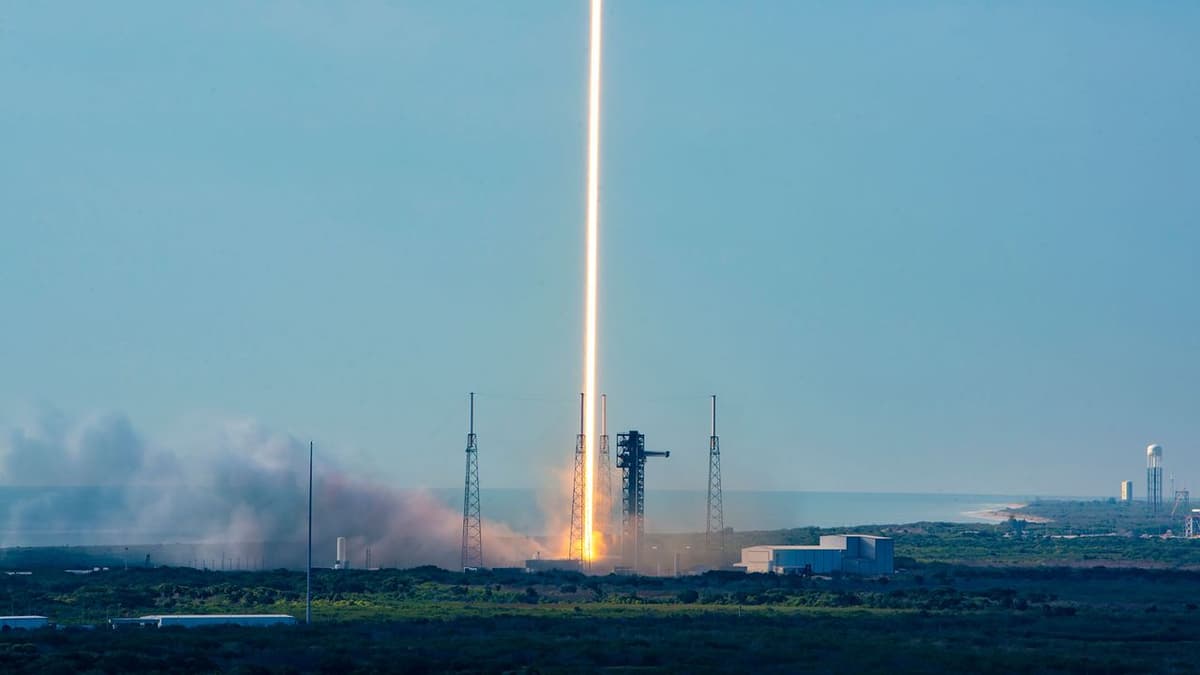
SpaceX's Stock Wasn't the Company's only Launch Today — It Also Put 29 Starlink Satellites in Orbit
Companies Mentioned
Why It Matters
The IPO validates SpaceX’s transition from a private launch provider to a publicly traded tech conglomerate, while the simultaneous satellite deployment underscores its ability to scale broadband services and maintain rapid launch cadence.
Key Takeaways
- •SpaceX IPO valued company at $2.1 trillion, Elon Musk first trillionaire
- •Falcon 9 lifted 29 Starlink satellites, mission 68th of 2026
- •First stage B1080 completed 27th flight, landed on “A Shortfall of Gravitas”
- •Starlink constellation exceeds 10,600 active satellites, expanding global broadband
- •Launch occurred minutes before shares began trading on Nasdaq
Pulse Analysis
SpaceX’s June 12 IPO marks a watershed moment for the commercial space sector, turning a launch‑focused private firm into a trillion‑dollar public entity. The offering opened at $155 per share and closed above $161, instantly catapulting Elon Musk into the exclusive trillionaire club. Investors are betting not only on the company’s launch services but also on its growing revenue streams from satellite broadband, government contracts, and future lunar and Mars ventures. The market’s enthusiastic response highlights the broader appetite for space‑related growth assets.
The launch itself was a textbook example of SpaceX’s operational efficiency. A Falcon 9 rocket lifted off from Space Launch Complex 40 carrying 29 Starlink satellites, the 68th Falcon 9 mission of 2026 and part of the Group 10‑54 batch. The first stage, booster B1080, achieved its 27th successful flight and touched down on the autonomous droneship “A Shortfall of Gravitas,” reinforcing the company’s reusable‑rocket paradigm that drives down launch costs. Adding the new satellites pushes the Starlink constellation past 10,600 active units, extending coverage to remote regions, in‑flight connectivity, and emerging direct‑to‑cell services.
Beyond the headline numbers, the combined IPO and launch signal a strategic push to monetize SpaceX’s satellite network at scale. With global broadband demand accelerating—especially in underserved markets—Starlink’s expanding footprint positions the firm as a key competitor to traditional telecoms and emerging low‑Earth‑orbit constellations. The ability to launch and replenish satellites on a near‑daily cadence gives SpaceX a decisive advantage in maintaining service quality and capturing market share, while also providing a steady revenue stream that can fund ambitious projects like Starship, lunar landers, and Mars colonization plans.
SpaceX's stock wasn't the company's only launch today — It also put 29 Starlink satellites in orbit
Comments
Want to join the conversation?
Loading comments...