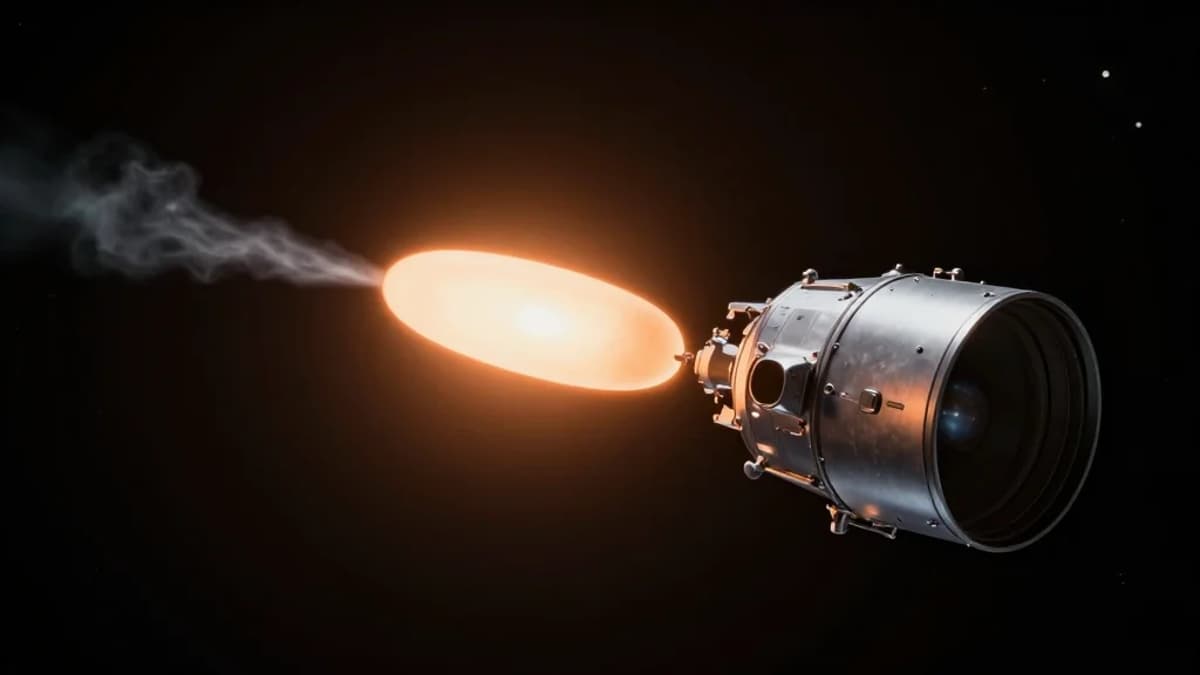
SPHEREx Imaging Reveals Increased Sublimation Activity on 3I/ATLAS
•January 20, 2026
0
Why It Matters
The surge in volatile release demonstrates that interstellar comets can undergo rapid compositional changes when crossing the solar system’s ice line, informing models of their thermal evolution and potential habitability. It also suggests that interstellar and solar‑system comets share similar formation processes, impacting theories of planetary system development.
Key Takeaways
- •Post-perihelion H2O and CO emissions rose 20‑fold
- •CO2 flux increased only 33% after perihelion
- •New C‑H organics detected in comet’s coma
- •Pear‑shaped dust coma points toward Sun
- •Composition mirrors typical solar‑system comets
Pulse Analysis
The SPHEREx mission, launched to map the near‑infrared sky, has become an unexpected workhorse for cometary science. By capturing 0.75‑5.0 µm spectra of 3I/ATLAS before and after its October 2025 perihelion, the observatory provided a rare, continuous view of an interstellar object’s volatile inventory. This data set fills a gap left by ground‑based telescopes, which often miss the rapid evolution of such fast‑moving bodies, and it underscores the value of space‑based spectrophotometry for tracking compositional shifts in real time.
The post‑perihelion measurements reveal a twenty‑fold surge in water and carbon monoxide outgassing, while carbon dioxide increased modestly, suggesting that a previously dormant ice layer was heated past its sublimation threshold. The emergence of C‑H organics such as methanol and ethane indicates that more complex molecules are released once the bulk matrix of the nucleus vaporizes. These findings illustrate how crossing the solar system’s ice line can activate multiple volatile reservoirs, a process that mirrors behavior observed in long‑period comets originating from the Oort cloud.
Beyond academic interest, the results have practical implications for future missions targeting interstellar objects. Understanding the timing and magnitude of volatile release informs spacecraft design, thermal shielding, and sampling strategies. Moreover, the compositional parity between 3I/ATLAS and native comets strengthens the hypothesis that planet‑forming disks across the galaxy share common chemical pathways, a key consideration for astrobiology and exoplanet research. Continued SPHEREx surveys, slated for early 2026, promise to refine these insights and expand the catalog of interstellar visitors.
SPHEREx imaging reveals increased sublimation activity on 3I/ATLAS
0
Comments
Want to join the conversation?
Loading comments...