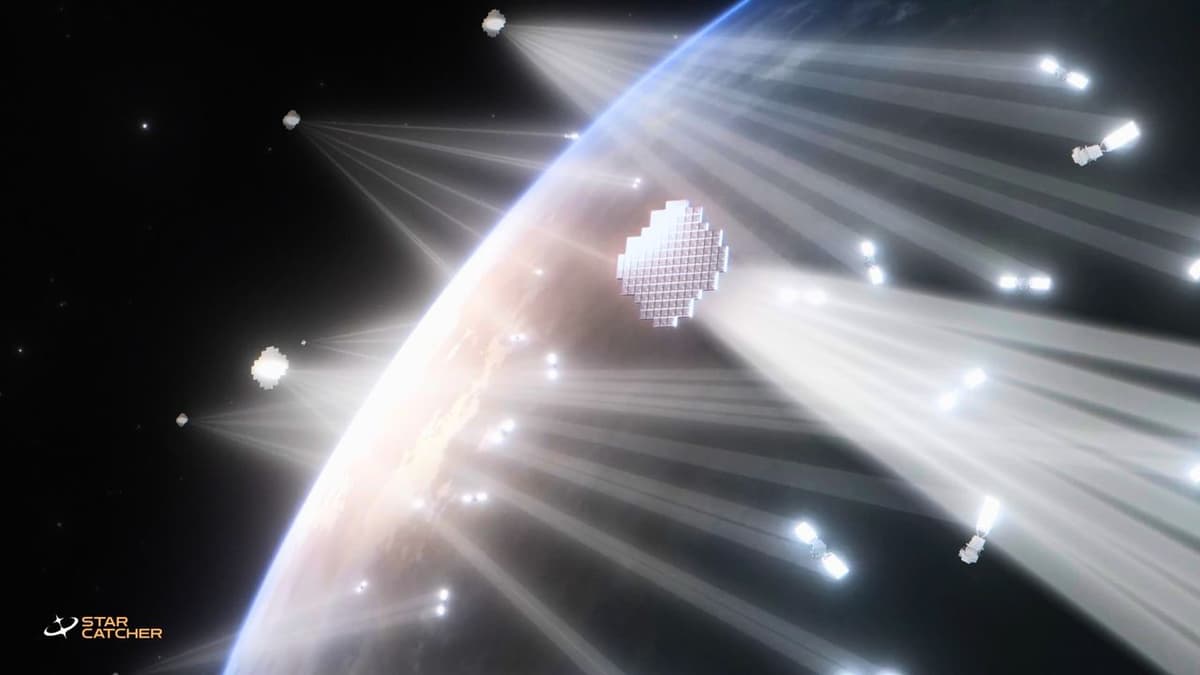
Star Catcher Just Raised $65 Million to Build the World's First Power Grid in Space — with Lasers
Companies Mentioned
Why It Matters
Space‑based laser power could eliminate the energy bottleneck that limits satellite uptime, unlocking new capabilities for defense, communications and emerging on‑orbit data centers. The technology also positions the U.S. to support lunar infrastructure, a critical component of Artemis and future deep‑space missions.
Key Takeaways
- •Star Catcher raised $65M Series A, total funding $88M
- •Power nodes will laser‑beam solar energy to satellites without retrofits
- •Tests achieved 1.1 kW beaming, surpassing DARPA’s 800 W record
- •Seven PPAs signed; services target national‑security and commercial missions
Pulse Analysis
The concept of a space‑based power grid has moved from science‑fiction to a venture‑backed reality thanks to Star Catcher Industries. By mounting solar arrays on dedicated “power node” satellites and using high‑precision lasers to transmit energy, the company sidesteps the need for costly retrofits on existing spacecraft. This approach promises up to ten times more power during eclipse periods, effectively turning the orbital environment from a power‑constrained arena into a near‑unlimited energy source. The technology dovetails with broader trends in satellite constellations, where operators seek to maximize payload performance without adding mass or complexity.
For commercial and defense customers, on‑demand laser power could be a game‑changer. Persistent surveillance platforms, secure communications satellites, and future on‑orbit AI data centers all suffer from limited battery life and solar exposure. By purchasing power‑as‑a‑service, operators can extend mission lifespans, increase maneuverability, and reduce the need for frequent orbital replacements. The seven power‑purchase agreements already signed illustrate early market traction, while the involvement of Cerberus Ventures and former Space Force leader Jay Raymond signals confidence in the strategic value of resilient orbital energy.
Technical hurdles remain, including beam safety, precise targeting, and regulatory approvals for high‑power laser transmissions. Star Catcher’s roadmap—demonstrations in 2025, an inaugural on‑orbit test later this year, and scaling services by decade’s end—shows a disciplined path to de‑risk the technology. As NASA’s Artemis program explores lunar power solutions, the company’s ability to complement nuclear generators with laser‑beamed energy could open new revenue streams beyond Earth orbit. With $65 million fresh capital, Star Catcher is positioned to lead the nascent space‑energy market, potentially reshaping how satellites and future lunar assets are powered.
Star Catcher just raised $65 million to build the world's first power grid in space — with lasers
Comments
Want to join the conversation?
Loading comments...