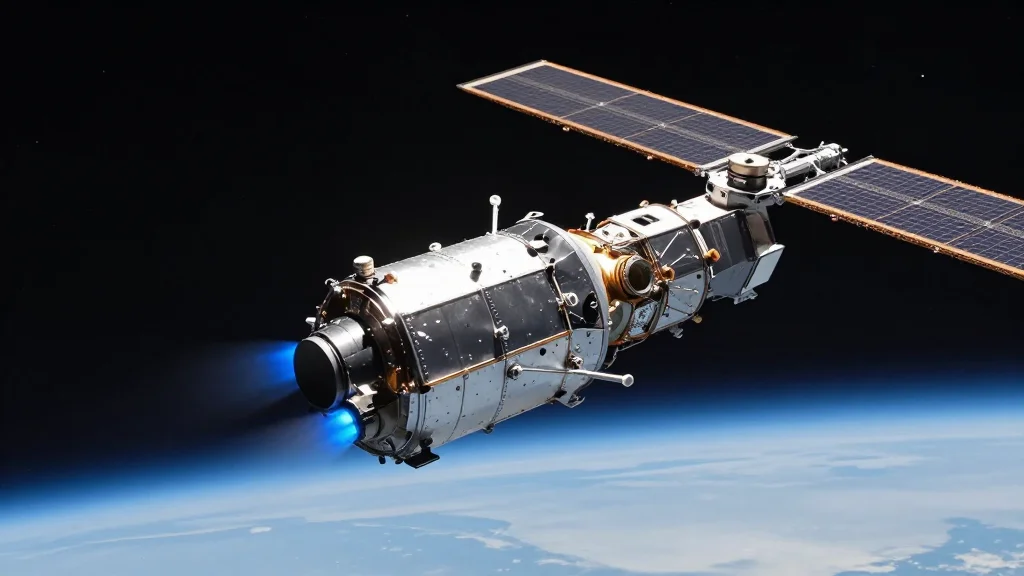
Starfish Finally Gets a Docking Target for Its Otter Pup 2 Orbital Tug Demo
Companies Mentioned
Why It Matters
Demonstrating a low‑cost, electrostatic docking solution could unlock scalable on‑orbit servicing, reducing launch expenses for satellite operators. The partnership also signals growing collaboration in a market traditionally driven by competition.
Key Takeaways
- •Otter Pup 2 targets Gilmour Space’s ElaraSat for docking demo
- •Electrostatic docking mechanism aims to enable low‑cost satellite attachment
- •Cooperation shows market demand for orbital tug services across competitors
- •Prior test achieved 4,100‑ft autonomous proximity maneuver
- •Successful demo could accelerate commercial on‑orbit servicing industry
Pulse Analysis
The orbital‑tug sector is entering a pivotal phase as satellite operators seek affordable ways to extend mission life and enhance flexibility. Starfish Space’s Otter Pup 2, launched in 2025, represents a new class of small, autonomous tugs designed to rendezvous with client payloads and provide propulsion or repositioning services. After an initial partnership with D‑Orbit collapsed, Starfish pivoted to Australian startup Gilmour Space, securing ElaraSat as a live docking target. This agile response underscores the importance of adaptable business models in a rapidly evolving space economy.
Technically, the demo hinges on an electrostatic docking mechanism that replaces traditional mechanical latches with controlled charge attraction, promising lighter hardware and reduced wear. Otter Pup 2’s onboard cameras will first capture high‑resolution imagery from a 10‑kilometer distance, then guide the tug into a kilometer‑scale approach before initiating the electrostatic capture. The system builds on a 2025 Impulse Space mission where Starfish’s software enabled a Mira tug to maneuver within 4,100 feet of another satellite, proving the precision required for close‑proximity operations.
Industry observers view this collaboration as a bellwether for on‑orbit servicing. By demonstrating a cost‑effective docking method, Starfish could attract a broad customer base, from small‑sat constellations to larger commercial platforms. Moreover, the willingness of competitors like Impulse and Gilmour to share hardware and flight opportunities suggests a shift toward ecosystem‑level cooperation, accelerating technology maturation and lowering entry barriers for future players. Successful validation may catalyze a wave of commercial missions focused on refueling, repair, and orbital debris mitigation.
Starfish finally gets a docking target for its Otter Pup 2 orbital tug demo
Comments
Want to join the conversation?
Loading comments...