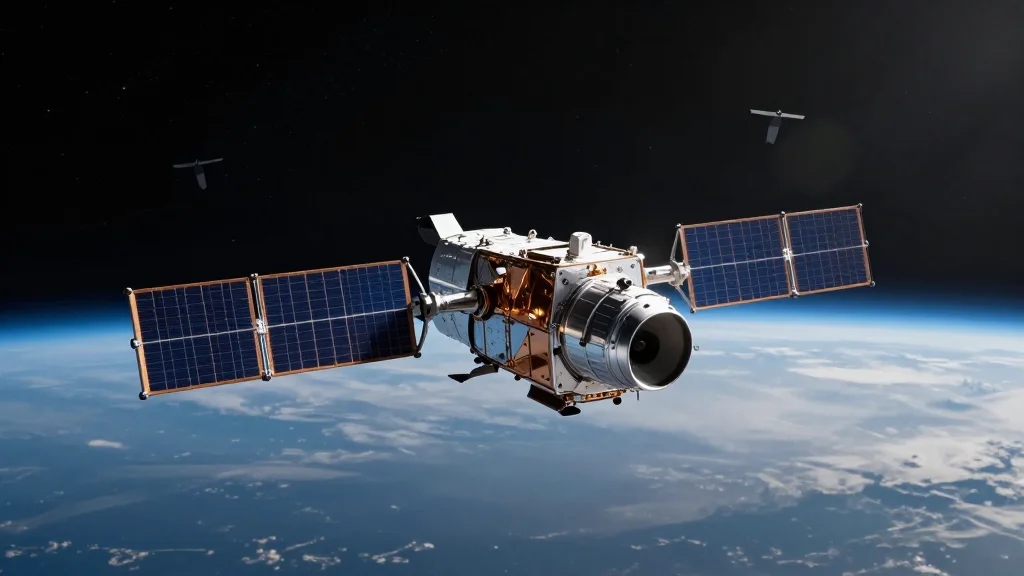
Starpath Global Expands Multi‑Orbital Leasing Network, Cutting Satellite Entry Costs

Why It Matters
The expansion of Starpath Global’s leasing network lowers the financial barrier for a broader set of users to access high‑resolution, hyperspectral Earth observation data. By converting satellite access into an OPEX model, the company democratizes space‑derived intelligence, enabling mid‑size manufacturers, regional governments, and emerging economies to incorporate real‑time geospatial analytics into their operations. This shift could spur a wave of new applications in resource management, infrastructure monitoring, and climate resilience, sectors that have historically been limited by cost and lead‑time constraints. Moreover, the model challenges the traditional launch financing paradigm, where satellite owners bear the bulk of launch costs. If leasing becomes the norm, launch providers may see a transition toward selling incremental capacity rather than full‑satellite contracts, potentially increasing launch cadence and driving down per‑kilogram prices. The ripple effect could accelerate the overall growth of the low‑Earth‑orbit market and stimulate competition among both satellite manufacturers and launch service companies.
Key Takeaways
- •Starpath Global adds a virtual constellation of >100 satellites to its leasing platform
- •24‑hour global revisit capability enables daily imaging of any point on Earth
- •Leasing model treats satellite access as OPEX, reducing upfront capital requirements
- •Full‑chain service covers design, manufacturing, launch, ground routing, and fleet management
- •Model expected to reshape launch economics and broaden satellite data adoption
Pulse Analysis
Starpath’s expansion reflects a broader industry trend toward service‑oriented space offerings. Historically, satellite projects required multi‑year development cycles and large capital commitments, limiting participation to well‑funded governments and a handful of commercial players. By bundling engineering, launch, and data delivery into a single lease, Starpath removes several friction points, effectively turning space access into a utility similar to cloud computing.
The timing aligns with a surge in demand for high‑frequency, hyperspectral data driven by commodity trading, infrastructure monitoring, and climate‑risk assessment. As terrestrial cloud providers integrate satellite data streams into their platforms, the ability to lease capacity on demand becomes a competitive differentiator. Companies that can offer predictable pricing and rapid deployment will likely capture a larger share of the emerging market for real‑time geospatial intelligence.
However, the model also introduces new risks. Leasing relies on a steady supply of launch slots and reliable in‑orbit operations; any disruption—whether from launch delays, regulatory changes, or space debris—could affect service continuity. Additionally, the financial health of the leasing model hinges on achieving sufficient scale to amortise the high upfront costs of satellite manufacturing and launch. If demand does not materialise as projected, Starpath could face cash‑flow pressures. Investors will be watching the company’s ability to convert the expanded virtual constellation into recurring revenue, as well as its success in forging long‑term launch partnerships.
Starpath Global Expands Multi‑Orbital Leasing Network, Cutting Satellite Entry Costs
Comments
Want to join the conversation?
Loading comments...