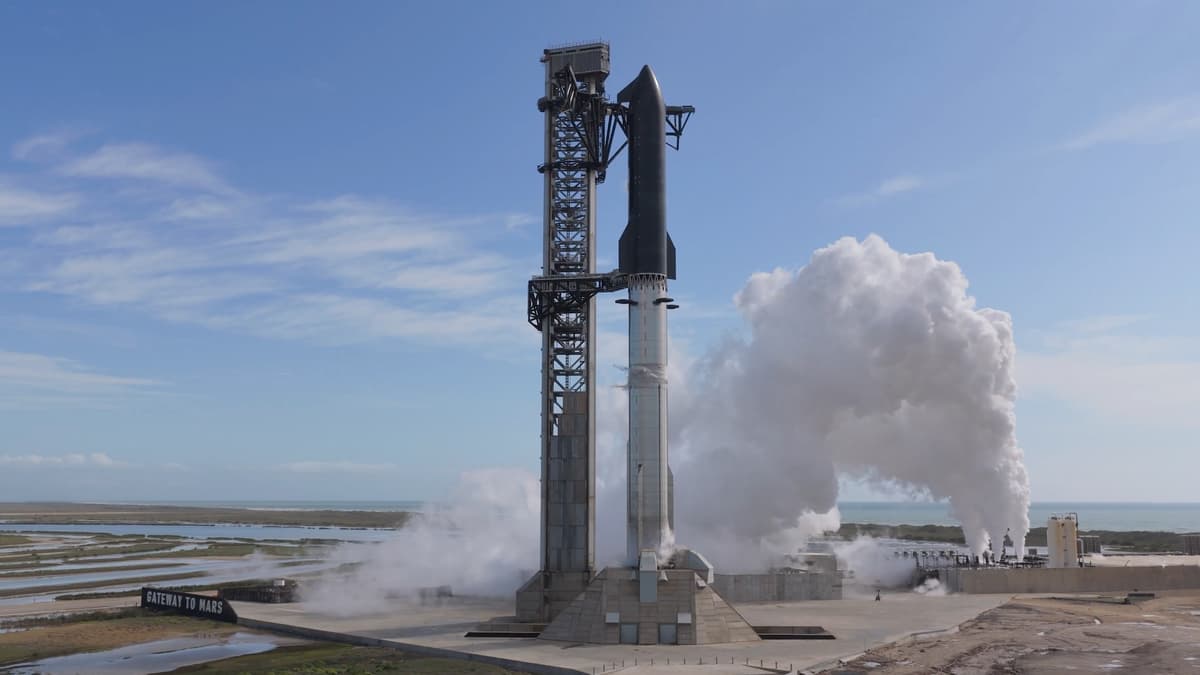
Starship Flight 12: SpaceX Debuts Redesigned Architecture
Companies Mentioned
Why It Matters
Flight 12 validates the redesigned hardware and launch infrastructure that are essential for SpaceX’s goal of fully reusable, high‑turnover launch services, directly influencing satellite deployment timelines and launch‑market competition.
Key Takeaways
- •Flight 12 debuts V3 Starship and Super Heavy with Raptor 3 engines.
- •Launch from new Pad 2 featuring water‑cooled flame trench.
- •Booster will splash down in Gulf, no tower catch attempt.
- •Carries 20 Starlink simulators and two active satellites for heat‑shield diagnostics.
- •Tests in‑space Raptor relight and aerodynamic stress maneuvers.
Pulse Analysis
SpaceX’s upcoming Flight 12 marks a pivotal step toward the company’s long‑term vision of rapid, full‑cycle reusability. The V3 iteration introduces structural upgrades, higher‑thrust Raptor 3 engines, and a redesigned aerodynamic profile that promise greater payload capacity and lower turnaround times. Coupled with Pad 2’s water‑cooled flame trench, the infrastructure upgrade mitigates launch‑pad erosion, a chronic issue for high‑energy rockets, and signals SpaceX’s commitment to scaling launch cadence without compromising safety.
The payload strategy underscores the mission’s dual purpose: satellite validation and thermal‑protection research. Deploying 20 Starlink V3 simulators alongside two operational units enables real‑time imaging of the heat‑shield tiles during re‑entry, while the intentional removal of a tile creates a controlled stress test. Data from these diagnostics will inform material choices and tile layout for future orbital flights, accelerating the rollout of the next generation of Starlink broadband constellations.
Beyond technical milestones, Flight 12 reshapes the commercial launch landscape. Demonstrating a splashdown recovery for Super Heavy reduces reliance on costly tower‑catch infrastructure and opens the Gulf of Mexico as a viable recovery zone, potentially expanding launch windows and geographic flexibility. Successful in‑space Raptor relight and aerodynamic maneuvers will cement SpaceX’s ability to perform orbital refueling and de‑orbit burns, capabilities that competitors are still chasing. As the industry watches, the outcomes could set new standards for cost‑effective, high‑frequency access to space.
Starship flight 12: SpaceX debuts redesigned architecture
Comments
Want to join the conversation?
Loading comments...