Stasis Pods and Deep Space Exploration
•March 11, 2026
0
Why It Matters
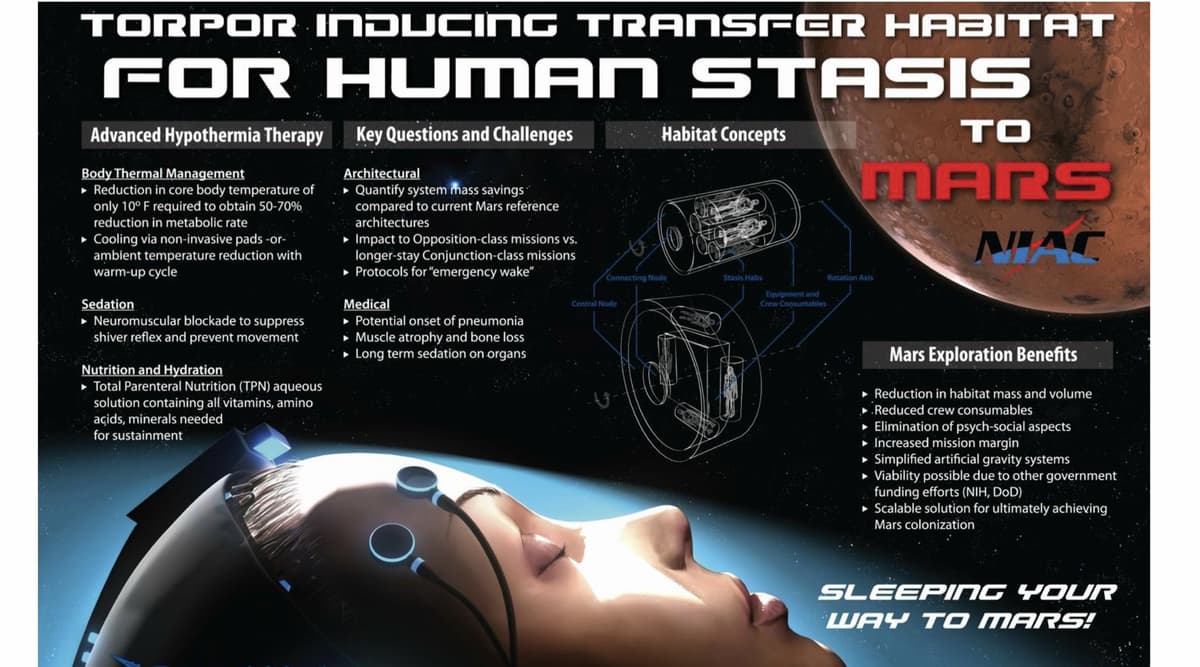
If viable, torpor could dramatically lower launch mass and mitigate physiological and psychological stresses of months‑long transits, reshaping mission architectures for Mars and beyond. Without it, crews must endure active travel, limiting the scope of deep‑space exploration.
Key Takeaways
- •Torpor could cut Mars transit mass up to 52%.
- •Human induced torpor limited to 72 hours currently.
- •Engineering hurdles include temperature control, nutrition, waste, EMS.
- •Radiation risk persists despite metabolic slowdown.
- •Ethical and regulatory frameworks for torpid crews absent.
Pulse Analysis
The sheer scale of interplanetary distances forces mission planners to confront months‑long confinement, muscle atrophy, and radiation exposure. Recent advances in therapeutic hypothermia, neural torpor pathways, and autonomous medical monitoring have revived serious discussion of human hibernation as a practical solution. By cooling crew members to a controlled 32‑36 °C, metabolic demand drops, potentially allowing spacecraft to shed life‑support mass and allocate more budget to shielding or propulsion, a trade‑off that could make Mars missions more affordable and flexible.
Translating biology into hardware, however, presents a gauntlet of engineering obstacles. Precise temperature regulation over six‑month voyages must contend with fluctuating solar flux and cosmic radiation, while automated parenteral nutrition and waste disposal systems must operate without human oversight. Electrical muscle stimulation and pharmacological agents are being prototyped to counteract atrophy and bone loss, yet integrating these subsystems into a compact, radiation‑hard pod remains unproven. Moreover, continuous physiological monitoring demands AI‑driven decision‑making that can intervene autonomously, raising questions about reliability and liability in deep‑space environments.
Commercial interest is quietly building beneath the surface. Companies like SpaceX see mass savings as a pathway to faster turnaround for Starship‑based Mars architectures, while defense and private‑sector investors monitor the technology for potential applications in lunar habitats and future interstellar probes. Regulatory frameworks lag behind, and human trials beyond 72 hours are still prohibited, pushing realistic deployment into the 2040s at best. Nonetheless, each breakthrough—whether a newly identified torpor‑inducing neuron or a more efficient thermal control system—edges the concept from speculative fiction toward a viable engineering option that could redefine humanity’s reach beyond Earth.
Stasis Pods and Deep Space Exploration
0
Comments
Want to join the conversation?
Loading comments...