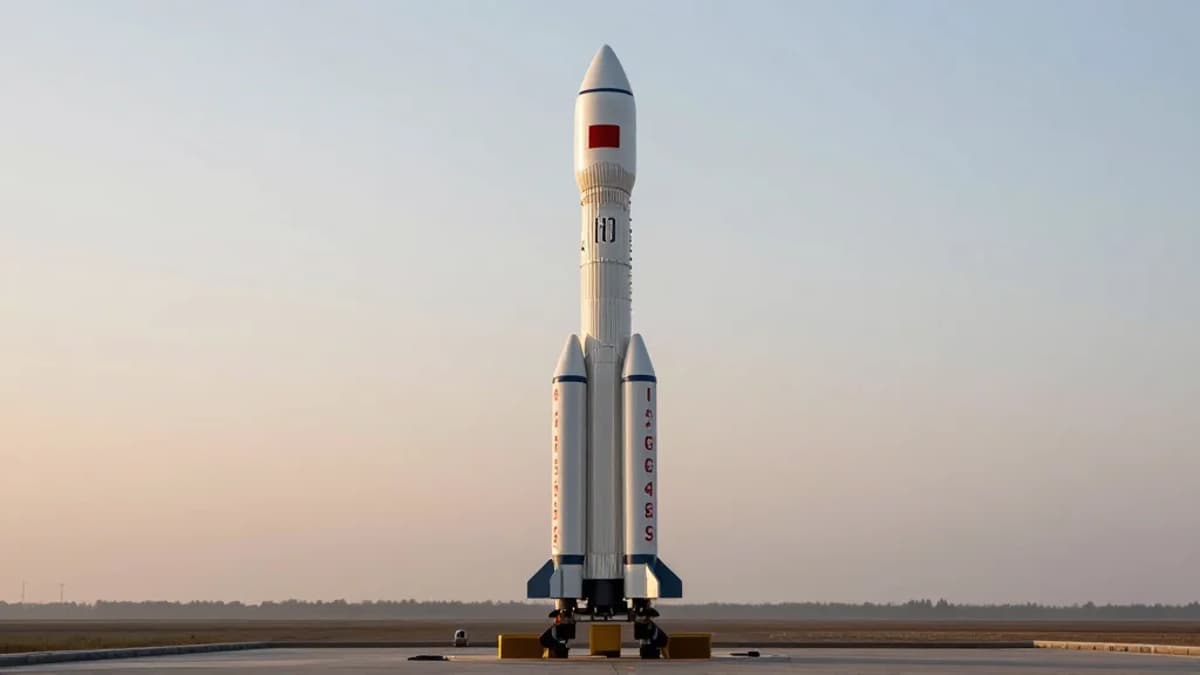
State-Owned Enterprises and Commercial Space in China
•December 22, 2025
0
Why It Matters
The hybrid SOE‑private model reshapes China’s competitive posture in the global space economy and signals new investment opportunities for both domestic and foreign stakeholders.
Key Takeaways
- •SOEs supply infrastructure, R&D, and financing to startups
- •CASC and CASIC remain core launch vehicle providers
- •Provincial hubs cluster around SOE‑anchored aerospace bases
- •Talent migration fuels private unicorn growth; salaries higher
- •2014 Document 60 triggered rapid private space investment
Pulse Analysis
China’s approach to commercial space diverges sharply from the United States’ venture‑driven model. Rather than fostering competition between private firms and legacy primes, Beijing has woven state‑owned enterprises into the fabric of its space ecosystem. CASC and CASIC retain control of critical launch systems, satellite platforms, and defense‑related technologies, while policy instruments such as Document 60 and the 2015‑2025 Civilian Space Infrastructure Plan explicitly encourage private capital to build on this state‑backed foundation. This structure provides startups with ready access to launch slots, testing facilities, and a deep talent pool, reducing entry barriers that typically constrain new‑space entrants elsewhere.
Regional dynamics amplify the SOE advantage. Provinces like Beijing, Xi’an, Wuhan, and Ningbo have crafted targeted action plans that pair local funding with the infrastructure of nearby SOE subsidiaries. These hubs generate dense supplier networks and enable rapid knowledge spillovers, as engineers and scientists transition from government labs to private ventures. Salary differentials—often three to five times higher than SOE rates—have accelerated talent migration, fueling the rise of high‑valuation “unicorn” firms such as iSpace and DeepBlue Aerospace. The result is a vibrant, albeit state‑guided, commercial landscape that blends public resources with market incentives.
Looking ahead, the hybrid model positions China to expand its footprint in satellite constellations, lunar logistics, and on‑orbit services while retaining strategic control over key technologies. International investors are watching closely, as the government’s willingness to back private initiatives with SOE resources lowers risk but also embeds political considerations into commercial deals. The continued emergence of gazelle‑scale startups suggests a maturing ecosystem capable of competing globally, yet the overarching influence of CASC and CASIC ensures that Beijing’s strategic objectives remain at the core of the nation’s space ambitions.
State-owned enterprises and commercial space in China
0
Comments
Want to join the conversation?
Loading comments...