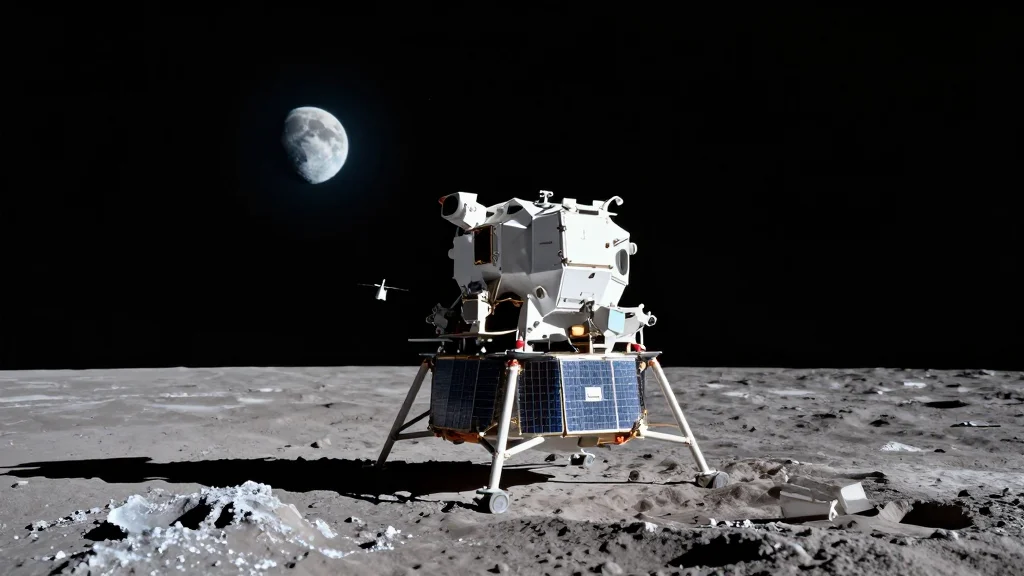
Strategic Celestography and Lunar Competition: Artemis, CLEP, and the Struggle for Positional Advantage
Why It Matters
Control of resource‑rich lunar sites and cislunar orbits will dictate future space logistics, national‑security surveillance, and the balance of great‑power influence beyond Earth.
Key Takeaways
- •South‑pole ice enables lunar propellant production
- •China’s Queqiao relays secure L2 communications for far‑side missions
- •Artemis depends on costly SLS; Starship could cut launch expenses
- •Cislunar Lagrange points offer low‑fuel station‑keeping for surveillance
- •Allied lunar partners like Japan boost US strategic positioning
Pulse Analysis
Strategic celestography reframes space as a contested geography where position, timing, and orbital dynamics confer power. The lunar south‑pole, with its permanently shadowed craters, holds water‑ice that can be harvested for hydrogen and oxygen, turning the Moon into a refueling hub and reducing Earth‑launch costs. Simultaneously, the five Earth‑Moon Lagrange points provide quasi‑stable stations for communications, navigation and space‑domain awareness, making them prized assets for any nation seeking persistent presence in cislunar space.
Artemis and CLEP embody divergent paths to the same goal. The U.S. program leans on the heavy‑lift SLS and the commercial Starship HLS to deliver crews and cargo, but high launch costs and schedule slips have delayed its south‑pole landing to 2028. China, by contrast, has fielded a series of robotic Chang’e missions, deploying Queqiao‑1 and Queqiao‑2 relays in near‑rectilinear halo orbits that grant low‑fuel line‑of‑sight to the far side and the pole. This robotics‑first approach, coupled with rapid launch cadence from its growing commercial sector, lets Beijing amass experience at lower expense while building an International Lunar Research Station.
The competition reshapes national‑security calculus. As cislunar traffic expands, the United States must upgrade its space‑domain awareness to monitor a volume over a thousand times larger than GEO, and develop doctrines for Lunar Intelligence (LUNINT). Partnerships with allies such as Japan, which demonstrated precision landing with SLIM, can distribute risk and enhance technological edge. Legal frameworks like the U.S. Commercial Space Launch Competitiveness Act further enable private actors to exploit lunar resources, accelerating the race for positional advantage that will define the next era of great‑power rivalry.
Strategic celestography and lunar competition: Artemis, CLEP, and the struggle for positional advantage
Comments
Want to join the conversation?
Loading comments...