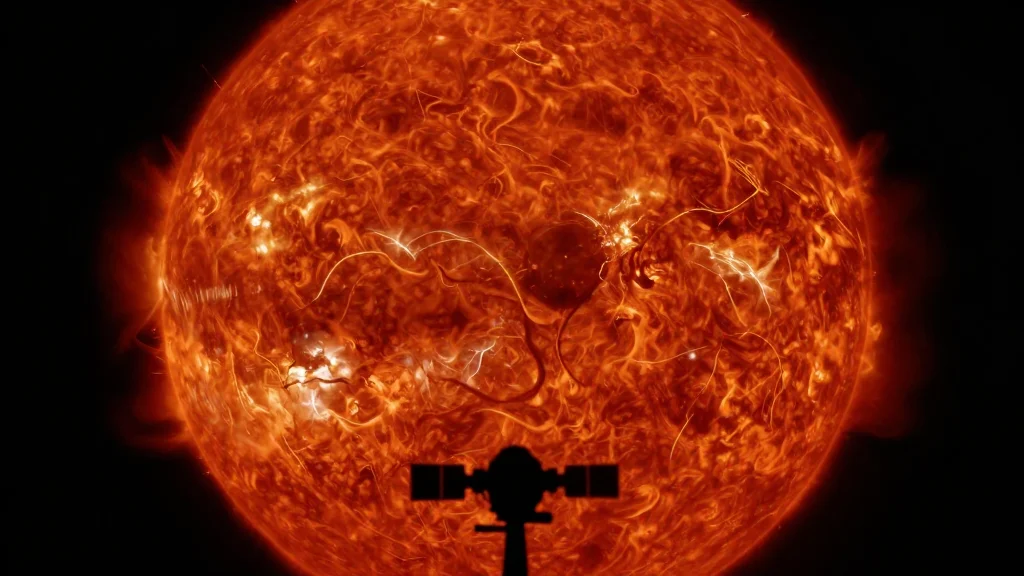
Student Research on Coronal Holes Improves Space Weather Forecasting
Why It Matters
Understanding the magnetic conditions that spawn fast solar wind improves space‑weather forecasts, helping protect critical infrastructure and reduce economic losses from solar storms.
Key Takeaways
- •Study of 70 coronal holes shows 88% magnetic imbalance
- •Magnetic imbalance linked to high‑speed solar wind streams
- •Findings enhance accuracy of space‑weather prediction models
- •Research supports protecting GPS, aviation, and power grids
Pulse Analysis
Space weather has moved from a niche scientific concern to a mainstream risk factor for global technology. Fast solar‑wind streams, which originate from coronal holes—dark, magnetically open regions on the Sun—can trigger geomagnetic storms that scramble GPS signals, interfere with airline communications, and overload power‑grid transformers. By quantifying the magnetic unipolarity of these holes, Katuwal’s research provides a measurable parameter that forecasters can integrate into real‑time models, narrowing the uncertainty that has long plagued space‑weather predictions.
The study’s core insight—that roughly 88% of examined equatorial coronal holes display a pronounced magnetic imbalance—offers a concrete link between solar magnetic topology and wind speed. This relationship allows scientists to flag potentially hazardous solar‑wind events days before they reach Earth, giving satellite operators and grid managers valuable lead time. As the commercial space sector expands, with megaconstellations and lunar missions on the horizon, the economic stakes of accurate forecasting have never been higher.
Looking ahead, Katuwal intends to leverage the Daniel K. Inouye Solar Telescope’s unprecedented resolution to dissect the fine‑scale magnetic structures that drive unbalance in coronal holes. Such granular data could refine the physical mechanisms embedded in forecasting algorithms, moving the field from empirical correlations toward predictive physics. For investors, policymakers, and engineers, this evolution promises more resilient infrastructure and lower insurance costs tied to solar‑storm exposure. The convergence of student‑led research, cutting‑edge instrumentation, and industry demand underscores a pivotal moment for space‑weather science.
Student research on coronal holes improves space weather forecasting
Comments
Want to join the conversation?
Loading comments...