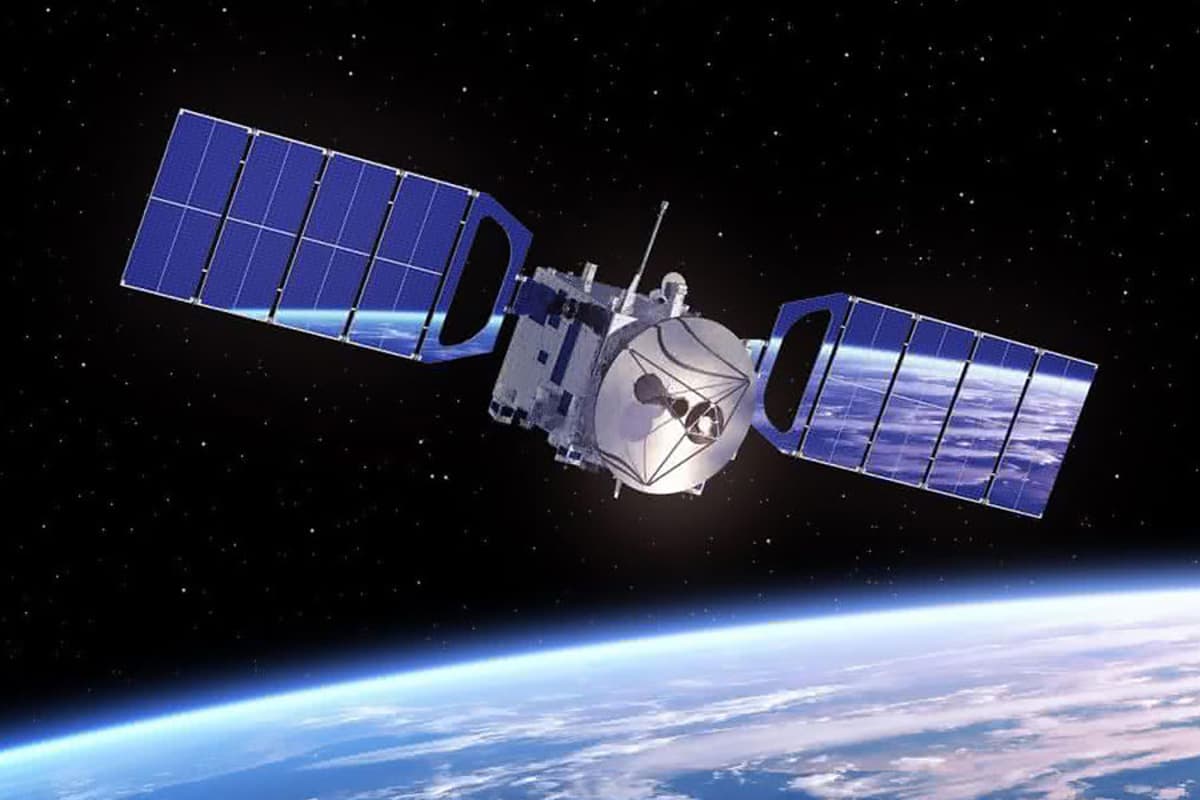
Studies Pinpoint Russian Satellites as GPS Interference Source
Why It Matters
Satellite‑originated jamming threatens navigation reliability for aviation, logistics and financial markets, while highlighting a new geopolitical weapon in space.
Key Takeaways
- •Russian early‑warning satellites linked to 75 GNSS interference events
- •Interference degrades L1 signals up to 10 dB across Europe
- •A network of 165 stations detected 1‑Hz carrier‑to‑noise anomalies
- •Disruptions affect GPS, Galileo, BeiDou but spare Russia’s GLONASS
- •First widespread jamming recorded October 2019, shortly after EKS launch
Pulse Analysis
The University of Texas at Austin’s Radionavigation Laboratory, together with collaborators, released a paper on June 2, 2026 that documents space‑based jamming originating from Russia’s early‑warning satellite constellation. By mining one‑hertz carrier‑to‑noise ratio data from 165 reference stations worldwide, the authors identified between three and seventy‑five interference incidents dating back to 2019. Three distinct satellites were repeatedly implicated, while the remaining events displayed an identical spectral fingerprint, pointing to a common transmitter. Independent verification from GMV in Spain reinforces the claim that Russian space assets are the source. The study also outlines a classification scheme for future detection.
The interference manifests as short‑duration, wide‑area spikes that depress L1‑band signal strength by up to 10 dB, a level sufficient to degrade positioning accuracy for civilian and commercial users. All major global navigation satellite systems—GPS, Europe’s Galileo, and China’s BeiDou—showed measurable degradation, yet Russia’s own GLONASS remained untouched, suggesting a targeted jamming pattern rather than a broad spectrum attack. The events have been concentrated over Europe, where aviation routes, freight corridors, and critical infrastructure rely heavily on precise GNSS timing. Operators relying on precise timestamps for grid synchronization have reported occasional outages.
For airlines, logistics firms, and financial markets, the findings raise immediate concerns about resilience and contingency planning. Persistent jamming could force operators to revert to inertial navigation or ground‑based augmentation, increasing costs and complexity. The geopolitical dimension is equally stark: the ability to weaponize a nation’s own satellite network signals a new layer of strategic competition in space. Regulators and industry groups are likely to accelerate development of anti‑jamming technologies and diversify timing sources to safeguard the global supply chain against future satellite‑borne disruptions. Investments in multi‑constellation receivers and AI‑driven anomaly detection are expected to rise.
Studies Pinpoint Russian Satellites as GPS Interference Source
Comments
Want to join the conversation?
Loading comments...