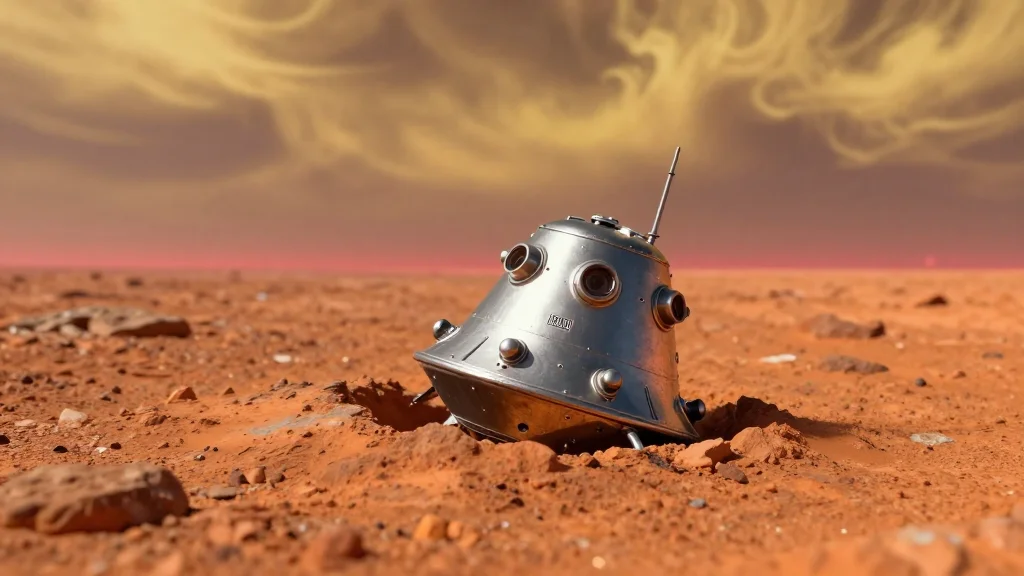
Study Finds Seven Venus Probes May Still Lurk Beneath Harsh Surface

Companies Mentioned

Why It Matters
The possibility that historic probes remain on Venus adds a new dimension to planetary heritage, compelling agencies to consider preservation alongside scientific exploration. Surviving artifacts could serve as calibration points for future instruments, offering a tangible link to past engineering achievements. Beyond heritage, the findings inform engineering choices for upcoming Venus missions. Demonstrating that certain materials can survive extreme conditions may guide the selection of structural alloys, thermal protection systems, and sealing technologies, reducing risk and cost for future landers and aerial platforms.
Key Takeaways
- •Out of 20 Venus probes, at least seven may still be intact, according to a new study.
- •NASA’s GEER lab replicated Venus’s 460 °C temperature and 90‑bar pressure to test probe durability.
- •Titanium and aluminum components showed strong resistance, while O‑rings likely failed.
- •The research could influence heritage preservation policies under the Outer Space Treaty.
- •Upcoming missions VERITAS (NASA) and EnVision (ESA) may carry instruments to locate surviving artifacts.
Pulse Analysis
The study arrives at a moment when Venus is re‑emerging as a priority for planetary science, driven by discoveries of possible phosphine and renewed interest in its geology. Historically, the planet’s hostile environment has been a deterrent, but this research flips the script, suggesting that the same harshness may act as a preservative. That duality could reshape mission architecture: designers might now prioritize durability for heritage‑focused payloads while still pursuing high‑risk scientific objectives.
From a market perspective, the notion of “space archaeology” on Venus could spawn a niche industry. Companies specializing in high‑temperature materials, corrosion‑resistant seals, and remote imaging could see new demand. Moreover, the prospect of locating and studying historic hardware may attract private funding, similar to the growing interest in lunar heritage sites. Investors will likely watch how agencies integrate heritage surveys into mission budgets, potentially opening up public‑private partnerships.
Looking ahead, the real test will be whether VERITAS, EnVision or any future lander can actually image these relics. Success would validate the laboratory approach and cement Venus as a living archive of early spaceflight, while failure could re‑affirm the belief that the planet’s surface is a graveyard for technology. Either outcome will influence how the international community drafts guidelines for protecting extraterrestrial cultural heritage, a conversation that has so far been dominated by lunar and Martian considerations.
Study Finds Seven Venus Probes May Still Lurk Beneath Harsh Surface
Comments
Want to join the conversation?
Loading comments...