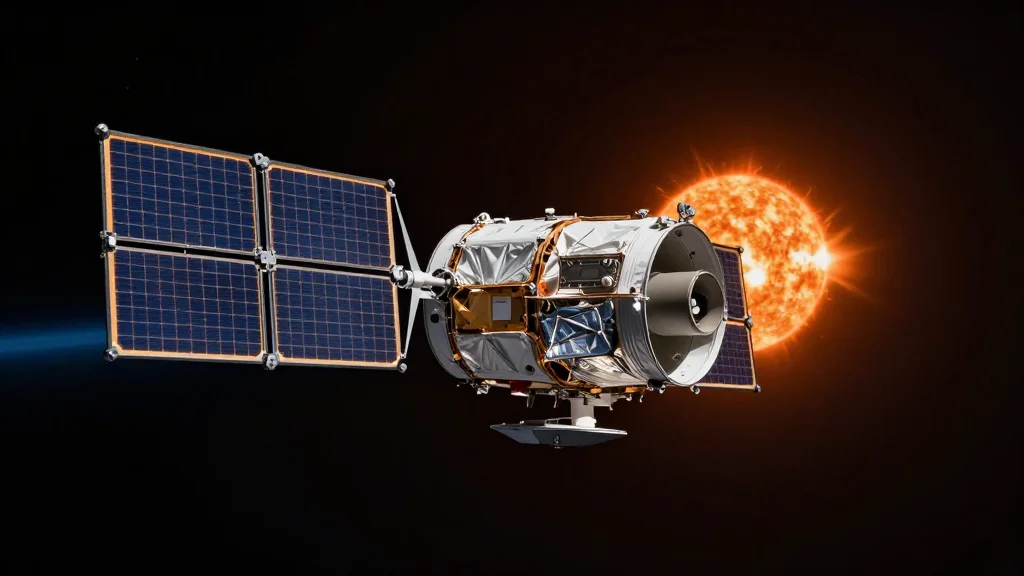
Sun Watching Worries – Predicting Troublesome Solar Events
Why It Matters
Accurate space‑weather forecasts protect multi‑billion‑dollar satellite assets and prevent costly power outages, while ensuring astronaut safety on deep‑space missions.
Key Takeaways
- •Solar flares can disrupt GPS, satellite links, and power grids
- •Artemis II relied on real‑time solar monitoring to protect crew health
- •NOAA’s SWPC issues alerts for U.S. infrastructure
- •Forecasting improvements aim to reduce economic losses from solar storms
- •SDO provides continuous imagery for event prediction
Pulse Analysis
Space‑weather forecasting has moved from a niche scientific pursuit to a cornerstone of modern economic stability. Solar storms, like the 1989 geomagnetic event that knocked out Quebec’s power grid, can cause billions of dollars in damage by crippling satellite operations, GPS navigation, and high‑voltage transmission lines. As the world’s reliance on space‑based services deepens, the cost of a missed flare escalates, prompting governments and private firms to invest heavily in predictive models and real‑time monitoring.
The National Oceanic and Atmospheric Administration’s Space Weather Prediction Center sits at the hub of this effort, issuing alerts that guide operators of communication satellites, airlines, and power utilities. During NASA’s Artemis II mission, the SWPC’s 24/7 vigilance allowed mission controllers to evaluate radiation exposure in near‑real time, informing crew safety protocols and trajectory adjustments. This collaboration underscores how space‑weather data directly influences mission planning and risk management for both crewed and uncrewed flights.
Looking ahead, advances in heliophysics, machine‑learning analytics, and higher‑resolution solar imaging promise to sharpen forecast accuracy. The Solar Dynamics Observatory’s continuous stream of high‑cadence images feeds algorithms that can flag emerging active regions minutes before they erupt. Policymakers are also recognizing the strategic importance of resilient space‑weather infrastructure, earmarking funding for next‑generation sensors and international data‑sharing agreements. Together, these developments aim to transform solar event prediction from a reactive warning system into a proactive shield for the global economy and humanity’s expansion into space.
Sun Watching Worries – Predicting Troublesome Solar Events
Comments
Want to join the conversation?
Loading comments...