Supermassives to Fuzzballs: Every Black Hole Type Explained
•January 14, 2026
0
Why It Matters
Understanding black‑hole diversity informs quantum‑gravity research and guides multi‑billion‑dollar space‑observatory investments, shaping the future of high‑performance computing and data analytics.
Key Takeaways
- •Supermassive black holes anchor galaxy evolution
- •Intermediate-mass holes bridge stellar and supermassive scales
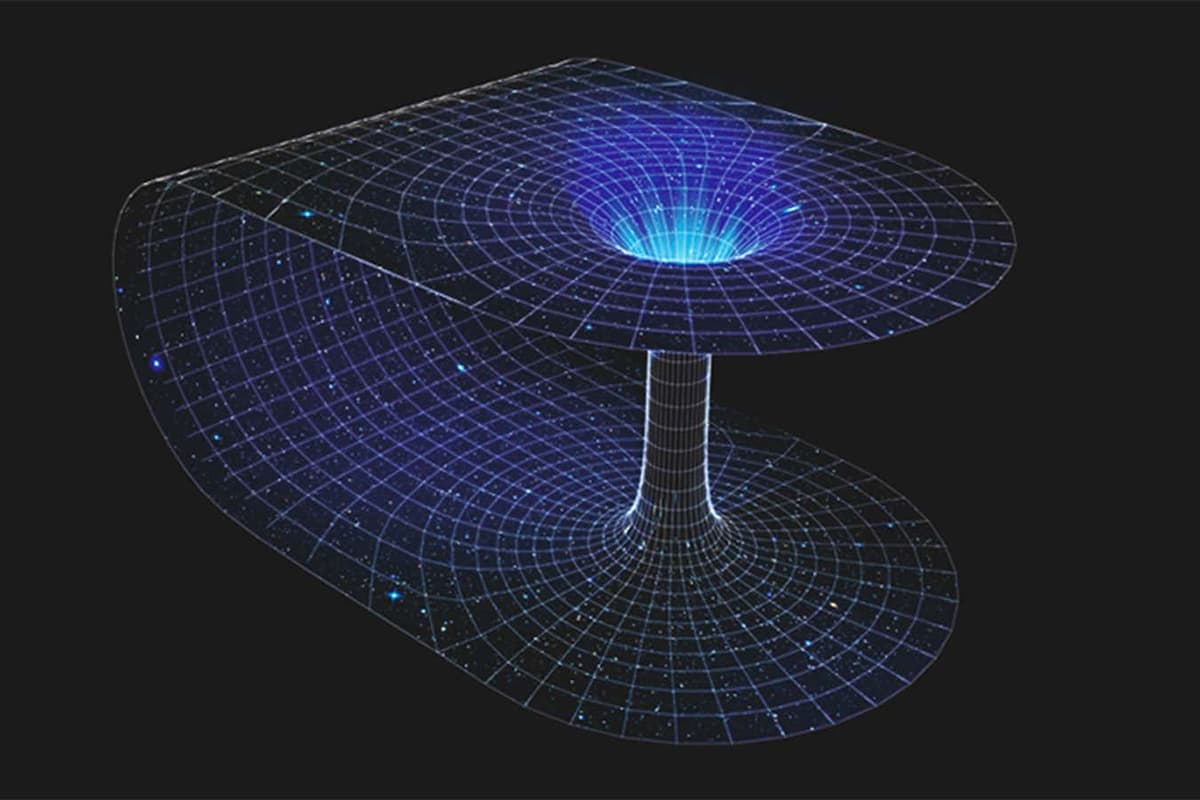
- •Wormholes remain theoretical shortcuts through spacetime
- •Fuzzballs replace singularities with stringy structures
- •Gravastars propose exotic vacuum energy cores
Pulse Analysis
The landscape of black‑hole research has expanded far beyond the classic picture of a single, all‑consuming singularity. Observations now catalog stellar‑mass remnants, intermediate‑mass candidates weighing a few thousand suns, and the supermassive behemoths that dominate the centers of most galaxies, some exceeding ten billion solar masses. The Event Horizon Telescope’s image of M87* and LIGO’s gravitational‑wave catalog have turned these objects from theoretical curiosities into measurable astrophysical laboratories. Each class exhibits distinct accretion dynamics, jet production, and influence on host‑galaxy morphology, providing a multi‑scale framework for modern cosmology. Beyond the observable spectrum, theorists populate the black‑hole zoo with exotic constructs that test the limits of general relativity. Wormholes propose traversable tunnels linking distant regions of spacetime, while fuzzball theory—rooted in string theory—replaces the singularity with a tangled mass of strings, eliminating information loss. Gravastars, on the other hand, substitute a thin shell of ultra‑dense matter for the event horizon, supported by dark‑energy‑like vacuum pressure. These models are not mere speculation; they drive research into quantum gravity, inspire novel mathematical techniques, and could eventually inform technologies that manipulate extreme fields or quantum information. The commercial and strategic stakes of this expanding knowledge base are significant. International consortia are allocating billions to next‑generation observatories such as the James Webb Space Telescope, the Laser Interferometer Space Antenna, and ground‑based Extremely Large Telescopes, all of which rely on high‑performance computing and AI‑driven data pipelines. Advances in detector sensitivity and simulation fidelity spill over into sectors like telecommunications, aerospace engineering, and cybersecurity. Moreover, public fascination with black‑hole mysteries fuels STEM education and media ventures, creating new markets for immersive content and scientific consultancy. Tracking these trends helps investors and policymakers gauge the long‑term value of fundamental space science.
Supermassives to fuzzballs: Every black hole type explained
0
Comments
Want to join the conversation?
Loading comments...