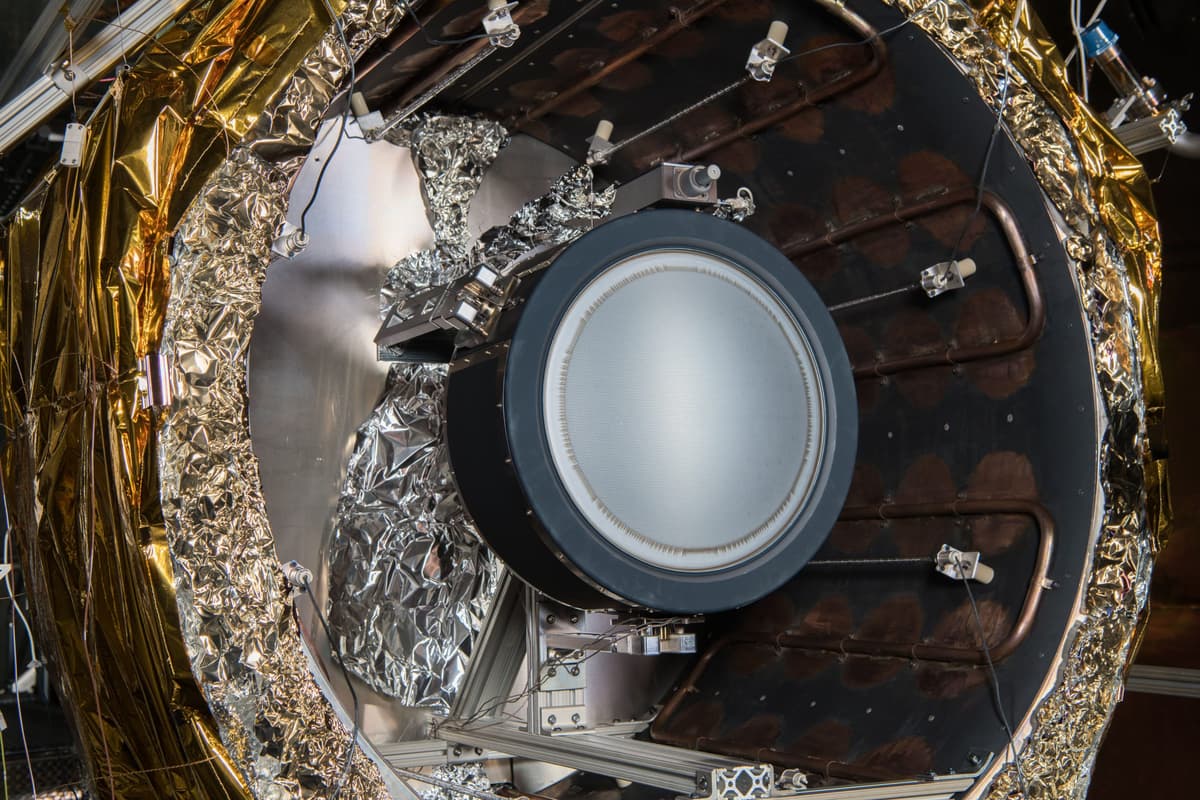
Sustained Maneuver Has a Propulsion Problem
Why It Matters
Without accounting for long‑term maneuver margin, operators risk losing critical agility on high‑value assets, jeopardizing mission success and cost efficiency. The guidance reshapes how agencies and commercial primes size, qualify, and procure propulsion for increasingly mobile, contested space operations.
Key Takeaways
- •Sustained maneuver requires propulsion margin across entire mission life
- •Gridded‑ion thrusters excel where high delta‑V and long life matter
- •Define mission envelope before locking in propulsion architecture
- •Restart confidence and duty cycle dictate repeated‑burn feasibility
- •Chemical propulsion remains optimal for urgent, high‑thrust tasks
Pulse Analysis
The space‑industry conversation is shifting from a static "where to place" mindset to a dynamic "how to keep moving" perspective. Operators now need to guarantee that a spacecraft can execute multiple, unpredictable maneuvers over a multi‑year lifespan. This sustained‑maneuver requirement forces a re‑examination of propulsion reserves, accounting for propellant consumption, degradation, thermal limits, and the uncertainty of long‑dormancy restarts. Ignoring these factors can leave a satellite with insufficient delta‑V when a contingency arises, turning a well‑designed mission into a costly failure.
Among the propulsion options, gridded‑ion technology stands out for its high specific impulse and proven NASA heritage. Its efficient propellant use and ability to operate for thousands of hours make it ideal for missions where cumulative delta‑V, long service life, and frequent restarts are paramount—such as on‑orbit servicing, cislunar logistics, and high‑altitude GEO platforms. However, the technology is not a silver bullet; it delivers modest thrust and demands robust power, thermal management, and rigorous qualification evidence. Chemical and solid‑propellant systems retain relevance for rapid, high‑thrust responses, while Hall‑effect thrusters fill the niche of moderate thrust with lower integration risk.
For program offices and spacecraft primes, the practical takeaway is clear: start with a detailed mission envelope that quantifies total delta‑V, number of burns, power budget, and restart cadence. Only then can the trade‑off matrix—specific impulse, total impulse, duty cycle, and qualification confidence—be applied to select the propulsion architecture that preserves maneuver margin throughout the mission. By embedding this disciplined approach early, stakeholders can avoid costly redesigns, ensure long‑term agility, and fully leverage emerging electric propulsion advances like gridded‑ion thrusters.
Sustained maneuver has a propulsion problem
Comments
Want to join the conversation?
Loading comments...