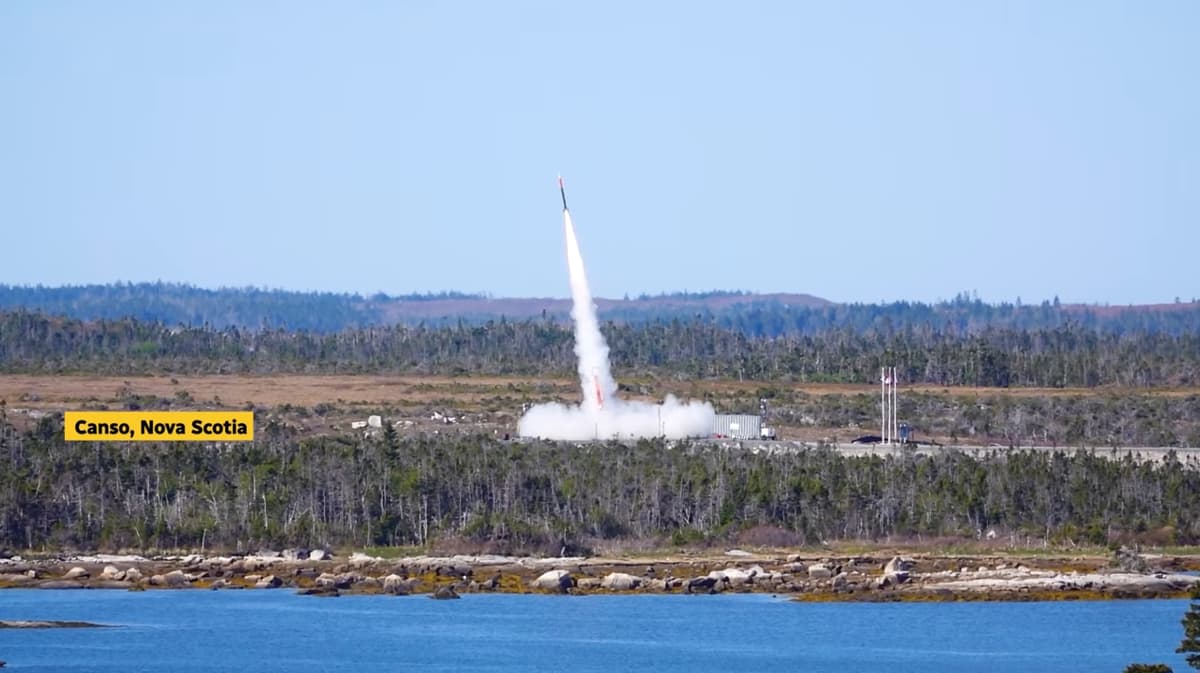
T-Minus Engineering Test Rocket Launches but Fails to Reach Targeted Altitude at Spaceport Nova Scotia
Why It Matters
The setback underscores the technical hurdles facing new suborbital launch firms and delays Canada’s timeline for a domestic commercial space capability, affecting investors and regional economic development.
Key Takeaways
- •Barracuda rocket lifted off but missed target altitude.
- •Telemetry captured fully, aiding post‑flight analysis.
- •No additional launch before June 14 window closes.
- •Next launch window slated for Oct‑Nov 2026.
- •Event highlighted Nova Scotia spaceport infrastructure and community ties.
Pulse Analysis
T‑Minus Engineering’s Barracuda test flight marks a pivotal moment for Canada’s nascent suborbital market. While the company’s solid‑fuel, single‑stage design promises low‑cost access to near‑space, the June 10 anomaly highlights the steep learning curve inherent to new launch systems. Solid rockets, prized for simplicity, still contend with unpredictable burn dynamics and structural stresses that can derail a mission after a nominal ascent. Capturing complete telemetry, however, equips engineers with the data needed to pinpoint failure modes and refine future designs, a process that mirrors the iterative development cycles of established aerospace firms.
The launch also serves as a litmus test for Spaceport Nova Scotia’s operational readiness. By hosting the event for roughly 100 guests—including a Canadian astronaut, government officials, First Nations leaders, and NATO delegates—the site demonstrated its ability to coordinate high‑profile activities while maintaining safety protocols. The pause in launches until the fall window reflects a prudent risk‑management approach, ensuring that any hardware revisions are validated before the next flight. This measured cadence aligns with Maritime Launch Services’ broader strategy to synchronize launch schedules with T‑Minus Engineering’s development timeline, fostering a collaborative ecosystem that could accelerate commercial payload services from Atlantic Canada.
Beyond the technical and logistical dimensions, the launch underscores the strategic importance of community integration. Local lobster harvesters supplied the reception meal, and officials emphasized transparent communication about restricted airspace, reinforcing public trust. As Canada seeks to diversify its space launch portfolio away from traditional east‑coast sites, Nova Scotia’s emerging infrastructure could attract both domestic and international customers, especially for suborbital research, micro‑satellite deployment, and defense‑related missions. Successful future flights will be crucial to converting this early enthusiasm into sustainable economic activity and positioning Canada as a competitive player in the global space economy.
T-Minus Engineering test rocket launches but fails to reach targeted altitude at Spaceport Nova Scotia
Comments
Want to join the conversation?
Loading comments...