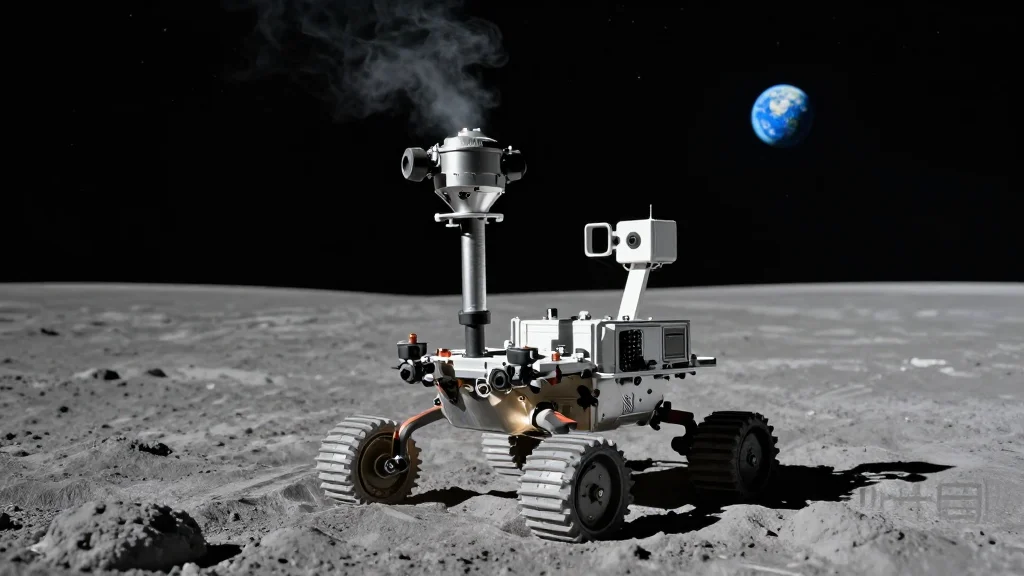
Test Time for These Moon Drills
Why It Matters
Efficient regolith handling is a critical technology gap for Artemis, and AeroFly’s augers could provide the first scalable solution for extracting water and other volatiles on the lunar surface.
Key Takeaways
- •AeroFly secured $1.7 million NASA grant for lunar auger projects.
- •LEONA will demo a 2‑meter horizontal auger with ice sublimation in April.
- •Rego‑LIFT vertical augers will undergo parabolic flight tests in September.
- •Full‑scale Rego‑LIFT aims to lift artificial regolith 10 m by July 2027.
- •Test data will feed digital‑twin models to refine power and flow rates.
Pulse Analysis
The Artemis program’s ambition to establish a sustainable lunar presence hinges on in‑situ resource utilization (ISRU). While water, oxygen, and hydrogen can be derived from regolith, extracting them at scale requires moving bulk soil from permanently shadowed craters to processing units. Traditional drilling methods proved cumbersome during Apollo, and the jagged, abrasive nature of lunar dust poses unique wear challenges. Engineers therefore need robust, low‑mass conveyance mechanisms that operate in vacuum and extreme cold, a niche that auger‑style screw conveyors—common in agriculture—are uniquely positioned to fill.
AeroFly, leveraging South Dakota’s grain‑agronomy heritage, has adapted these screw conveyors into two distinct prototypes. The LEONA system integrates a horizontal auger with a heated vacuum chamber, allowing ice‑laden regolith to sublimate and be captured as liquid water. Scheduled for an April demonstration, the 2‑meter device will validate the sublimation‑capture cycle under simulated lunar conditions. Meanwhile, the Rego‑LIFT project focuses on vertical transport, employing rotating‑tube augers that have shown superior lift capacity in laboratory tests. Four 60‑centimeter vertical augers will fly aboard a parabolic aircraft in September, replicating the Moon’s one‑sixth gravity to assess flow rates and power consumption. A full‑scale prototype, designed to raise artificial soil ten meters, is slated for a two‑week demonstration in July 2027.
If AeroFly’s augers meet performance targets, they could become a cornerstone of lunar infrastructure, feeding molten‑regolith electrolysis reactors, oxygen generators, and metal extraction plants. The data collected will feed digital‑twin models, enabling rapid design iteration without costly hardware rebuilds. Such a scalable, low‑cost transport solution aligns with NASA’s broader push to commercialize lunar ISRU, potentially attracting private investment and accelerating the timeline for a permanent human foothold on the Moon.
Test time for these moon drills
Comments
Want to join the conversation?
Loading comments...