The Case Against Human Spaceflight Exploration: Risks, Costs, & Alternatives
•December 31, 2025
0
Companies Mentioned


Why It Matters
Redirecting billions from crewed missions to robotic and Earth‑focused programs maximizes scientific output while addressing urgent global challenges. The analysis reshapes policy debates about where limited space budgets should be invested.
Key Takeaways
- •Robotic missions cost <1% of crewed missions
- •Radiation and microgravity cause irreversible health damage
- •Mars colonization diverts funds from Earth crises
- •Human presence risks planetary contamination
- •Rocket equation makes crewed launches inefficient
Pulse Analysis
Economic analyses increasingly reveal that the marginal utility of human spaceflight diminishes as costs soar. The International Space Station’s $150 billion price tag and projected Mars crew missions exceeding $200 billion illustrate a budgetary imbalance that could otherwise fund hundreds of advanced robotic probes. By reallocating these funds toward Earth‑centric technologies—renewable energy, climate monitoring, and health infrastructure—governments can achieve higher immediate returns while preserving the strategic flexibility to expand scientific capabilities in space.
Medical research underscores that deep‑space radiation, microgravity‑induced bone loss, and vision impairment present risks that current engineering cannot fully mitigate. Astronauts would face cancer‑level radiation exposure, rapid skeletal degradation, and severe psychological stress from isolation and communication delays. In contrast, robotic platforms operate without life‑support constraints, eliminating health hazards and allowing mission designs that prioritize payload mass and scientific instruments over survivability systems. This risk asymmetry makes unmanned missions a safer, more cost‑effective avenue for deep‑space exploration.
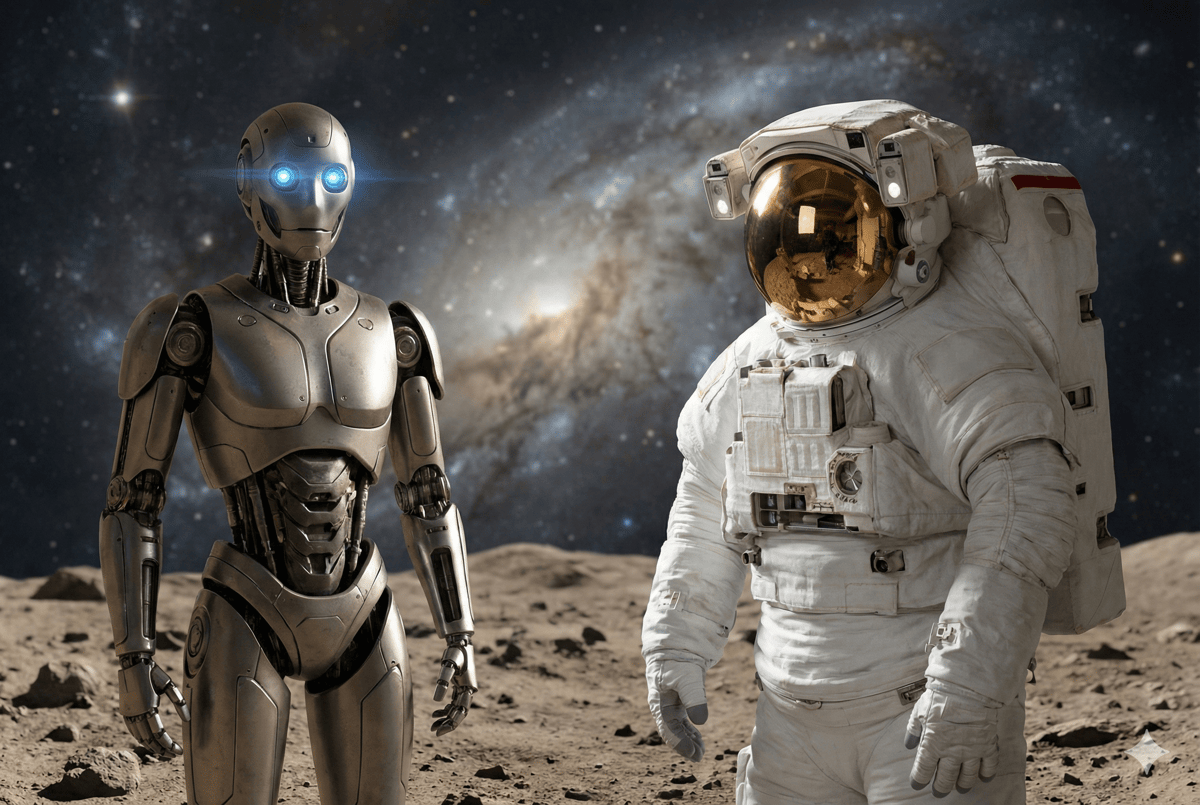
Technological advances in artificial intelligence, autonomous navigation, and telepresence further tilt the balance toward robotics. Modern rovers can execute complex scientific tasks, adapt to unexpected terrain, and transmit high‑resolution data in real time, while AI‑driven analysis accelerates discovery cycles. Virtual reality interfaces enable thousands of researchers to “walk” on Mars via robotic sensors, democratizing access and fostering collaborative science. As robotic capability approaches parity with human intuition, the strategic imperative shifts to investing in resilient, sterilizable probes that safeguard planetary protection and expand humanity’s knowledge without the ethical and financial burdens of crewed missions.
The Case Against Human Spaceflight Exploration: Risks, Costs, & Alternatives
0
Comments
Want to join the conversation?
Loading comments...