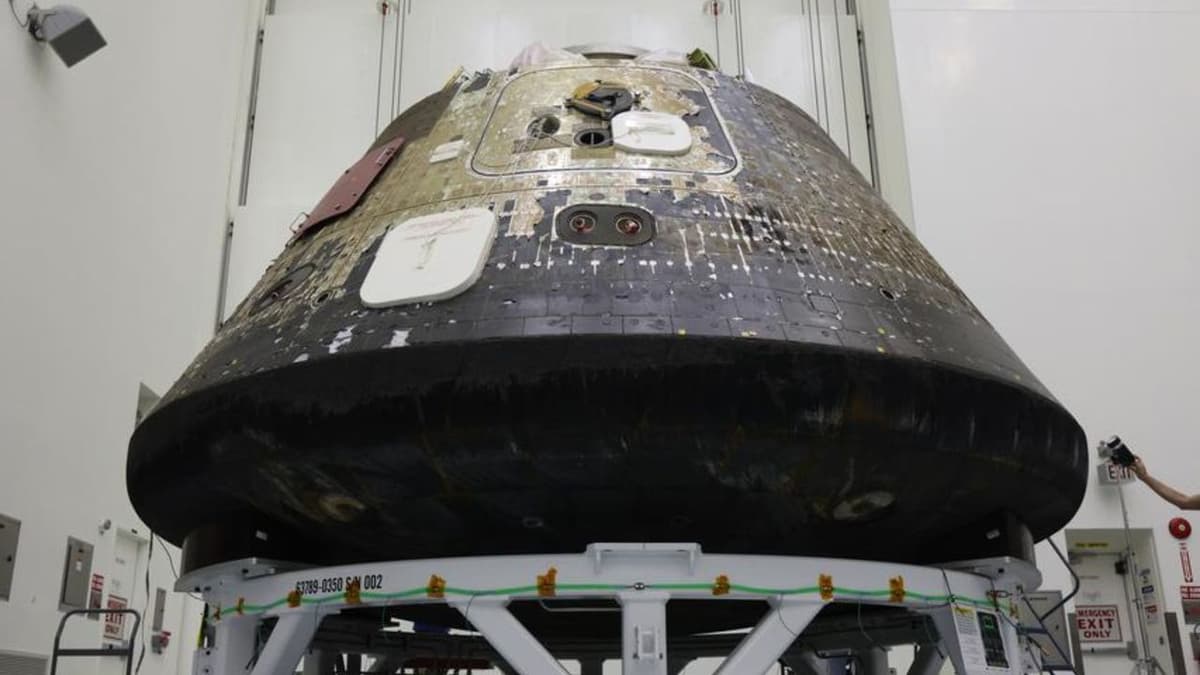
The Charred Hull of Artemis 2's Orion | Space Photo of the Day for May 8, 2026
Companies Mentioned

NASA
Why It Matters
The mission proves the viability of crewed deep‑space travel and provides critical data to improve Orion’s heat‑shield performance, directly impacting NASA’s timeline for a sustainable lunar presence.
Key Takeaways
- •Artemis 2 completed first crewed lunar flyby since 1972.
- •Reentry temperatures peaked at 5,000 °F, scorching Orion’s exterior.
- •Heat shield protected crew, but tile damage prompts analysis.
- •Findings will inform Orion upgrades for Artemis 3 and beyond.
- •Capsule now displayed at Kennedy Space Center for public viewing.
Pulse Analysis
Artemis 2 marked a watershed moment for human spaceflight, delivering four astronauts on a 10‑day circumlunar mission that re‑established the United States’ capability to venture beyond low‑Earth orbit. Launched on April 1, the crew—Commander Reid Wiseman, Pilot Victor Glover, Mission Specialists Christina Koch and Jeremy Hansen—performed a series of waypoints that mirrored the Apollo era while testing modern navigation, communications, and life‑support systems. The successful splashdown on April 10 not only closed a historic chapter but also set the stage for a new cadence of lunar exploration.
The dramatic re‑entry phase exposed Orion’s ablative heat shield to temperatures estimated at 2,760 °C (5,000 °F), scorching the capsule’s exterior and turning its tiles black. While the shield performed its primary function of protecting the crew, the visible charring provides engineers with real‑world data on material erosion, tile adhesion, and thermal gradients. NASA’s post‑flight inspection will compare these observations against pre‑flight models, informing potential upgrades such as reinforced carbon‑phenolic layers or revised tile geometry for Artemis 3, which will focus on orbital rendezvous and docking tests.
Beyond the technical insights, Artemis 2’s high‑profile return fuels public enthusiasm and underscores the commercial sector’s growing role in lunar logistics. Partnerships with companies like SpaceX and Blue Origin are poised to supply launch services and habitat modules, accelerating the timeline for a sustainable lunar gateway. By validating deep‑space crew safety and delivering actionable engineering feedback, Artemis 2 strengthens the business case for continued investment in NASA’s Artemis program and the broader space economy.
The charred hull of Artemis 2's Orion | Space photo of the day for May 8, 2026
Comments
Want to join the conversation?
Loading comments...