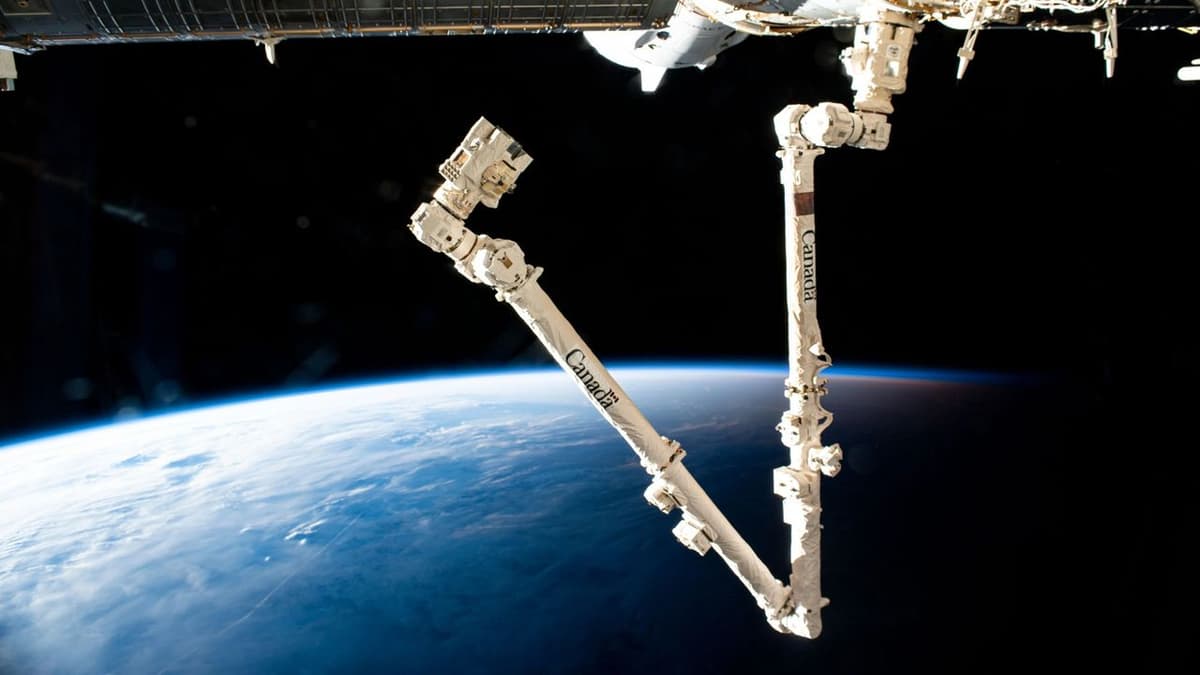
The Critical Robot Arm on the ISS Isn't Working Properly, but NASA Has a Plan to Fix It
Companies Mentioned

Why It Matters
Without a functional Canadarm2, ISS cargo berthing and critical maintenance tasks are delayed, jeopardizing crew supplies and the station’s operational schedule. The swift repair also highlights the effectiveness of international collaboration between NASA and the Canadian Space Agency.
Key Takeaways
- •Canadarm2 seized wrist joint, requiring replacement during June 30 spacewalk.
- •Spare joint already on ISS, enabling prompt repair without new launch.
- •Arm’s downtime threatens cargo berthing and routine station maintenance.
- •Modular design allows segment swaps, extending arm’s 25‑year service life.
- •CSA’s pre‑positioned spares illustrate effective international collaboration on ISS robotics.
Pulse Analysis
Since its launch in 2001, Canadarm2 has become the workhorse of the ISS, handling everything from berthing visiting spacecraft to relocating large experiment modules. Its seven‑segment, interchangeable architecture was a pioneering solution that allowed the arm to evolve alongside the station’s growing commercial traffic. Over two and a half decades, the Canadian‑built arm has logged thousands of hours, supporting both NASA and ESA missions while showcasing Canada’s legacy in space robotics that began with the original shuttle‑era Canadarm.
The recent fault—an elevated motor current in a wrist joint—forced the arm into a safe, stationary position. NASA’s response leverages a spare joint that was pre‑positioned on the station as part of a long‑term logistics plan devised by the Canadian Space Agency and MDA Space. By scheduling a spacewalk on June 30, astronauts from Expedition 74 will replace the faulty segment, restoring full functionality within weeks. This approach avoids the months‑long delay of launching a new component, demonstrating how modular design and forward‑thinking spare provisioning can mitigate unexpected hardware failures in orbit.
Beyond the immediate fix, the incident reinforces the strategic importance of international partnerships in maintaining the ISS’s aging infrastructure. The CSA’s commitment to funding and supplying spare parts ensures continued access for Canadian research and astronaut participation. Looking ahead, lessons from Canadarm2’s longevity are feeding into the development of Canadarm3, slated for the Artemis program, where similar modularity will be crucial for lunar gateway operations. The episode serves as a reminder that robust, upgradable hardware is essential for sustaining long‑duration human spaceflight.
The critical robot arm on the ISS isn't working properly, but NASA has a plan to fix it
Comments
Want to join the conversation?
Loading comments...