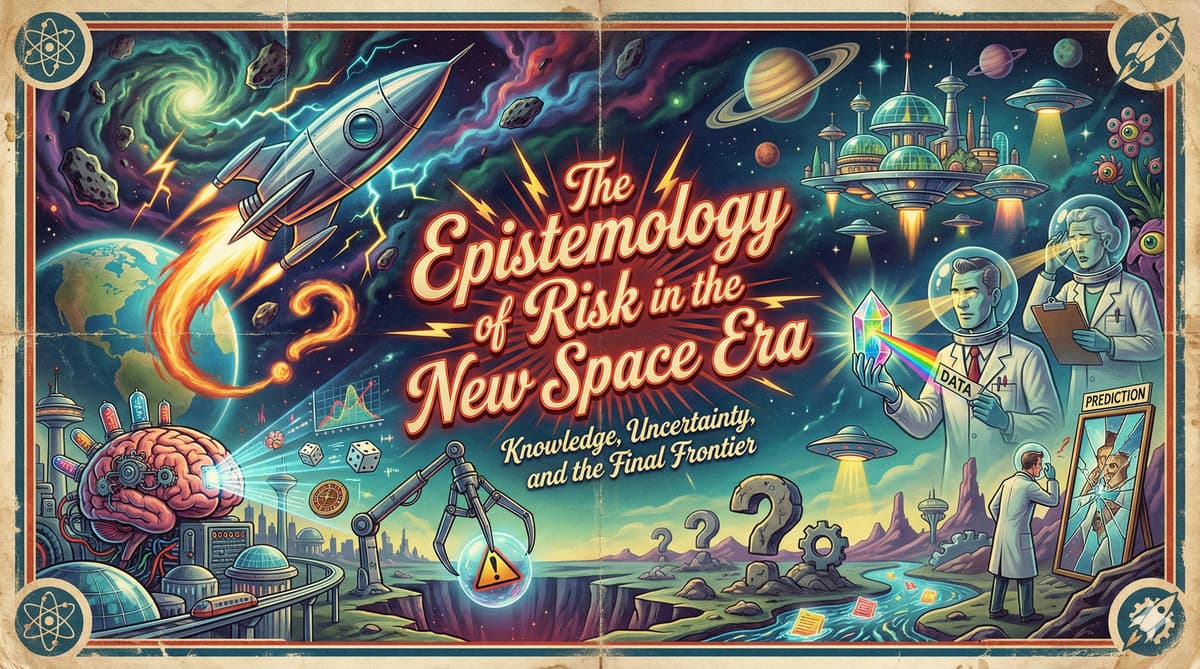
The Epistemology of Risk in the New Space Era
•January 20, 2026
0
Companies Mentioned


Why It Matters
Understanding and categorizing risk knowledge directly influences investment confidence, insurance pricing, and mission success across commercial and governmental space programs.
Key Takeaways
- •Rumsfeld Matrix categorizes space risks by knowledge level.
- •Unknown Knowns often cause preventable launch failures.
- •Antifragile strategies mitigate Unknown Unknowns.
- •AI introduces hidden risks as Unknown Knowns.
- •Red teaming uncovers blind spots across all risk quadrants.
Pulse Analysis
The rise of commercial launch services and mega‑constellations has turned risk management from a technical afterthought into a strategic imperative. The Rumsfeld Matrix offers a disciplined lens, separating what engineers can measure from what they merely suspect, and it aligns with probabilistic risk assessment methods used by NASA and the European Space Agency. By mapping each quadrant to specific governance processes—standard operating procedures for Known Knowns, contingency budgeting for Known Unknowns, cultural reforms for Unknown Knowns, and resilience buffers for Unknown Unknowns—companies can translate epistemic uncertainty into actionable plans.
Cultural blind spots, often labeled Unknown Knowns, remain the most lethal source of preventable loss. Historical cases like Challenger’s O‑ring failure illustrate how data can sit idle in silos until a crisis forces its disclosure. Modern firms combat this through radical transparency initiatives, whistleblower protections, and cross‑functional data platforms that surface hidden insights before they become catastrophic. Simultaneously, the integration of AI into guidance, navigation, and autonomous decision‑making introduces new Unknown Knowns; black‑box models may hide algorithmic biases that only surface under rare conditions. Organizations are therefore investing in explainable AI, model audits, and hybrid human‑machine oversight to keep hidden risks visible.
From an investment perspective, the matrix reshapes capital allocation. Venture funds price Known Unknowns with quantifiable risk premiums, while insurance markets shy away from Unknown Unknowns that lack historical data. Red‑team simulations and pre‑mortem workshops are increasingly mandated by both private equity and government contracts to convert unknowns into knowns, preserving market confidence. As space activities venture deeper—toward lunar habitats, Mars missions, and orbital defense—the ability to anticipate, expose, and adapt to every risk quadrant will become the defining competitive edge for the next generation of space enterprises.
The Epistemology of Risk in the New Space Era
0
Comments
Want to join the conversation?
Loading comments...