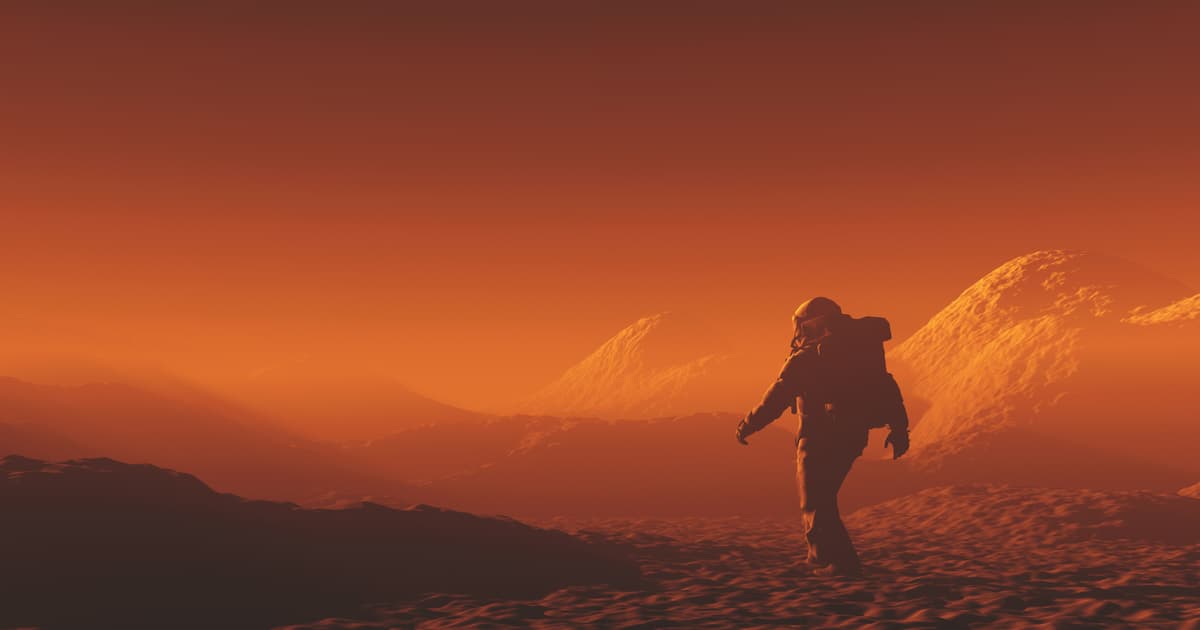
The First Humans on Mars Will Not Just Be Explorers Crossing a Red Desert. They Will Be Radiation Workers, Dust-Control Technicians and Weather-Watchers on a Planet Where the Danger Is Less Dramatic than Constant.
Why It Matters
Managing cumulative radiation, toxic dust, and solar‑power loss is essential for crew health and mission success, shaping astronaut selection, habitat design, and operational protocols for future Mars exploration.
Key Takeaways
- •Mars surface radiation can reach ~1 sievert, near astronaut career limits
- •Fine dust carries perchlorates, silica, and metals, posing inhalation hazards
- •Thin Martian atmosphere makes wind weak; storms mainly block sunlight
- •Continuous dosimetry, filtration, and optical‑depth monitoring are daily tasks
- •Methodical, disciplined crew traits outweigh traditional “heroic” explorer image
Pulse Analysis
Radiation exposure is the most quantifiable risk for a Mars surface mission. Measurements from Curiosity’s RAD instrument show a round‑trip transit delivering roughly 0.66 Sv, with a full 500‑day stay adding another 0.3‑0.4 Sv. Those levels brush against NASA’s 0.6 Sv career cap and ESA’s 1 Sv limit, making dosimetry a daily discipline. Engineers are therefore prioritizing advanced shielding materials, optimized transit trajectories, and real‑time solar event alerts to keep cumulative dose within acceptable bounds.
Equally pressing is the pervasive fine dust that blankets the Martian landscape. Recent GeoHealth research highlights that particles as small as a few micrometres carry perchlorates, silica, and trace metals—substances that can damage lungs and disrupt endocrine function. Because the dust is electrostatically charged, it adheres to suits and habitat interiors, creating a chronic housekeeping challenge. Filtration upgrades, airlock redesigns, and suit‑port technologies are being tested on the ISS and lunar analog sites to ensure crews can replace filters hundreds of times without compromising safety.
The third, often misunderstood, hazard is the planet’s weather. Martian winds, even at 60 mph, exert negligible force due to the thin atmosphere, but they loft dust high enough to reduce surface insolation dramatically. Optical‑depth monitoring becomes a critical operational metric, dictating solar‑panel output and thermal management. By integrating real‑time sky‑opacity sensors with predictive models, mission planners can schedule power‑intensive activities around anticipated dust‑storm windows. Together, these three continuous, low‑profile tasks redefine the skill set required for the inaugural Mars crew, emphasizing meticulous, data‑driven stewardship over cinematic heroics.
The first humans on Mars will not just be explorers crossing a red desert. They will be radiation workers, dust-control technicians and weather-watchers on a planet where the danger is less dramatic than constant.
Comments
Want to join the conversation?
Loading comments...