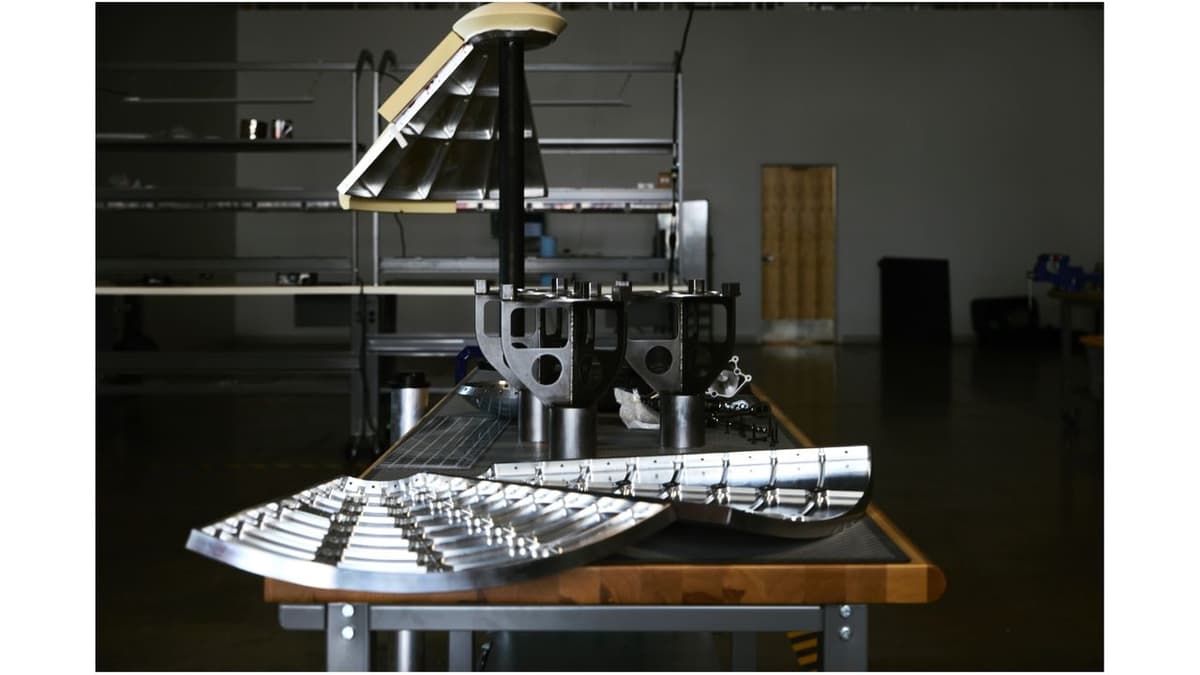
'The Future of the Space Economy': Colorado Startup Lux Aeterna Raises $10 Million to Develop Reusable Satellites
•March 10, 2026
0
Why It Matters
Reusable satellites could slash launch and manufacturing costs while unlocking new mission architectures, accelerating growth of the emerging space economy. The technology positions Lux Aeterna to capture defense, commercial, and in‑space manufacturing markets that currently face high barriers.
Key Takeaways
- •Raised $10M seed round led by Konvoy.
- •Developing fully reusable satellites for rapid re‑launch.
- •First test flight planned for 2027 on SpaceX rideshare.
- •Targeting tens of satellites by 2030, hundreds by 2035.
- •Enables flexible payload designs beyond typical 5‑7 year lifespan.
Pulse Analysis
The push for satellite reusability marks a logical extension of the reusable‑rocket paradigm popularized by SpaceX. While rockets have become cheaper through rapid turnaround, the satellite segment still suffers from high unit costs and long supply‑chain lead times. Lux Aeterna’s approach—designing a satellite that can survive atmospheric re‑entry, be refurbished, and relaunched—directly addresses these inefficiencies. By treating satellites as an airline fleet rather than disposable assets, the company promises to reduce capital expenditures and enable more frequent, mission‑specific deployments.
Industry analysts see this development as a catalyst for new business models in low‑Earth orbit. Defense customers, for instance, could field responsive constellations that adapt to evolving threats without waiting years for new builds. Commercial users, especially those pursuing in‑space manufacturing or hypersonic testing, gain the ability to iterate payload designs quickly, as missions are no longer constrained by a satellite’s fixed lifespan. Lux Aeterna’s Delphi demonstrator, slated for a 2027 rideshare launch, will validate key technologies such as heat‑shield materials, autonomous re‑entry control, and rapid refurbishment processes, setting a benchmark for future fleets.
Looking ahead, the scalability of reusable satellites will hinge on integration with next‑generation launch vehicles like SpaceX’s Starship and the emergence of standardized refurbishment infrastructure. If Lux Aeterna can achieve its target of tens of operational units by 2030, the cost per kilogram to orbit could drop dramatically, spurring broader adoption across sectors. This could also intensify competition among emerging players such as Varda Space and Outpost, accelerating innovation across the entire space logistics ecosystem. The race to establish a reusable satellite market may well define the next decade of the space economy.
'The future of the space economy': Colorado startup Lux Aeterna raises $10 million to develop reusable satellites
0
Comments
Want to join the conversation?
Loading comments...