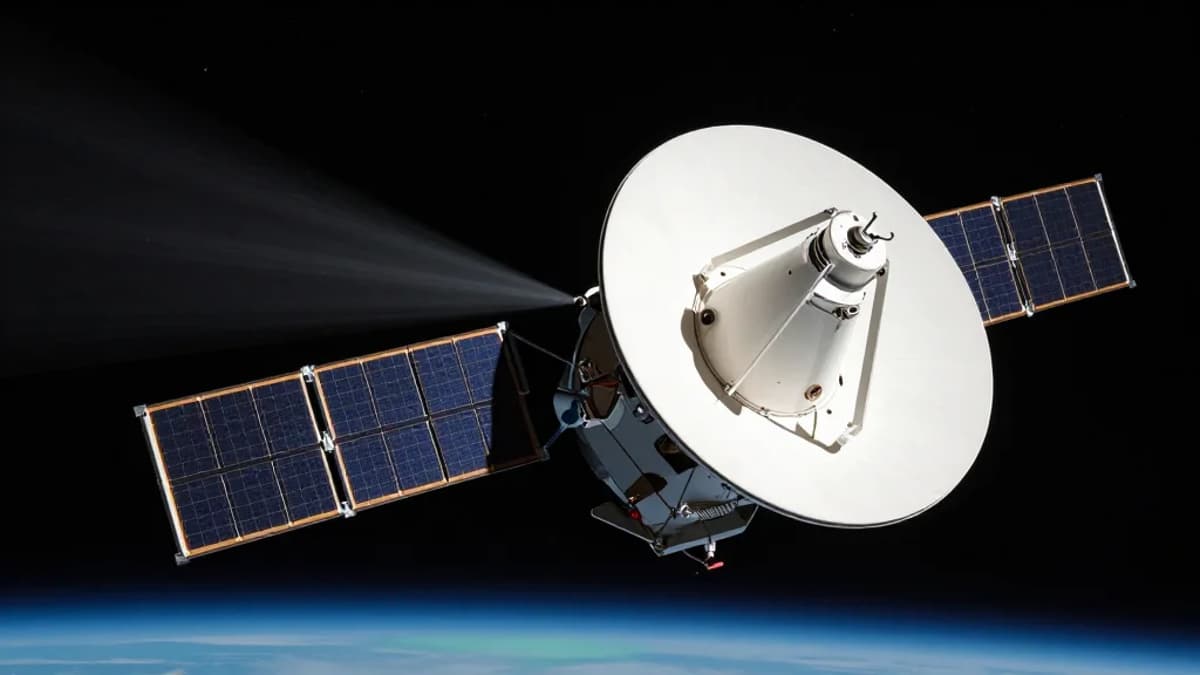
The Ghost in the Orbit: How Hybrid Surveillance Reshapes Risks
•March 2, 2026
0
Why It Matters
The reliance on commercial operators for strategic surveillance creates a governance gap that could trigger accidental nuclear escalation, especially as traditional verification safeguards disappear. Establishing transparent orbital protocols is therefore essential to preserve strategic stability.
Key Takeaways
- •GHOST‑R shifts surveillance to commercial‑operated GEO satellites
- •New START lapse removes nuclear verification, heightening misperception risk
- •Hybrid procurement creates governance gap for space‑based inspections
- •Proximity‑notification protocols proposed to prevent accidental escalation
- •China’s fusion strategy mirrors U.S. commercial‑military model
Pulse Analysis
The February 2026 expiration of the New START treaty eliminated the last formal mechanism for on‑site nuclear verification between Washington and Moscow, leaving strategic stability increasingly dependent on space‑based sensors. In response, the Pentagon’s Defense Innovation Unit issued a solicitation for GHOST‑R, a geosynchronous high‑resolution optical reconnaissance system that will be built, launched, and initially operated by commercial firms before transferring to the Department of Defense within 36 months. This “buy‑to‑own” model promises to field GEO electro‑optical payloads in under two years, dramatically accelerating the United States’ ability to monitor both friendly and adversary satellites.
The commercial hand‑off, however, creates a legal and operational gray zone. Private operators lack the de‑escalation training and diplomatic clearance that military crews possess, so a routine proximity maneuver near a Russian or Chinese early‑warning satellite could be interpreted as hostile intent. China’s own military‑civil fusion program, exemplified by the Shijian‑21 and Shijian‑25 platforms, already blurs the line between inspection and interference, raising the probability of false alarms in an environment where New START’s verification safeguards are absent. Without clear rules of engagement, a software glitch or pilot error could trigger a strategic cascade.
Policymakers therefore face a narrow path between technological advantage and strategic destabilization. Experts advocate a multilateral “proximity‑notification” regime akin to aviation NOTAMs, requiring any GEO maneuver within a defined radius of sensitive assets to be reported to an international clearinghouse in real time. Coupled with binding treaties that delineate inspection rights and impose penalties for unauthorized interference, such a framework would restore predictability to the increasingly commercialized orbital environment. Until these safeguards are codified, the GHOST‑R architecture risks turning routine space surveillance into a trigger for nuclear escalation, undermining the very deterrence it was designed to protect.
The ghost in the orbit: how hybrid surveillance reshapes risks
0
Comments
Want to join the conversation?
Loading comments...